

Maddy summaryHR 3304, the Providing Child Care for Police Officers Act of 2025, establishes a federal grant program to help law enforcement agencies provide child care for officers' minor children during nonstandard shifts. The program awards competitive 3-year grants to state or local "lead agencies" (like state child care offices) to fund child care services through eligible law enforcement agencies or consortia, with 20% of funds reserved for small agencies (under 200 officers). Grants cover startup costs, provider training, sick child care, facility construction, and other needs, requiring local matching funds (10% to 33% over three years). The program is authorized for $24 million annually from 2026-2030 and includes studies to evaluate its impact on child care access for officers and other first responders.
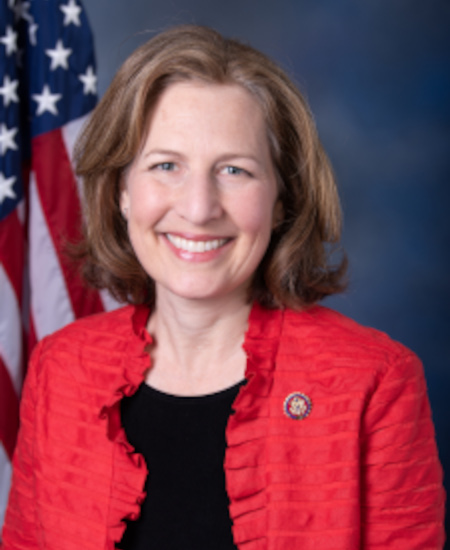
Rep. Kim Schrier
Sponsored bills
Maddy summaryHR 2623, the Innovative Therapies Centers of Excellence Act of 2025, directs the Department of Veterans Affairs to establish at least five specialized medical centers focused on treating veterans with specific conditions like PTSD, depression, chronic pain, and substance use disorders using innovative therapies. These centers must meet strict criteria, including academic partnerships with medical schools, research capabilities, veteran advisory committees, and data-sharing systems for evaluating treatment effectiveness. The bill authorizes $30 million annually for these centers' research and education activities and requires the VA to submit annual reports to Congress on their operations and findings. It directly affects veterans seeking advanced treatments for covered conditions through VA facilities and establishes a peer review process to select designated centers based on scientific merit.
Maddy summaryHR 3243, the Therapeutic Fraud Prevention Act of 2025, bans the provision of paid conversion therapy aimed at changing a person's sexual orientation or gender identity, and prohibits advertising such therapy as effective, safe, or without risk. It directly affects LGBTQ+ individuals and their families who might be targeted by these practices, as professionals have determined conversion therapy is ineffective and harmful. The law treats violations as deceptive acts under consumer protection laws, empowering the Federal Trade Commission and state attorneys general to enforce it through civil actions. It explicitly excludes legitimate gender transition support and non-discriminatory counseling from the ban.
Maddy summary# Summary of Farm Workforce Modernization Act of 2025 (Electronic Verification and Labor Recruiter Provisions) This legislation establishes a new electronic verification system (Section 274E) for employment eligibility verification, replacing the previous E-Verify program. Key provisions include: 1. **Electronic Verification System**: - Requires employers to verify identity and employment authorization through an electronic system - Establishes processes for tentative nonconfirmations and appeals - Creates an Electronic Verification Compensation Account to pay lost wages for individuals wrongly denied employment due to government error 2. **Phased Implementation for Agricultural Employers**: - Larger agricultural employers (500+ employees) must comply 6 months after implementation - Smaller employers (20-100 employees) must comply 12 months after implementation - Smallest employers (1-19 employees) must comply 15 months after implementation 3. **Foreign Labor Recruiter Accountability**: - Requires electronic registration of foreign recruiters - Prohibits recruiters from charging workers fees - Mandates required disclosures to workers about their rights and employment terms - Establishes bond requirements and enforcement mechanisms - Creates penalties for violations, including fines up to $25,000 per violation 4. **Key Protections**: - Prevents employers from terminating employment based on tentative nonconfirmations - Ensures individuals can contest verification issues within 10 business days - Requires notification of final nonconfirmations to employees - Protects against unfair immigration-related employment practices 5. **Transition Provisions**: - Repeals the E-Verify program from the Illegal Immigration Reform and Immigrant Responsibility Act - Establishes coordination between Department of Homeland Security, Social Security Administration, and Department of Agriculture - Includes rural access to assistance for individuals contesting verification issues The legislation aims to modernize employment verification while protecting workers' rights and preventing exploitation in the agricultural workforce.
Maddy summaryThe Law Enforcement Officers Equity Act expands federal retirement benefits to include specific non-traditional law enforcement roles, such as IRS tax collection officers, U.S. Postal Inspection Service employees, Department of Veterans Affairs police, and certain U.S. Customs and Border Protection seized property specialists. It directly affects current and future federal workers in these positions who were previously excluded from law enforcement retirement benefits under the Federal Employees Retirement System and Civil Service Retirement System. The bill allows current employees (incumbents) to elect to count prior service toward retirement by paying a deposit covering the difference in retirement contributions, with government contributions made over 10 years. It also temporarily exempts law enforcement officers from mandatory separation for three years after enactment.
Maddy summaryThe Stop Child Hunger Act of 2025 expands the Summer Electronic Benefits Transfer (EBT) program to cover school closure periods (when schools operate remotely or hybrid for 5+ consecutive weekdays), not just summer months. It directly affects children in households qualifying for free school meals during these closures. Key provisions include updating program definitions, phasing down federal administrative funding from 100% in 2026 to 50% by 2031, and providing $50 million in grants to states for data system upgrades to implement the changes. The bill modifies existing school meal program rules without creating new eligibility criteria.
Maddy summaryHRES 381 designates May 5, 2025, as the "National Day of Awareness for Missing and Murdered Indigenous Women and Girls," calling for public commemoration of victims and solidarity with their families. The resolution urges the public and groups to honor both documented and undocumented cases while recommending the Department of Justice commission a new study on the crisis, citing that the last major study was published in 2016. It does not create new laws or funding but aims to raise awareness about ongoing issues, referencing recent data showing 5,614 Indigenous women and girls reported missing in 2024. This symbolic resolution directly affects Indigenous communities, families, and the public, aligning with prior federal efforts like Savanna’s Act and the Not Invisible Act.
Maddy summaryHR 3178, the Save Healthcare Workers Act, creates a new federal crime for assaulting hospital staff while they are performing their duties, with penalties including fines and up to 10 years in prison (up to 20 years for aggravated cases involving weapons or injuries). The bill directly affects hospital employees - including nurses, doctors, and support staff - across all covered facilities (such as emergency rooms, long-term care centers, and children’s hospitals) by criminalizing violence that disrupts patient care. It also establishes a $25 million annual grant program (2025-2034) to help hospitals implement safety measures like staff de-escalation training, security technology, and coordination with local law enforcement. These provisions aim to address workplace violence in healthcare settings, which the bill cites as a growing problem affecting service delivery and staff retention.
Maddy summaryHR 3112, the Better CARE for Animals Act of 2025, strengthens enforcement of the federal Animal Welfare Act by requiring dealers and exhibitors to hold valid licenses for animal sales or transport (Section 4). It expands enforcement authority by allowing the Attorney General to sue violators for up to $10,000 per day, seize animals, and seek injunctions (Section 20), while clarifying that courts can address violations of related rules and regulations. The bill directly affects animal dealers, exhibitors, the USDA, and the Department of Justice, creating clearer pathways for holding violators accountable. Key provisions include updating definitions, broadening inspection powers to cover all regulations, and directing penalty funds toward temporary animal care costs during legal proceedings.
Assault Weapons Ban of 2025 This bill makes it a crime to knowingly import, sell, manufacture, transfer, or possess a semiautomatic assault weapon (SAW) or large capacity ammunition feeding device (LCAFD). The prohibition does not apply to a firearm that is (1) manually operated by bolt, pump, lever, or slide action, except for certain shotguns; (2) permanently inoperable; (3) an antique; (4) only capable of firing rimfire ammunition; or (5) a rifle or shotgun specifically identified by make and model. The bill also exempts from the prohibition the following, with respect to a SAW or LCAFD: importation, sale, manufacture, transfer, or possession related to certain law enforcement efforts, or authorized tests or experiments; importation, sale, transfer, or possession related to securing nuclear materials; and possession by a retired law enforcement officer. The bill permits continued possession, sale, or transfer of a grandfathered SAW, which must be securely stored. A licensed gun dealer must conduct a background check prior to the sale or transfer of a grandfathered SAW between private parties. The bill permits continued possession of, but prohibits sale or transfer of, a grandfathered LCAFD. Newly manufactured LCAFDs must display serial number identification. Newly manufactured SAWs and LCAFDs must display the date of manufacture. The bill also allows a state or local government to use Edward Byrne Memorial Justice Assistance Grant Program funds to compensate individuals who surrender a SAW or LCAFD under a buy-back program.