

Maddy summaryThe Respect Tribal IDs Act requires the Department of Homeland Security to create and enforce annual training for immigration officers on how to properly identify and accept Native American tribal documents as proof of U.S. citizenship. This legislation directly affects federal immigration officials by mandating that they complete specific curricula developed in collaboration with the Bureau of Indian Affairs and Indian tribes. Key provisions include establishing a database of tribal document examples, incorporating scenario-based exercises, and ensuring officers understand the historical trust responsibility between the U.S. government and American Indians. Additionally, the bill defines which tribal documents, such as enrollment cards and certificates of degree of Indian blood, are considered valid proof of citizenship.
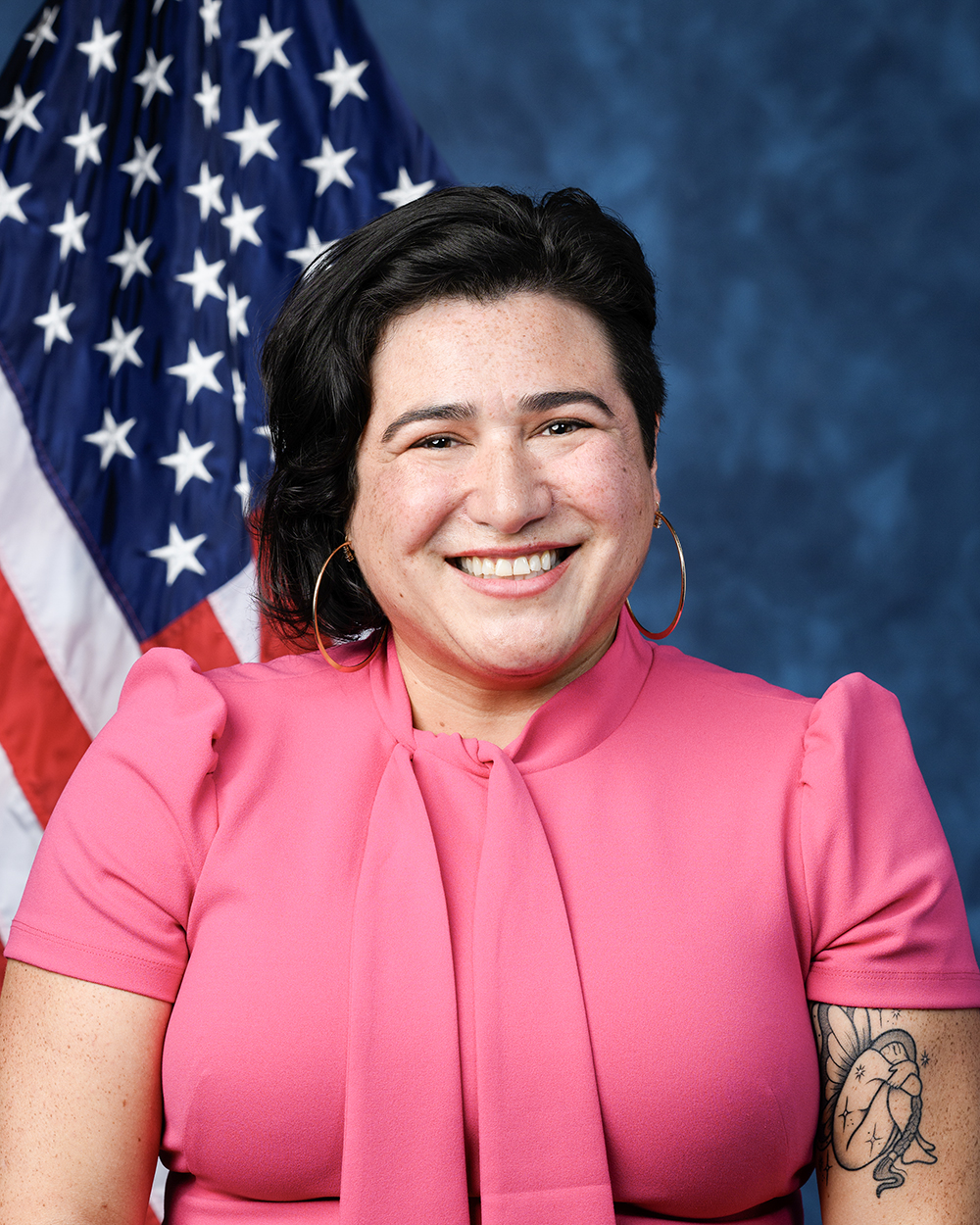
Rep. Emily Randall
Sponsored bills
Maddy summaryThe Pregnant Women in Custody Act establishes new federal standards to protect the health and rights of pregnant women held in Bureau of Prisons facilities, immigration detention centers, and refugee shelters. It mandates comprehensive medical care, including mandatory pregnancy testing, access to contraception, and specialized dietary and housing accommodations tailored to pregnancy needs. A central provision prohibits the use of restrictive housing and physical restraints during pregnancy, labor, and the postpartum recovery period, with limited exceptions only for immediate safety threats. The legislation also requires facilities to provide nursery programs allowing mothers and infants to remain together, offers education on parental rights, and mandates regular reporting on health outcomes and the use of restrictive measures.
Maddy summaryThis resolution formally acknowledges the cultural and historical importance of Cinco de Mayo, a holiday celebrated by Mexican and Mexican-American communities. It commemorates the 1862 Battle of Puebla, where Mexican forces defeated the French army, symbolizing resilience and the pursuit of self-determination. The text highlights the holiday's role in honoring diverse contributions to the United States and strengthening ties between Mexico and the U.S. Ultimately, the House of Representatives is encouraged to observe the day with appropriate ceremonies and activities.
Maddy summaryThis resolution expresses support for designating May 4, 2026, as a "National Day of Reason" to highlight the value of critical thinking and evidence-based decision-making. It encourages all Americans to observe the day by promoting the scientific method and free inquiry as tools for solving social problems and advancing human welfare. The text cites historical figures and principles to argue that reason is essential for protecting democracy, civil liberties, and addressing challenges like climate change and misinformation. As a non-binding congressional resolution, it does not create new laws or alter government operations but serves as a formal statement of the House's position.
Maddy summaryThis bill is a non-binding resolution that expresses the House of Representatives' sentiment to honor public servants for their dedication to the United States. It specifically acknowledges the work of federal, state, and local government employees, as well as uniformed service members, who deliver essential services and support the economy. The resolution calls on the American public to observe Public Service Recognition Week with ceremonies and activities that recognize these contributions. Because it is a symbolic expression of the House's feelings rather than a law with enforceable rules, it does not create new policies or mandate specific actions.
Maddy summaryThe No WAR Act prohibits Congress from using budget reconciliation procedures to fund military hostilities against Iran unless such actions are explicitly authorized by a formal declaration of war or a specific authorization for the use of military force. This legislation directly affects the legislative process by establishing a point of order that blocks any reconciliation bill attempting to provide budget authority for offensive military operations, strikes, or covert actions targeting Iranian military forces, territory, or government institutions. The bill also defines proxy forces as any foreign military or irregular groups operating with U.S. direction or material support, ensuring these entities are included in the restrictions on unauthorized funding. By amending the Congressional Budget and Impoundment Control Act, the measure aims to prevent the use of budgetary shortcuts to bypass the constitutional requirement for congressional approval before engaging in armed conflict with Iran.
Maddy summaryThis resolution directs the House Committee on Oversight and Government Reform to take legal action in federal court to enforce a subpoena issued to Attorney General Pamela Bondi. The specific goal is to obtain a court order requiring Bondi to provide deposition testimony and documents related to the government's handling of sex trafficking cases and the Jeffrey Epstein investigation. The House Office of General Counsel is authorized to represent the committee in these proceedings and may hire additional private lawyers to assist. If the committee initiates or intervenes in the lawsuit, it must report its actions to the full House of Representatives as soon as possible.
Maddy summaryThis bill, titled the Protecting Human Rights and Public Health in Foreign Assistance Act, aims to cancel specific regulations issued by the Department of State. It directly affects the federal government by prohibiting any department or agency from enforcing, implementing, or proposing rules related to protecting life, combating discriminatory equity ideology, and combating gender ideology in foreign aid programs. The legislation treats these cancelled rules as if they never existed, effectively nullifying their impact on future foreign assistance policies.
Maddy summaryThis bill, known as the Lowering Utility Bills Act, aims to reduce electricity and natural gas costs by regulating how utility companies calculate their profits and what expenses they can pass on to customers. It requires transmission providers and investor-owned utilities to determine a reasonable profit range based on historical stock market returns from academics, large financial institutions, and major global banks, then generally limits their authorized profit to the lowest point in that range. Additionally, the legislation bans utilities from recovering specific costs in customer rates, including lobbying fees, political contributions, executive travel, and entertainment expenses. The bill also mandates that utilities prioritize lower-cost grid technologies in their planning and requires them to publicly justify any decision to use a higher profit rate than the standard minimum.
Maddy summaryThe Living Wage For All Act raises the federal minimum wage in a tiered schedule, requiring large corporations to reach $25 per hour by 2031 while giving smaller businesses a longer timeline to catch up. Once the standard is met, the law automatically indexes the minimum wage to two-thirds of the national median hourly wage to ensure it keeps pace with economic changes. The bill also eliminates the lower minimum wage for tipped employees and youth workers, phasing them out until they match the general standard, and extends similar protections to incarcerated workers. Additionally, the legislation restricts the issuance of special minimum wage certificates for workers with disabilities and mandates that employers provide technical assistance during the transition period.