

Maddy summaryHR 1787 authorizes the U.S. Mint to produce commemorative coins honoring baseball legend Roberto Clemente, including $5 gold, $1 silver, and half-dollar coins, with specific specifications for weight, size, and metal content. The bill requires the coins to feature Clemente's image and commemorative inscriptions, and mandates a surcharge ($35 for gold, $10 for silver, $5 for half-dollar) paid to the Roberto Clemente Foundation for its educational, youth sports, and disaster relief programs. All coins must be minted in 2027, sold at face value plus surcharge and production costs, and will be legal tender. The bill focuses solely on the coin program, not broader policy changes.
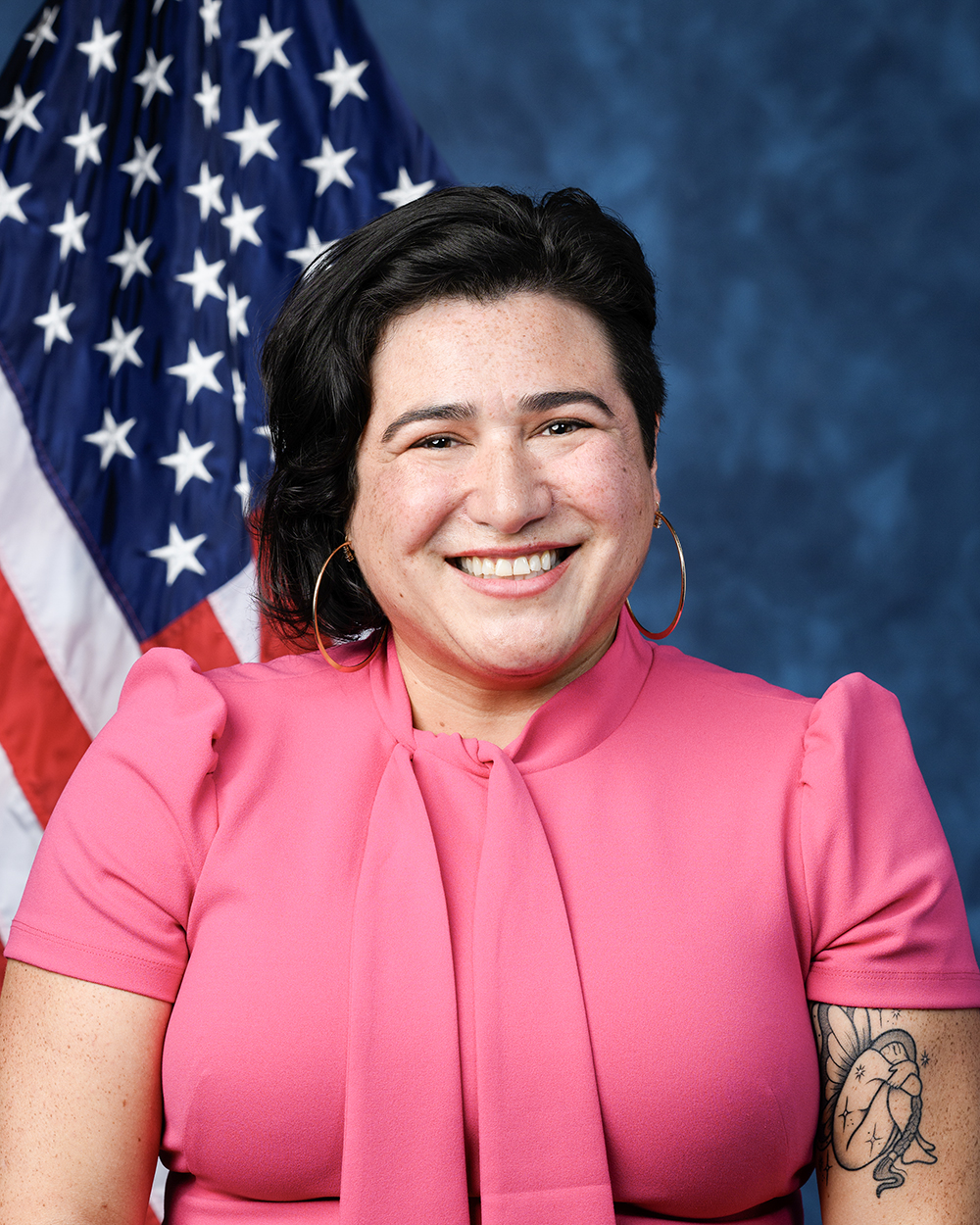
Rep. Emily Randall
Sponsored bills
Safe Schools Improvement Act This bill requires states to direct their local educational agencies (LEAs) to establish policies that prevent and prohibit bullying and harassment of elementary and secondary school students. In particular, these policies must prohibit bullying and harassment based on race, color, national origin, disability, religion, or sex. Sex includes sexual orientation, gender identity, and sex characteristics (including intersex traits). Further, LEAs must provide (1) students, parents, and educational professionals with annual notice of the conduct prohibited in their disciplinary policies; (2) students and parents with grievance procedures that target such conduct; and (3) the public with annual data on the incidence and frequency of that conduct at the school and LEA level. The Department of Education must conduct and report on an independent biennial evaluation of programs and policies to combat bullying and harassment in elementary and secondary schools. The National Center for Education Statistics must collect state data to determine the incidence and frequency of the conduct prohibited by LEA disciplinary policies.
Maddy summaryHR 1383 extends the Secure Rural Schools program, which provides payments to counties and states with federal land (like national forests) to support local schools and services. It reauthorizes these payments through fiscal year 2026, adding specific rules to ensure counties don’t receive duplicate payments for 2024 and 2025. The bill also extends related authorities for special projects on federal land and county fund expenditures through 2028-2029. This directly affects rural communities adjacent to federal lands that rely on these payments for education and infrastructure.
Maddy summaryThis bill amends Section 5(e)(6) of the Food and Nutrition Act of 2008 by removing a reference to "subparagraph (B)" and renumbering the following provisions. It does not change SNAP eligibility rules or benefits; it only adjusts the internal numbering of existing provisions. The change takes effect January 1 following enactment. As a procedural amendment, it directly affects how the law is cited but does not alter policy or impact beneficiaries.
Maddy summaryThe Pell Grant Sustainability Act (HR 1666) requires the federal government to automatically adjust the maximum Pell Grant amount each year based on inflation, starting with $1,060 for the 2024-2025 academic year. This adjustment uses the Consumer Price Index (CPI) to ensure grants keep pace with rising college costs, directly affecting low-income students who rely on Pell Grants to afford higher education. The bill amends the Higher Education Act to mandate this annual inflation-based increase, rounding the final amount to the nearest $5. It aims to reverse the decades-long decline in grant purchasing power, which covered 80% of college costs in 1974-75 but only 31% by 2022-23.
Maddy summaryThe American Dream and Promise Act of 2025 would create pathways to permanent residency for certain immigrant youth who entered the U.S. as children (Dream Act component) and for individuals from countries with Temporary Protected Status or Deferred Enforced Departure (American Promise Act component). To qualify, applicants must meet continuous physical presence requirements (since January 1, 2021 for Dream Act applicants, and for 3+ years for American Promise applicants), pass background checks, and satisfy educational or employment criteria. Conditional permanent resident status would be granted initially, with the option to convert to full permanent residency after meeting additional requirements like earning a degree, serving in the military for two years, or demonstrating three years of earned income. The bill includes fee exemptions for low-income applicants, establishes a grant program to assist applicants with legal help, and creates specific procedures for background checks and appeals.
Maddy summaryHR 1637, the Protect Veteran Jobs Act, allows veterans who were involuntarily dismissed without cause from federal civil service positions between January 20, 2025, and the bill’s enactment date to seek reinstatement to their former role or a qualified position. It directly affects eligible veterans dismissed during this period and requires federal agencies to report quarterly on veteran removals, including the number and reasons for each dismissal. Agencies must submit these reports to specified congressional committees until January 20, 2029, when the reporting requirement ends. The bill aims to restore employment opportunities for affected veterans while increasing transparency around federal hiring and dismissal practices.
Maddy summaryEthan's Law requires gun owners to store firearms securely in homes where minors live or where residents are legally prohibited from owning guns. It makes it unlawful to leave firearms unsecured if a minor or ineligible person could access them, with fines of $500 per violation and harsher penalties if injury or death occurs. The bill creates a federal grant program to help states implement similar secure storage laws and treats unsafe storage as negligence in legal cases. It directly affects households with children or residents who cannot legally possess firearms, aiming to reduce accidental shootings and unauthorized access.
Maddy summaryHRES 155 is a symbolic congressional resolution expressing strong U.S. support for Ukraine during Russia’s third year of invasion. It condemns Russia’s war crimes - including attacks on civilians, forced deportations of children, and infrastructure destruction - and demands Russia’s immediate withdrawal from all Ukrainian territory. The resolution reaffirms U.S. commitment to Ukraine’s sovereignty and territorial integrity within internationally recognized borders, insisting Ukraine must be central to any peace negotiations. It also calls for accountability for Russian leaders and the safe return of kidnapped Ukrainian children. As a non-binding resolution, it does not create new laws but formalizes U.S. diplomatic stance.
Dentist and Optometric Care Access Act of 2025 or the DOC Access Act of 20 25 This bill prohibits private health insurance plans from setting rates for items and services, except for dental cleanings, provided by a doctor of optometry, of dental surgery, or of dental medicine (or an employer of such a doctor) for which the plan does not pay a substantial amount. Additionally, an agreement between a plan and such a doctor for limited scope dental or vision benefits may last longer than two years only with the prior acceptance of the doctor for each term extension. Plans also may not restrict such a doctor's choice of laboratories or suppliers. Such doctors may elect to waive the application of the payment amount and choice of laboratories provisions of this bill. The bill does not supersede state laws regarding health insurers and dental or vision benefit plans.