

Maddy summaryThis bill restricts federal law enforcement officers and military personnel (including National Guard) from conducting crowd control, arrests, or detentions during protests, demonstrations, or riots outside federal property unless specific exceptions apply. It requires officers to visibly display their agency and name/identifier during such operations and prohibits using unmarked vehicles or obscuring identification. Federal agencies must also publish public notices within 24 hours after deployments, detailing the date, personnel numbers, mission purpose, and detainee locations. These provisions apply to all federal law enforcement actions involving civil disobedience or public demonstrations, with exceptions only for state/local written requests or emergency federal action under the Insurrection Act.
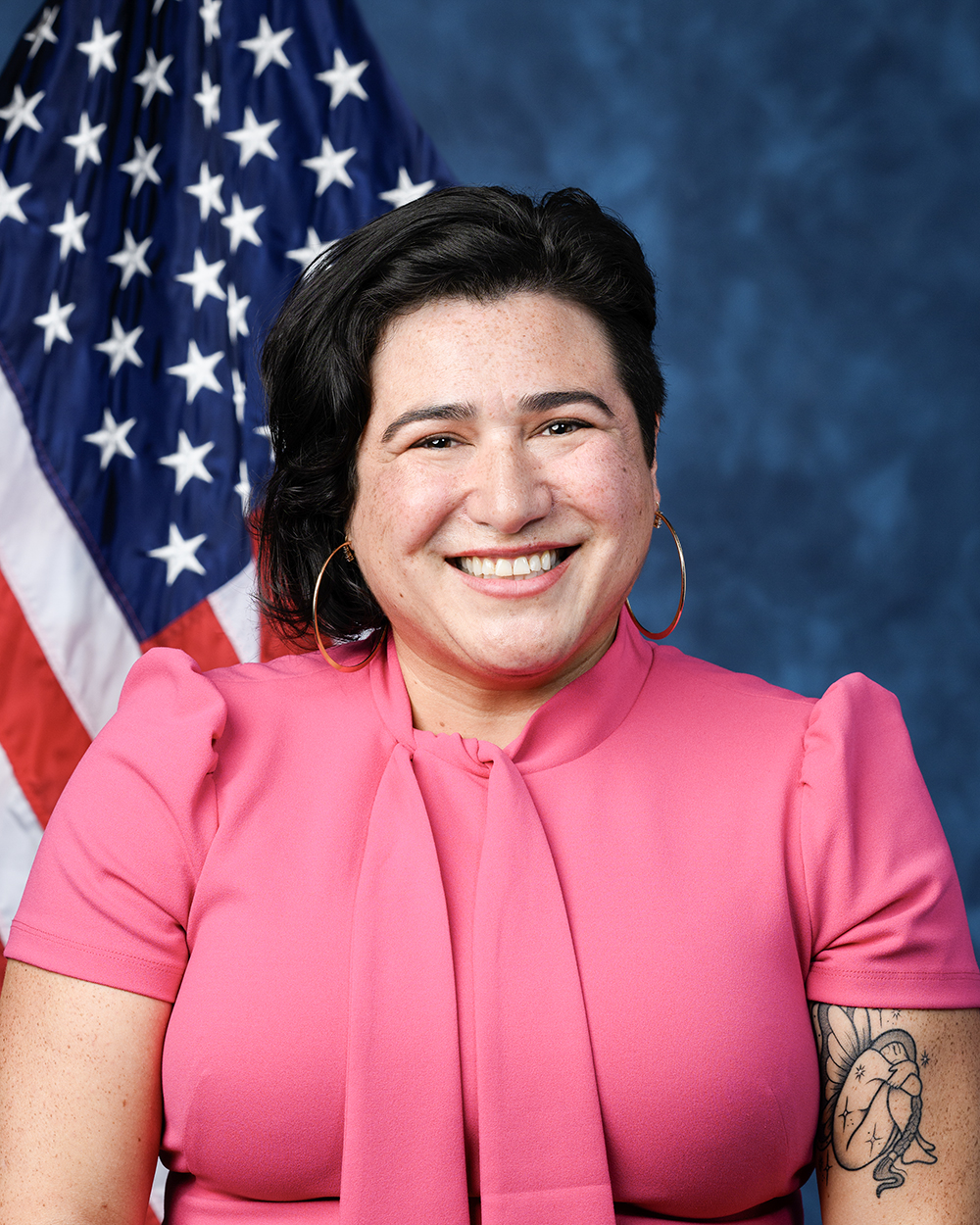
Rep. Emily Randall
Sponsored bills
Maddy summaryThe Silver Shield Act of 2025 establishes a new U.S. government program to monitor how foreign countries use American military equipment and services. It requires the U.S. to obtain written agreements from recipient nations before arms sales, prohibiting the use of U.S. weapons to commit civilian harm or violate international humanitarian law (like genocide or war crimes). The program mandates 180-day investigations into alleged violations and automatically makes violators ineligible for future U.S. arms transfers. This directly affects foreign governments receiving U.S. military aid, adding accountability measures to existing arms export rules.
Maddy summaryThis bill prohibits U.S. Immigration and Customs Enforcement (ICE) from using federal funds to detain or transport U.S. citizens during civil immigration enforcement actions. It directly affects ICE operations by blocking funding for any activity that would hold or move citizens outside the U.S. under immigration laws. The key mechanism is a specific funding restriction in the bill text, stating no funds may be used for detaining or transporting citizens. This applies to all civil immigration enforcement activities defined under the Immigration and Nationality Act. The bill does not create new enforcement powers but limits how existing funds can be spent.
Maddy summaryThis bill establishes federal worker heat protection standards to prevent heat-related illness and injury. It requires employers to provide a workplace free from heat stress hazards, including access to cool water, scheduled rest breaks, shaded cooling areas, and training on heat illness symptoms. The Secretary of Labor must create these standards within one year, incorporating evidence-based practices like engineering controls (e.g., ventilation), administrative measures (e.g., adjusted schedules), and employer-paid personal protective equipment. The law directly affects all employers in high-heat work environments - such as construction, agriculture, and manufacturing - and strengthens whistleblower protections for workers reporting safety violations.
Maddy summaryThis bill would allow states to create their own universal health care systems by applying for waivers that replace federal health programs with state-based coverage. States would need to demonstrate they can cover at least 95% of residents within 5 years, maintain comparable benefits and affordability, and provide comprehensive coverage including reproductive health services. The federal government would redirect funds that would have gone to federal programs like Medicaid and Medicare to the states, with states required to submit regular reports on coverage progress and costs. The bill includes specific protections for Indian health care providers and ensures coverage for vulnerable populations without imposing new costs on them. This framework would apply to states that choose to implement their own universal health care system rather than relying on existing federal programs.
Maddy summaryThis non-binding House resolution (HRES 577) demands that the current administration immediately release all unclassified federal documents related to Jeffrey Epstein, including flight logs, correspondence, and evidence. It specifically requires the release of materials involving Epstein, Ghislaine Maxwell, and known associates, with redactions only to protect minor victims' identities and ongoing prosecutions. The resolution also calls for the Department of Justice and FBI to submit a report on any delays or evidence suppression related to the case. As a resolution, it does not create new law but serves as a formal congressional demand for transparency regarding Epstein-related investigations.
Maddy summaryHR 4365, the Consumer Online Payment Transparency and Integrity Act, requires businesses to clearly disclose automatic renewal terms and cancellation procedures when selling goods or services with free trials or automatic renewal features. It mandates 7-day advance notice before charging consumers for renewals, requires express consent for each renewal (not just initial sign-up), and ensures cancellation is as easy as signing up (via online tools or toll-free numbers). The bill also prohibits "dark patterns" (manipulative design) from tricking consumers into unintended charges and voids automatic renewals if businesses violate these rules, requiring refunds for affected consumers. This directly affects consumers who encounter surprise charges from subscriptions or free trials that convert to paid services without clear consent.
Maddy summaryHR 4382 authorizes the U.S. Mint to produce commemorative coins for the 2028 Los Angeles Olympics/Paralympics and 2034 Salt Lake City Winter Olympics/Paralympics. It specifies gold, silver, and half-dollar coin designs with defined mintage limits (e.g., up to 100,000 $5 gold coins for each event), all bearing inscriptions like "2028" or "2034" and standard coin features. A surcharge ($5-$50 per coin) is added to sales, with all funds directed to the respective Olympic committees to support event hosting and legacy programs like youth sports. The bill ensures no net cost to the government by requiring surcharge revenues to cover all design, production, and marketing expenses before funds are disbursed.
Maddy summaryThe Head Start for Our Future Act amends Section 441(c)(1) of the Higher Education Act of 1965 to replace "literacy training" with "child development and early learning (including Head Start programs and Early Head Start programs carried out under the Head Start Act), literacy training." This technical change formally integrates Head Start and Early Head Start programs into the federal definition of early learning initiatives under the Higher Education Act, while maintaining a separate reference to literacy training. The bill directly affects how federal grants for early childhood education are categorized and administered under the Higher Education Act. It does not alter funding levels, program requirements, or operations but updates administrative terminology to explicitly include Head Start services.
Maddy summaryHRES 564 is a non-binding House resolution calling on the U.S. government to prioritize the return of Ukrainian children abducted by Russia before any peace agreement is finalized. It cites 19,546 confirmed reports of unlawful child deportations to Russia or occupied territories as of April 2025, noting only 1,274 have been returned. The resolution condemns Russia's actions as violations of the Geneva Convention and Genocide Convention, including forced adoptions and Russification policies. It urges that all abducted children be returned prior to concluding peace talks, emphasizing this as a necessary condition for a just resolution to the war. The resolution does not create new law but expresses congressional position on a key issue in U.S. diplomatic efforts.