

Secure and Fair Enforcement Banking Act of 2021 or the SAFE Banking Act of 2021 This bill generally prohibits a federal banking regulator from penalizing a depository institution for providing banking services to a legitimate cannabis-related business. Prohibited penalties include terminating or limiting the deposit insurance or share insurance of a depository institution solely because the institution provides financial services to a legitimate cannabis-related business and prohibiting or otherwise discouraging a depository institution from offering financial services to such a business. Additionally, proceeds from a transaction involving activities of a legitimate cannabis-related business are not considered proceeds from unlawful activity. Proceeds from unlawful activity are subject to anti-money laundering laws. Furthermore, a depository institution is not, under federal law, liable or subject to asset forfeiture for providing a loan or other financial services to a legitimate cannabis-related business. The bill also provides that a federal banking agency may not request or order a depository institution to terminate a customer account unless (1) the agency has a valid reason for doing so, and (2) that reason is not based solely on reputation risk. Valid reasons for terminating an account include threats to national security and involvement in terrorist financing, including state sponsorship of terrorism. Finally, the bill decreases the cap on the surplus funds of the Federal Reserve banks. (Amounts exceeding this cap are deposited in the general fund of the Treasury.)
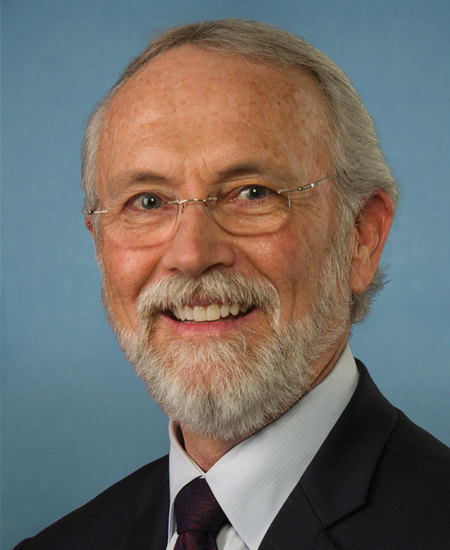
Rep. Dan Newhouse
Sponsored bills
This resolution condemns the actions taken by the governments of China and Hong Kong to put in place national security legislation that violates the freedoms and rights guaranteed to the people of Hong Kong. (Hong Kong is a part of China but, by agreement, has operated a legal and economic system largely separate from China's.)
This resolution expresses the sense of the House of Representatives that (1) clean water is a national priority, and (2) the 2020 final rule titled The Navigable Waters Protection Rule: Definition of "Waters of the United States" should not be withdrawn or vacated.
Accelerate Long-term Investment Growth Now Act or the ALIGN Act This bill makes permanent the expensing of certain new business equipment. Expensing allows the deduction of the full amount of an expense item in the same taxable year.
Paris Transparency and Accountability Act This bill restricts the President's authority to unilaterally establish or revise actions the United States plans to take to meet its obligations under the Paris Agreement (a climate change treaty adopted in 2015) and increases congressional oversight of those actions. The bill also prohibits any legal cause of action in U.S. courts pursuant to the Paris Agreement. Specifically, the President must report to Congress before proposing new or revised actions under the agreement. The report must describe the proposed actions, including their impact on global emissions, and outline a detailed plan to address economic effects and related considerations of the actions. If a proposed action results in increased energy or manufacturing costs, the report must include specific policy measures (and timelines for implementing the measures) to prevent (1) job displacement, (2) reduced global competitiveness of U.S. goods, and (3) leaked emissions that may occur as a result of the proposed action. After the President submits a report, the bill provides Congress with a 60-day period to review it. During the review period, Congress may block the actions proposed in the report by enacting a joint resolution of disapproval. The bill also outlines procedures for the introduction and consideration of this type of joint resolution.
Comprehensive Care for Alzheimer's Act This bill allows the Center for Medicare and Medicaid Innovation (CMMI) to test a Dementia Care Management Model that provides comprehensive care to Medicare beneficiaries with Alzheimer's disease or a related dementia. Under the model, participating health care providers receive payment under Medicare for comprehensive care management services that are provided to individuals with diagnosed dementia, excluding Medicare Advantage enrollees, hospice care recipients, and nursing home residents. Required services include medication management, care coordination, and health, financial, and environmental monitoring, as well as trainings and other support services for unpaid caregivers. Providers must furnish services through interdisciplinary teams and must ensure access to a team member or primary care provider 24-7. The CMMI must set payments and determine quality measures for the model in accordance with specified requirements. The bill also allows the CMMI to design a similar model under Medicaid.
Wage Equity Act of 2021 This bill addresses workplace wage discrimination based on sex. Specifically, it limits the acceptable reasons for wage disparities based on sex to legitimate business-related factors unrelated to sex. Italso protects from liability for such discrimination those employers who conduct a job and wage analysis audit to identify wage disparities and take reasonable steps to remedy any such disparities. Further, the bill prohibits employers from relying on, or requesting, the wage history of a prospective employee for hiring and wage determination purposes unless it is voluntarily provided by the prospective employee. Employers generally may not prohibit employees from inquiring about, or discussing, wage information concerning another employee or from requesting information from an employer about wage differentials. Finally, the bill permits the Department of Labor to establish a grant program for negotiation skills education for women and girls. It also requires the Government Accountability Office to study and report on the causes and effects of sex-based wage disparities.
Veterinary Medicine Loan Repayment Program Enhancement Act This bill modifies the requirements for calculating taxable income to exclude from gross income payments under the federal veterinary medicine loan repayment program or any state loan repayment or forgiveness program that is intended to provide for increased access to veterinary services in such state.
Veterans 2nd Amendment Protection Act This bill prohibits the Department of Veterans Affairs (VA) from transmitting certain information to the National Instant Criminal Background Check System (NICS) utilized by licensed importers or dealers of firearms. Specifically, the bill prohibits the VA from transmitting personally identifying information of a veteran or a beneficiary to the NICS solely on the basis that such veteran or beneficiary has an appointed fiduciary to manage their benefits, unless there is an order or finding of a judicial authority that such veteran or beneficiary is a danger to themselves or others.
This resolution condemns Iranian state-sponsored terrorist attacks against U.S. citizens and officials and Iranian dissidents and expresses support for the people of Iran who are engaged in legitimate and peaceful protests against the Iranian regime.