

Science-Based Grizzly Bear Management Act of 2021 This bill directs the Department of the Interior to reissue the final rule relating to removing the Greater Yellowstone Ecosystem population of grizzly bears from the Federal List of Endangered and Threatened Wildlife, published on June 30, 2017 (82 Fed. Reg. 30502), without regard to any other provision of statute or regulation that applies to issuance of such rule. Such reissuance shall not be subject to judicial review. Interior shall issue a final rule removing the Northern Continental Divide Ecosystem population of grizzly bears from the Federal List of Endangered and Threatened Wildlife without regard to any other provision of statute or regulation that applies to the issuance of such rule. Such issuance shall also not be subject to judicial review.
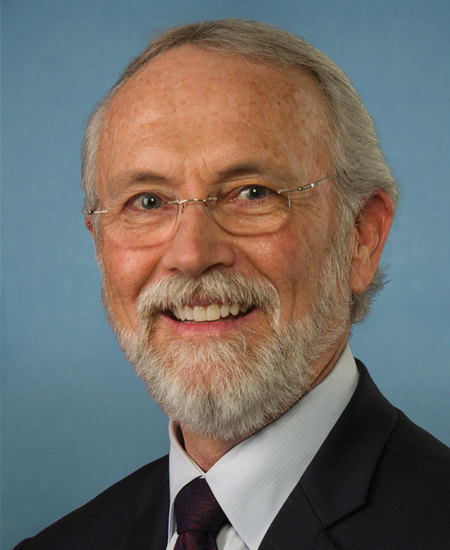
Rep. Dan Newhouse
Sponsored bills
Accelerating Access to Critical Therapies for ALS Act This bill establishes grant programs to address neurodegenerative diseases, such as amyotrophic lateral sclerosis (also known as ALS or Lou Gehrig's disease), and contains other related provisions. The Department of Health and Human Services (HHS) shall award grants to eligible entities for scientific research utilizing data from expanded access to investigational ALS treatments for individuals who are not otherwise eligible for clinical trials. The Food and Drug Administration (FDA) shall award grants to public and private entities to cover the costs of research and development of drugs that diagnose or treat ALS and other rare neurodegenerative diseases. HHS shall also establish the Public-Private Partnership for Neurodegenerative Diseases between the National Institutes of Health, the FDA, and at least one eligible entity (generally, an institution of higher education or a nonprofit organization). The partnership shall support the development and regulatory review of drugs that address ALS and other rare neurodegenerative diseases. The FDA shall publish on its website a five-year action plan for fostering the development of drugs that improve or extend the lives of people living with rare neurodegenerative diseases. The Government Accountability Office must report to Congress about the grants provided under this bill, including an analysis of the impact of such grants on research and development of treatments for ALS.
This resolution (1) supports the designation of National Blueberry Month; and (2) recognizes the contributions of U.S. growers and their families, and that purchasing blueberries grown in the United States supports farmers, jobs, and the economy.
Make Energy Affordable Act This bill requires the President to report on the rising energy prices. In addition, the President must provide updates on residential energy price trends, impacts of energy prices on low-income households, and actions by federal agencies to mitigate energy price increases.
Payment In Lieu of Lost Revenues Act or the PILLR Act This bill requires the Department of the Interior to compensate, using federal mineral royalties, states for lost revenue derived from oil and gas production that is caused by a moratorium or similar action to prevent oil and gas leasing on federal land.
This bill posthumously provides for the award of a Congressional Gold Medal in commemoration of the 13 service members who died on August 26, 2021, while stationed at Hamid Karzai International Airport in Afghanistan.
Maddy summaryHRES 855 is a symbolic resolution passed by the U.S. House of Representatives to support designating the first week of December 2022 as "National United States Miners Week." It does not create new laws or policies but formally recognizes miners' contributions to the economy and supply chains. The resolution highlights miners' role in providing critical minerals and coal, supporting over 500,000 jobs, and securing domestic resources for everyday products. It directly affects miners and their communities by offering a formal, non-binding acknowledgment of their work. This is a procedural resolution with no concrete policy changes or funding implications.
Continuing Robust and Uninhibited Drilling and Exporting Act or the CRUDE Act This bill limits the President's authority to restrict the export of crude oil from the United States. Currently, the President may restrict the export of oil for up to a year if the President declares a national emergency; the restrictions apply to countries, persons, or organizations for reasons of national security; or the Department of Commerce finds and reports to the President that the export of crude oil has caused sustained material oil supply shortages or sustained oil prices significantly above world market levels and those shortages or price increases have caused or are likely to cause sustained material adverse employment effects. However, this bill only allows the President to make such restrictions if the restrictions apply to countries, persons, or organizations for reasons of national security; or the Department of Defense, the Department of Energy, and Commerce jointly make those findings and report them to the President and Congress.
Food Donation Improvement Act of 2021 This bill expands liability protections for the donation of food and grocery products. Specifically, the bill expands the liability protections to include donations of an apparently fit grocery product or apparently wholesome food for which the recipient is charged a good Samaritan reduced price that is no greater than the cost of handling, administering, and distributing the food or product; or that is donated directly to a needy individual by a retail grocer, wholesaler, agricultural producer, restaurant, caterer, school food authority, or institution of higher education. The Department of Agriculture must issue regulations that clarify the quality and labeling standards that food products donated under the Bill Emerson Good Samaritan Food Donation Act must meet to be eligible for liability protection.
Strategic Production Response Act This bill limits the drawdown of petroleum in the Strategic Petroleum Reserve until the Department of Energy develops a plan to increase the percentage of federal lands leased for oil and gas production.