Maddy summaryHR 53 (FIND Act) requires federal contractors to certify they do not refuse to work with firearm manufacturers, dealers, ammunition sellers, or related safety device companies based on bias. It prohibits main contractors from awarding subcontracts exceeding 10% of a contract’s value to entities that fail to make this certification, and bans efforts to circumvent the rule through complex subcontract tiers. The law applies to all federal procurement contracts, directly affecting businesses bidding on government work. Violations risk contract termination and suspension from future government contracts.
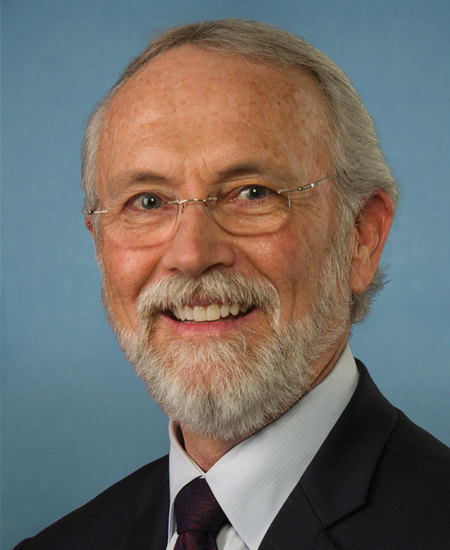
Rep. Dan Newhouse
Sponsored bills
Maddy summaryThis bill requires large district attorney offices (serving jurisdictions of 380,000+ people) that receive federal Byrne grant funds to submit annual reports to the Attorney General. The reports must detail prosecution decisions for 10 specific violent crimes and gun offenses (including murder, rape, robbery, aggravated assault, burglary, and firearm violations), such as cases declined, plea agreements, and defendant histories. The Attorney General must establish uniform reporting standards and share all collected data publicly with Congress and on a government website. This policy change directly affects major prosecutors' offices receiving federal crime-fighting funds, aiming to increase transparency in how they handle serious offenses.
Maddy summaryHRES 641 is a ceremonial resolution recognizing the 75th anniversary of the National Association of Conservation Districts (NACD). It celebrates NACD's history as a locally led conservation organization with 3,000 districts across all 50 states and territories, which works with landowners and governments to manage natural resources. The resolution describes NACD's mission of promoting voluntary, incentive-driven conservation programs at the local level. As a non-binding resolution, it does not create new laws or funding, but formally honors NACD's role in conservation efforts.
Lodging Options Developed for Government Employees Act or the LODGE Act This bill expands the current authority of the Department of the Interior to enter into agreements with housing entities to provide rental housing for employees. The bill allows Interior to enter agreements with other federal agencies, state or local governments, tribal governments, or other public or private organizations for purposes of facilitating housing accommodation projects for rent to field employees and members of the public on public lands, including National Park System units; off public lands in the vicinity of system units; or on a combination of such lands. Interior may allow field employees and members of the public to occupy and lease project quarters. Field employees and members of the public shall be prohibited from subleasing housing units or quarters developed or leased in accordance with a housing partnership agreement under this bill, including all forms of short-term rentals. To the maximum extent practicable, priority for occupancy in project quarters shall be given to field employees. Interior may collect, or authorize entities who have entered into partnership housing agreements under this bill to collect, rents directly from field employees and members of the public occupying housing units or quarters. The bill modifies the lease-to-build program to allow Interior to lease federal land and interests in land to qualified persons for the construction of field employee quarters for any period not to exceed 60 years (under current law not to exceed 50 years).

This bill authorizes the Confederated Tribes of the Chehalis Reservation to lease their land held in trust for a term of up to 99 years. The tribe is located in western Washington State.
Cardiovascular Advances in Research and Opportunities Legacy Act This act addresses research, education, and awareness concerning valvular heart disease and its treatment. This disease is caused by damage to or disease affecting any valve that controls blood flow in the heart. The National Institutes of Health may conduct or support research on the disease in consultation with the National Heart, Lung, and Blood Institute (NHLBI). The NHLBI must also conduct a workshop on mitral valve prolapse, which occurs when the valve between the chambers of the left side of the heart seals improperly. The Department of Health and Human Services (HHS) must develop best practices to treat valvular heart disease. HHS may also carry out other projects to increase education and awareness of the disease.
This bill extends until December 31, 2024, the temporary scheduling order issued by the Drug Enforcement Administration to place fentanyl-related substances in schedule I of the Controlled Substances Act. The temporary order expires on December 31, 2022.
Pacific Northwest Pumped Storage Hydropower Development Act of 2021 This bill provides the Department of the Interior exclusive authority to develop hydropower facilities in certain instances and contains other related provisions. Specifically, Interior shall have exclusive authority to develop small conduit hydropower using Bureau of Reclamation facilities and pumped storage hydropower that exclusively use bureau reservoirs. Currently, the Federal Energy Regulatory Commission (FERC) also has regulatory authority over some of the bureau infrastructure involved in such projects, so some projects require approval from both Interior and FERC. The bill also imposes various requirements related to certain proposed projects involving specified tribes in Washington State. Before Interior may issue a lease to use power generated from such a project, the parties involved must agree to a study plan that lays out certain information, time lines, and procedures for addressing issues. Such a lease must also meet certain requirements, such as conditions to ensure that the project will not interfere with the tribes' hunting and fishing rights.
Sunshine Protection Act of 2021 This bill makes daylight savings time the new, permanent standard time. States with areas exempt from daylight savings time may choose the standard time for those areas.
Federal Land Freedom Act This bill sets forth a process that allows a state (including the District of Columbia) to seek to transfer the responsibility of energy development on federal land within its boundaries from the federal government to the state. Federal land does not include land that, as of May 31, 2013, is (1) held for the benefit of an Indian tribe, (2) in the National Park System, (3) in the National Wildlife Refuge System, or (4) in a congressionally designated wilderness area. To qualify for such a transfer of responsibility, a state must have a program that regulates the exploration and development of oil, natural gas, and other forms of energy on its land. The federal responsibility transfers to the state once the state submits to the Department of the Interior, the U.S. Department of Agriculture, and the Department of Energy a declaration that it has such a program and that it seeks to transfer the responsibility. Any action taken by a state to lease, permit, or regulate the exploration and development of energy on federal land in lieu of the federal government is not subject to the Administrative Procedure Act, the National Historic Preservation Act, the Endangered Species Act of 1973, or the National Environmental Policy Act of 1969.