

Maddy summaryHR 795 amends the 1968 Crime Control Act to require federal funding for training first responders on using containment devices that prevent secondary exposure to fentanyl and other dangerous substances. It directs the Department of Justice to provide both training resources and purchase these devices for emergency personnel. The law specifically targets risks faced when handling drugs like fentanyl during arrests or medical emergencies. First responders, including police and EMTs, would directly benefit from this provision. The bill mandates these measures through existing federal programs without creating new standalone requirements.
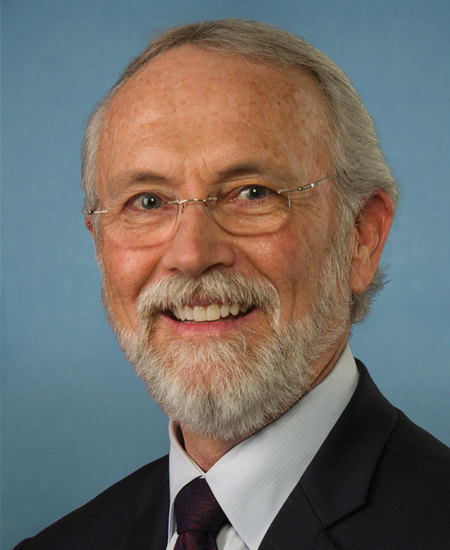
Rep. Dan Newhouse
Sponsored bills
Repealing Illegal Freedom and Liberty Excises Act or the RIFLE Act This bill repeals the excise tax on the transfer of firearms. The bill shall not be construed as placing any regulated firearms under the jurisdiction of the U.S. Consumer Product Safety Commission.
Prohibition of Agricultural Land for the People's Republic of China Act This bill requires the President to prohibit nonresident aliens, foreign businesses, and agents associated with China's government from (1) purchasing agricultural (including ranching) real estate located in the United States, or (2) participating in Department of Agriculture programs that are unrelated to food and safety regulatory requirements.
Maddy summaryHR 683 (PASS Act of 2023) expands the Committee on Foreign Investment in the United States (CFIUS) review process to cover foreign investments in U.S. agriculture businesses, agricultural biotechnology, and private farmland. It mandates that the President block transactions involving foreign entities from China, Russia, Iran, or North Korea that would give them control over U.S. agricultural operations or land used for farming. The bill allows limited presidential waivers for national security reasons but requires a 30-day review period before any waiver. Additionally, it requires the Secretary of Agriculture to submit biannual reports to Congress on risks posed by foreign ownership in U.S. agriculture.
Disaster Reforestation Act This bill sets forth a special rule for the tax deduction for casualty losses of uncut timber (including pre-merchantable timber). It provides that in losses of any uncut timber from fire, storm, insects, invasive species, drought, or other casualty, or from theft, the basis for determining the amount of the deduction for such loss shall not be less than the excess of the value of such timber determined immediately before such loss was sustained, over the salvage value of such timber. To be eligible for the casualty loss deduction, the uncut timber subject to the loss must be reforested not later than the close of the five-year period beginning on the date of the loss.
Maddy summaryHR 648, the Agriculture Export Promotion Act of 2023, increases federal funding for key USDA export promotion programs to boost U.S. agricultural sales abroad. It raises annual funding for the Market Access Program from $200 million to $400 million and for the Foreign Market Development Cooperator Program from $34.5 million to $69 million, effective 2024-2029. These changes directly benefit U.S. farmers and agricultural businesses exporting commodities like soybeans, beef, and dairy by expanding their access to international markets. The bill aims to counter competitive disadvantages as foreign competitors grow their export programs faster than U.S. funding has kept pace. This represents a significant funding adjustment to address years of stagnant investment in these programs.
This resolution expresses support for the Supreme Court's holding in Dobbs v. Jackson Women's Health Organization (that there is no constitutional right to abortion). The resolution also applauds the courage of the Justices for standing by their allegiance to the Constitution and the legitimacy of the Supreme Court, and it expresses a commitment to supporting policies that continue to protect all life.
Maddy summaryThe HEAL Act (HR 603) requires the U.S. Holocaust Memorial Museum Director to study how public elementary and secondary schools teach about the Holocaust and related antisemitism. The study will examine curriculum requirements, teaching methods (like project-based learning), instructional materials, and assessment approaches across states and school districts. It specifically analyzes whether Holocaust education is mandatory, optional, or integrated across subjects, and how schools address antisemitism and genocide prevention. The resulting report, due within 180 days of the study or three years after enactment, will inform Congress but does not change current school policies. This is a data-gathering measure, not a policy mandate.
Protecting Life and Taxpayers Act of 2023 This bill requires federally funded entities to certify that they will not, subject to certain exceptions, perform abortions or provide funding to other entities that perform abortions. The bill provides exceptions for abortions (1) in cases of rape or incest; or (2) when the life of the woman is in danger due to a physical disorder, injury, or illness.
Maddy summaryThis bill prohibits federal funding to Planned Parenthood Federation of America and its affiliates for one year unless they certify they won't perform or fund abortions (with exceptions for rape/incest or life-threatening conditions). It redirects $235 million in existing funding to community health centers for women's health services like contraception, cancer screenings, and prenatal care. The bill explicitly states that redirected funds will continue to support all women's health services previously provided by Planned Parenthood. It also requires repayment of funds if Planned Parenthood violates the certification, and clarifies that overall federal funding for women's health services remains unchanged.