

Maddy summaryThe Military Spouse Hiring Act expands the Work Opportunity Tax Credit to include military spouses. Employers who hire a spouse of an active-duty military member - certified by a local agency as meeting eligibility requirements on the hiring date - can claim this tax credit. The credit reduces the employer's federal tax liability for hiring such individuals. This provision applies to new hires after the bill's enactment date.
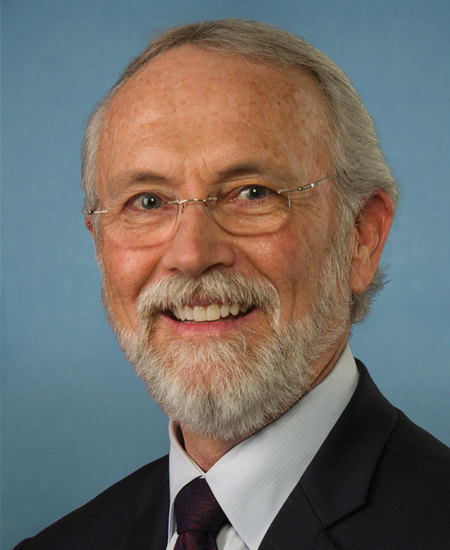
Rep. Dan Newhouse
Sponsored bills
Maddy summaryThe Permitting for Mining Needs Act of 2023 streamlines federal permitting for mining projects on public lands by establishing specific time limits for environmental reviews (12 months for assessments, 24 months for impact statements) and allowing lead agencies to adopt applicant-prepared environmental documents that meet National Environmental Policy Act requirements. It enables mineral exploration with limited surface disturbance (up to 5 acres) to proceed without full environmental review, and creates mechanisms for coordination between agencies and project applicants through memorandums of agreement. The bill applies to all minerals, not just "critical" minerals, and ensures uranium is treated as a critical mineral for certain purposes. The legislation aims to expedite domestic mineral development while maintaining environmental review standards.
Maddy summaryHR 1202, the REDI Act, amends the Higher Education Act to allow medical and dental residents to temporarily pause federal student loan payments without accruing interest during their internship or residency programs. This directly affects borrowers with federal student loans who are enrolled in qualifying medical or dental training programs. The key provision adds a new rule (paragraph 6) ensuring these borrowers qualify for a deferment period where they don't pay principal and interest accrues at 0%. The change modifies existing loan rules to explicitly include medical/dental residents under the "in-school" deferment category. This policy change provides immediate financial relief during a critical training phase for healthcare professionals.
Maddy summaryThis bill makes it a federal crime to defraud veterans of their benefits, including benefits for dependents or survivors. It targets individuals who create schemes to steal or improperly obtain veterans' benefits, with penalties of up to five years in prison or fines. The law directly affects veterans, their families, and anyone seeking to exploit the benefits system. Key provisions define "veterans' benefits" broadly under federal law and establish criminal penalties for fraud attempts.
This bill authorizes the Department of Agriculture to waive the matching funds requirement for grants under the specialty crop research initiative. Currently, entities that receive grants under the initiative must provide nonfederal matching funds (including funds from an agricultural promotion, research, and information program) equal to not less than the amount of the grant.
Maddy summaryHR 567, the SALVAGE Act, streamlines the removal of dead trees after wildfires on federal lands by skipping standard environmental reviews for smaller operations (max 10,000 acres). It requires land managers to follow stream buffer rules, create reforestation plans, and complete 75% reforestation within 5 years of a disaster. The bill also shortens public input to 60 days total (30 days for comments, 15 for objections, 15 for agency response) and prohibits court delays on approved projects. It does not apply to wilderness areas, roadless zones, or lands where timber harvesting is already banned. This directly affects U.S. Forest Service and Bureau of Land Management operations on National Forest System lands and public lands impacted by wildfires.
Promoting Local Management of the Lesser Prairie Chicken Act This bill prohibits any population of the lesser prairie-chicken ( Tympanuchus pallidicinctus ) in Kansas, Oklahoma, Texas, Colorado, or New Mexico from being listed as endangered or threatened under the Endangered Species Act of 1973 (ESA). The lesser prairie-chicken is a type of grouse. Currently, two distinct population segments (DPS) of the lesser prairie-chicken are listed under the ESA. The Southern DPS of the lesser prairie-chicken is listed as endangered and the Northern DPS is listed as threatened. The bill removes both populations from the list. In addition, the bill bans Interior from listing any population of the lesser prairie-chicken as endangered or threatened in the future.
Maddy summaryHJRES 33 is a symbolic congressional resolution acknowledging Vietnam War veterans' service and formally apologizing for their mistreatment upon returning home. It recognizes the sacrifice of over 58,000 service members killed and 300,000 wounded during the war, including veterans exposed to harmful herbicides like Agent Orange. The resolution urges the President to acknowledge this mistreatment as part of the Vietnam War Commemoration and issues a formal apology on behalf of the American people. It also calls for increased educational efforts in schools to highlight veterans' courage and the lack of support they faced after the war. (Note: This is a non-binding resolution, not a law, so it has no direct legal or financial impact.)
Maddy summaryHR 1088, the Shirley Chisholm Congressional Gold Medal Act, authorizes a posthumous Congressional Gold Medal to honor Congresswoman Shirley Chisholm, the first African-American woman elected to Congress (1968) and the first Black candidate for a major party's presidential nomination (1972). The bill directs the Treasury Secretary to design and strike a gold medal featuring Chisholm's image, which will be presented by Congress and then permanently displayed at the Smithsonian Institution. Duplicate bronze medals may be sold to the public to cover production costs, with proceeds deposited into the U.S. Mint fund. This bill commemorates Chisholm's legacy and achievements without creating new laws or affecting any current policies.
Maddy summaryThis bill authorizes a single Congressional Gold Medal to honor all U.S. Army Dustoff crews who served during the Vietnam War (1962-1973). It recognizes their critical role in evacuating nearly 900,000 wounded personnel, including U.S., South Vietnamese, and allied forces, under extreme combat conditions. The medal, designed with input from the Secretary of Defense, will be presented to the U.S. Army Medical Department Museum for permanent display. Duplicate bronze medals may be sold to cover costs, but the primary action is the commemorative recognition of these crews' service.