

Maddy summaryHR 4860, the PROTECT the Second Amendment Act, prevents landlords in specific federally assisted housing from banning or restricting residents' lawful possession of firearms in their private units or during travel between units and common areas. It directly affects tenants in housing funded by HUD or USDA programs, including public housing, Section 8 vouchers, and housing for veterans or people with disabilities. The bill prohibits landlords from imposing firearm bans or additional conditions on residents who lawfully carry firearms within their dwelling units or while moving through common areas to reach their units. This changes current policies in these housing programs by explicitly allowing firearm possession where state law permits.
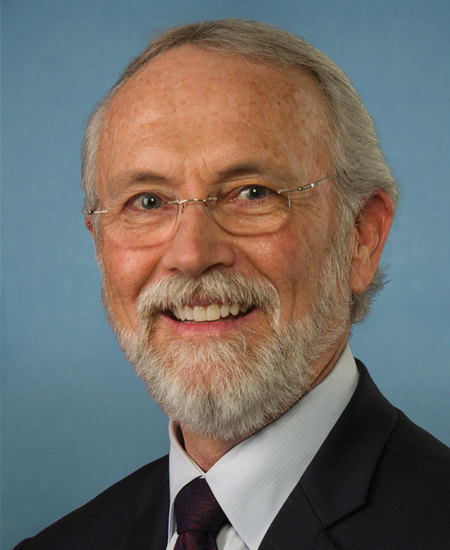
Rep. Dan Newhouse
Sponsored bills
Maddy summaryHR 4795, the Fentanyl Kills Act, reclassifies illegal fentanyl trafficking as attempted murder under federal law. If convicted of trafficking fentanyl (including manufacturing, distributing, or selling related chemicals), individuals would face the same penalties as those for attempted murder. The bill broadly defines trafficking to cover activities like producing fentanyl precursors intended for U.S. distribution. This policy change directly affects drug traffickers by imposing stricter criminal penalties for fentanyl-related offenses.
Maddy summaryHR 592 requires the Department of Veterans Affairs (VA) to obtain specific certifications before expanding or continuing its electronic health record system at VA facilities. For existing facilities, the VA must certify the system achieves 99.9% monthly uptime for four consecutive months and completes all pre-enactment system improvements. For new facility implementations, the VA must certify the system build is accurate, staff/infrastructure are ready, and implementation won’t harm patient safety, wait times, or care quality. This bill directly affects VA hospitals and the Veterans Health Administration by setting concrete technical and operational requirements before system changes can proceed.
Maddy summaryHR 4721, the Main Street Tax Certainty Act, makes a permanent the 20% tax deduction for eligible small business owners under Section 199A of the tax code. This provision directly affects pass-through business owners (like S-corps, partnerships, and sole proprietorships) who qualify for the deduction. The bill achieves this by removing the temporary expiration language (subsection (i)) from the existing tax code provision. The key change is ending the need for annual congressional extensions of this deduction, providing long-term tax certainty for small businesses.
Maddy summaryThis bill, the Veteran Care Improvement Act of 2023, establishes new standards for when veterans can receive care from private providers instead of the Department of Veterans Affairs (VA). It requires the VA to allow veterans to seek community care if they cannot get an in-person appointment within 30 days for primary care or 60 days for specialty care at a VA facility within a 30 or 60-minute drive, respectively. The legislation also mandates that the VA notify veterans of their eligibility for community care within two business days, provide information about telehealth options, and explain reasons for denied care requests along with appeal instructions. Additional provisions include requiring the VA to conduct outreach to inform veterans about community care options, mandate the use of value-based reimbursement models for community care, and establish a pilot program to improve care administration through scheduling improvements and provider incentives. The bill also extends the deadline for health care entities to submit claims under the prompt payment standard from 180 days to one year, and requires the VA Inspector General to assess VA medical center performance in implementing community care programs within three years of enactment.
Maddy summaryThis bill, HR 1282 (Major Richard Star Act), expands benefits for certain military retirees by allowing them to receive both veterans' disability compensation and military retirement pay simultaneously. It specifically affects combat-related disabled retirees under Chapter 61 of the military retirement system who have fewer than 20 years of service. The key change removes the automatic reduction of military retirement pay when these retirees also receive disability compensation, as amended in Section 1413a(b)(3) of Title 10. Technical updates to the law’s structure and effective date (starting after enactment) complete the provisions.
Closing Loopholes for the Overseas Use and Development of Artificial Intelligence Act or the CLOUD AI Act This bill prohibits certain transactions between a U.S. person (i.e., natural person or entity) and an entity located in China or Macau when the transactions support remote access to certain integrated circuits. Specifically, the bill prohibits a U.S. person (and any foreign branch of a U.S. person) from providing support to an entity in China or Macau for the remote or cloud use of integrated circuits covered by export control classification numbers 3A090 or 4A090. (The classification numbers cover certain high-performance integrated circuits, computers, electronic assemblies, and related components.) The bill directs the Department of Commerce to establish the ban no later than 180 days after the bill is enacted and to issue the regulations necessary to implement the bill.
Maddy summaryThis bill requires the Committee on Foreign Investment in the United States (CFIUS) to review real estate transactions involving foreign adversaries (including China, Russia, Iran, and North Korea) near sensitive sites like military installations, ports, or critical infrastructure. It defines "elevated risk real estate transactions" as purchases or leases by foreign adversaries near such sites, creating a presumption that these deals pose unresolvable national security risks unless CFIUS explicitly approves them with evidence. The bill also adds food security considerations to CFIUS reviews and mandates declarations for these high-risk transactions. These changes aim to prevent foreign adversaries from gaining access to strategic U.S. land or infrastructure through real estate deals.
Maddy summaryHR 4604, the Don Young American Grown Act, requires that cut flowers and cut greens displayed in public areas of Executive Office, State Department, and Defense Department buildings must be grown in the United States. This affects federal agencies by mandating U.S.-sourced decorative floral products for official displays, excluding personal use by employees. The bill defines "produced in the United States" to include all states, D.C., territories, and federally recognized tribal lands. It takes effect one year after enactment, with no impact on personal displays by federal staff.
Maddy summaryThis bill restricts eligibility for federal electric vehicle tax credits by barring manufacturers majority-owned by foreign adversaries (as defined in federal regulations) or their related entities from claiming these credits. It amends the Internal Revenue Code to require EV manufacturers to certify they meet this ownership standard to qualify for Section 30D tax credits. The provision applies to vehicles placed in service after the bill's enactment date. This directly affects EV manufacturers with significant ties to designated foreign governments, altering which companies can access these tax incentives.