

Maddy summaryThis bill, HR 1097 (Everett Alvarez, Jr. Congressional Gold Medal Act of 2023), authorizes the award of a Congressional Gold Medal to Everett Alvarez, Jr., in recognition of his service as a U.S. Navy pilot and Vietnam War prisoner of war. It directly honors Alvarez, who was the first U.S. pilot shot down in the Vietnam War, spent over 8.5 years in captivity, and later served in the Peace Corps and Veterans Administration. The bill’s key mechanism is directing the U.S. Mint to strike a gold medal bearing his name and image, with bronze duplicates available for sale to cover costs. It does not create new policies or affect any group beyond the honoree.
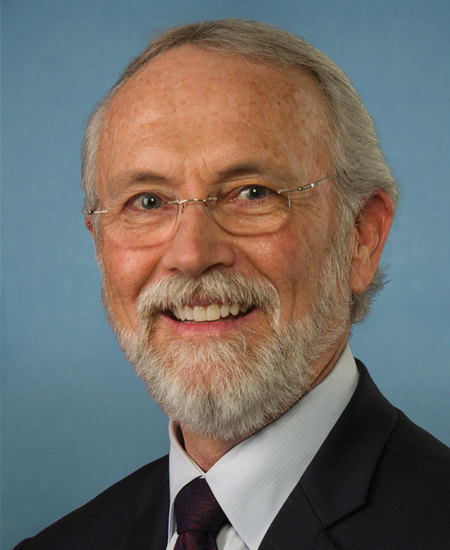
Rep. Dan Newhouse
Sponsored bills
Maddy summaryHR 663, the Native American Child Protection Act, amends the Indian Child Protection and Family Violence Prevention Act to strengthen child protection systems for Native American children. It expands definitions of child abuse to include serious physical injuries (like fractures or burns) and sexual exploitation, and requires culturally appropriate services in grant programs. The bill creates a National Indian Child Resource and Family Services Center, mandates reports on grant usage, and allows tribes, urban Indian organizations, and intertribal consortia to partner in prevention and treatment. These changes directly affect tribal governments, child welfare agencies, and families in tribal communities by improving response systems for child abuse and neglect.
Maddy summaryThis bill approves new agreements that amend the Compact of Free Association between the United States and the Federated States of Micronesia, the Republic of the Marshall Islands, and the Republic of Palau. It incorporates related agreements including fiscal procedures and trust fund agreements that govern how U.S. funding is managed and distributed to these nations. The bill provides funding for 2024-2043 to support programs like healthcare, education, veterans' services, and economic development in the Freely Associated States. It establishes reporting requirements and oversight mechanisms for federal agencies implementing these agreements. The bill directly affects U.S. federal agencies, the Freely Associated States, and U.S. funding mechanisms for these Pacific Island nations.
Maddy summaryHR 10512 extends the RAISE Family Caregivers Act, which supports family caregivers of seniors and people with disabilities, by delaying its expiration date from the original termination point to September 30, 2029. The bill modifies existing provisions to require the Secretary to make caregiver program information publicly available and updates the governing law for the advisory council. It does not create new benefits or change eligibility but ensures the current framework remains operational for six more years. This extension directly affects the ongoing work of the RAISE Council and federal agencies managing caregiver support programs. The bill focuses solely on maintaining existing structures without altering program scope or funding.
Maddy summaryHR 8784, the FREE Act, requires federal agencies to replace slow, discretionary permitting systems with a streamlined "permit by rule" process. Applicants would certify compliance with written requirements, and permits would automatically be approved within 30 days unless the agency proves non-compliance. Agencies must first report on all current permits and identify which could switch to this system, with a deadline of 240 days after enactment. This directly affects federal agencies managing permits and applicants seeking permits, aiming to reduce delays while maintaining enforcement for violations through audits and appeals.
Maddy summaryThis bill (HR 7516) updates the Indian Health Care Improvement Act to clarify and improve reimbursement for Native American patients who pay out-of-pocket for authorized "purchased/referred care" services through the Indian Health Service (IHS). It requires the IHS to establish procedures within 120 days to reimburse patients within 30 days of receiving documentation (electronically or in-person) for such care. The bill replaces outdated terms like "contract health care" with "purchased/referred care" throughout the law and clarifies that the IHS is not liable to debt collectors for these payments. It directly affects Native American patients who receive IHS-authorized care outside of regular IHS facilities.
Maddy summaryThe America's Wildlife Habitat Conservation Act creates new funding mechanisms to support wildlife habitat conservation across the United States. It establishes a $300 million annual subaccount for states, territories, and the District of Columbia to restore habitat for species listed as threatened or endangered under federal or state law, and to prevent species from needing such listings, with at least 15% of funds dedicated to endangered species recovery. The bill also creates a $20 million annual account specifically for tribal wildlife conservation programs. Funds must be used for habitat restoration, species conservation, invasive species management, and must be tracked through annual reporting requirements to demonstrate effectiveness.
Maddy summaryThis bill extends funding for the National Landslide Preparedness Act through 2028, replacing the previous 2021-2024 authorization period. It directly affects existing federal landslide preparedness programs by continuing their current funding structure without new requirements. The key change is simply updating the program's authorization period in two specific sections of the law (sections 3(h) and 5(e)). The bill does not create new policies or alter how landslide preparedness activities are conducted.
Maddy summaryThis bill requires federal agencies to assess whether energy policies and rules disproportionately affect at-risk communities, including low-income, minority, rural, elderly, and Native American communities. Agencies must conduct studies before actions like leasing federal land or issuing new energy rules, and include an "energy poverty statement" certifying the policy won't cause energy poverty. Within one year, the Comptroller General and OMB must jointly report to Congress on how current policies impact these communities and recommend solutions to reduce energy poverty. The law aims to prevent energy poverty by mandating concrete evaluations of policy impacts on vulnerable groups.
Maddy summaryHR 3396, the Fire Department Repayment Act of 2023, requires the Secretaries of Agriculture, Interior, Homeland Security, and Defense to establish standard procedures for federal fire suppression cost share agreements within one year. It mandates reviewing existing agreements to align them with local cooperative fire protection agreements and conducting second-level reviews after wildfires, involving state and local fire organizations. The bill directly affects fire departments and agencies participating in these cost-sharing arrangements under the Reciprocal Fire Protection Act. Key changes include standardized procedures for agreement management and post-wildfire reviews to ensure cost-sharing compliance.