

Peace Corps Reauthorization Act of 2022 This bill reauthorizes through FY2024 and modifies operations of the Peace Corps. Changes include increasing the readjustment allowance paid to volunteers when their service terminates and providing statutory authority for an executive order that grants returned volunteers noncompetitive eligibility for federal civil-service positions. Additionally, the bill entitles returned volunteers to sixty days of health care benefits. The Peace Corps must also provide volunteers with information about enrolling in U.S. health plans before service termination and mental health care during and after service. The bill also includes provisions to address involuntary termination of Peace Corps service in emergencies, including by expediting re-enrollment of involuntarily terminated volunteers. The Peace Corps must also adequately insure volunteers' safety and must coordinate with the Department of State to periodically update agreements concerning the security of Peace Corps volunteers and staff abroad. The bill also authorizes Peace Corps to recruit domestically based volunteers to serve in the United States at the request of another agency or to provide services in a host country virtually, modifies the Peace Corps National Advisory Council's membership and functions, expands whistleblower protections for volunteers, increases the rate of pay that applies to a volunteer's workers compensation claim, requires Peace Corps to implement a zero tolerance drug use policy regarding volunteer involvement with illegal drugs, and emphasizes the use of the internet in Peace Corps programs. Furthermore, the bill requires reporting, including on the provision of mental health services to volunteers.
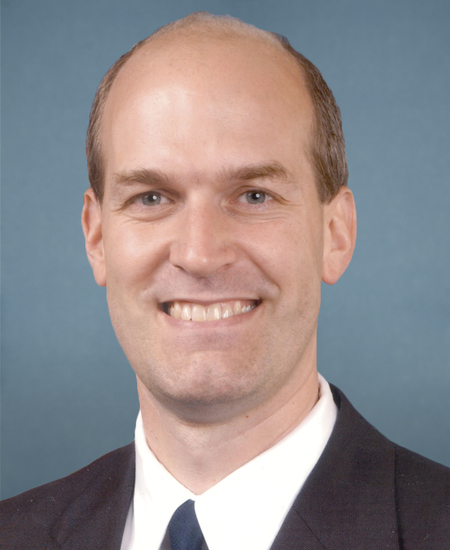
Rep. Rick Larsen
Sponsored bills
Patient Advocate Tracker Act This act requires the Office of Patient Advocacy within the Veterans Health Administration to establish an information technology system that allows veterans or their representatives to electronically file a complaint with a patient advocate and review the status of a filed complaint.
Maddy summaryHRES 1358 is a symbolic House resolution designating the week of September 17-24, 2022, as "National Estuaries Week." It expresses congressional support for raising public awareness about the ecological and economic importance of estuaries, highlighting their role in supporting jobs, fisheries, coastal protection, and biodiversity. The resolution does not create new laws or funding but acknowledges estuaries' contributions to the U.S. economy (e.g., $351 billion in GDP) and their vulnerability to threats like pollution and sea-level rise. It aims to encourage continued efforts by government and community partners to protect and restore these vital ecosystems.
Improving Seniors' Timely Access to Care Act of 2022 This bill establishes several requirements and standards relating to prior authorization processes under Medicare Advantage (MA) plans. Specifically, MA plans must (1) establish an electronic prior authorization program that meets specified standards, including the ability to provide real-time decisions in response to requests for items and services that are routinely approved; (2) annually publish specified prior authorization information, including the percentage of requests approved and the average response time; and (3) meet other standards, as set by the Centers for Medicare & Medicaid Services, relating to the quality and timeliness of prior authorization determinations.
Strengthening Welfare in Marine Settings Act of 2022 or the SWIMS Act of 2022 This bill establishes prohibitions on capturing, importing, exporting, or breeding of orcas, beluga whales, false killer whales, or pilot whales for the purpose of public display. Specifically, the bill prohibits the National Oceanic and Atmospheric Administration from issuing any permit under the Marine Mammal Protection Act of 1972 that authorizes the taking (e.g., capturing) or importation of such orcas or whales for the purpose of public display. The bill further revises the act to make it unlawful to export such orcas or whales, unless they are being transported to marine mammal sanctuaries or for release into the wild. Further, the bill makes it unlawful under the Animal Welfare Act for any person to breed or artificially inseminate such marine mammals for purposes of using their progeny for public display.
Aviation Emissions Reduction Opportunity Act or the AERO Act This bill requires the Department of Transportation to award competitive grants for projects in the United States that support the production and deployment of sustainable aviation fuel or the development of low-emission aviation technologies. Eligible grantees include, among others, state or local governments, air carriers, and research institutions. None of the funds made available may be used for a project unless all of the iron, steel, manufactured products, and construction materials used in the project are produced in the United States, subject to waivers where inconsistent with the public interest, where not produced in sufficient quantities or satisfactory quality, or where such inclusion will increase the cost of the project by more than 25%. The bill also reauthorizes through FY2027 the Continuous Lower Energy, Emissions, and Noise Program of the Federal Aviation Administration.
Commercial Space Transportation Safety Act of 2022 This bill requires the National Transportation Safety Board (NTSB) to investigate and establish the facts, circumstances, and cause or probable cause of a commercial space transportation accident in which there is (1) a fatality or significant injury of any individual, regardless of whether the individual was on board the commercial launch vehicle at the time of the accident; or (2) substantial damage to property that is not associated with commercial space launch activities and that is not located at the launch site. The NTSB shall seek to enter into a memorandum of understanding with any other government agency with the authority to certify a commercial space transportation operation or investigate a commercial space transportation accident. The memoranda must delineate the conditions under and manner in which (1) a commercial space transportation accident that may be investigated by the NTSB will be investigated by the other agency, and (2) the NTSB will participate in the other agency's investigation.
Harriet Tubman Bicentennial Commemorative Coin Act This bill directs the Department of the Treasury to mint and issue 50,000 $5 gold coins, 400,000 $1 silver coins, and 750,000 half-dollar clad coins emblematic of the legacy of Harriet Tubman as an abolitionist. The Secretary may issue coins under this bill only during the period of January 1, 2024, through December 31, 2024. All surcharges received by Treasury from the sale of such coins must be paid equally to the National Underground Railroad Freedom Center in Cincinnati, Ohio, and The Harriet Tubman Home, Inc. in Auburn, New York, for the purpose of accomplishing and advancing their missions.
Assault Weapons Ban of 2022 This bill makes it a crime to knowingly import, sell, manufacture, transfer, or possess a semiautomatic assault weapon (SAW) or large capacity ammunition feeding device (LCAFD). The prohibition does not apply to a firearm that is (1) manually operated by bolt, pump, lever, or slide action, except for certain shotguns; (2) permanently inoperable; (3) an antique; (4) only capable of firing rimfire ammunition; or (5) a rifle or shotgun specifically identified by make and model. The bill also exempts from the prohibition the following, with respect to a SAW or LCAFD: importation, sale, manufacture, transfer, or possession related to certain law enforcement efforts, or authorized tests or experiments; importation, sale, transfer, or possession related to securing nuclear materials; and possession by a retired law enforcement officer. The bill permits continued possession, sale, or transfer of a grandfathered SAW, which must be securely stored. A licensed gun dealer must conduct a background check prior to the sale or transfer of a grandfathered SAW between private parties. The bill permits continued possession of, but prohibits sale or transfer of, a grandfathered LCAFD. Newly manufactured LCAFDs must display serial number identification. Newly manufactured SAWs and LCAFDs must display the date of manufacture. The bill also allows a state or local government to use Edward Byrne Memorial Justice Assistance Grant Program funds to compensate individuals who surrender a SAW or LCAFD under a buy-back program.
VA Loan Informed Disclosure Act of 2022 or the VALID Act of 2022 The bill requires a Federal Housing Administration mortgage notice to a veteran to contain comparative rate and fee information about loans available under the Veterans Affairs home loan program.