

The Jackie Walorski Maternal and Child Home Visiting Reauthorization Act of 2022 This bill reauthorizes through FY2027, increases funding for, and modifies the Maternal, Infant, and Early Childhood Home Visiting Program. This program supports home visits for expectant and new parents who live in communities that are at-risk for poor maternal and child health outcomes. Changes to the program include setting out requirements for allocating program funds; increasing the percentage of funds reserved for tribal entities; establishing a publicly available dashboard that reports program outcomes; requiring activities to reduce unnecessary data collection, reporting, and other administrative requirements of the program; and allowing for virtual home visits (provided certain conditions are met). The bill also reduces funding for the Medicare Improvement Fund.
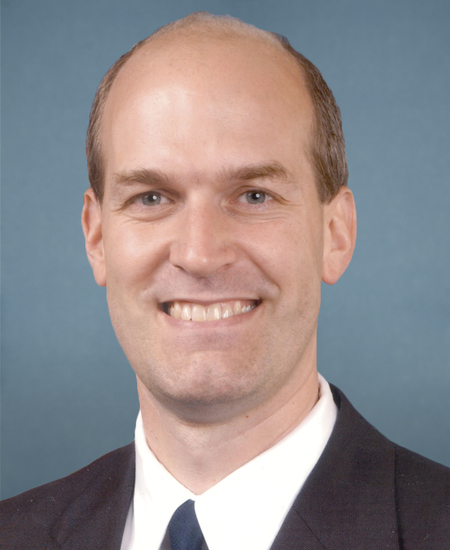
Rep. Rick Larsen
Sponsored bills
VA Work-Study Improvement Act This bill updates the Department of Veterans Affairs work-study program, including by increasing the number of hours an individual may work, modifying the minimum wage requirements, and implementing an electronic timesheet.
Lymphedema Treatment Act This bill provides for Medicare coverage of lymphedema compression treatment items. Specifically, the bill provides for coverage of standard and custom fitted gradient compression garments and other approved items that are prescribed by a physician or other specified health care professional to treat lymphedema.
This bill authorizes the Department of Commerce to award competitive grants to Indian tribes to further achievement of tribal coastal zone objectives. Specifically, these tribal coastal zone objectives include protecting, restoring, or preserving areas in the zone that hold important ecological, cultural, or sacred significance for the tribes or traditional, historic, and aesthetic values essential to the tribes; preparing and implementing a special area management plan and technical planning for important coastal areas; and implementing any coastal or shoreline stabilization measure for the purpose of public safety, public access, or cultural or historical preservation.
Driftnet Modernization and Bycatch Reduction Act This bill addresses certain driftnet fishing. Driftnet fishing is a method of fishing in which a gillnet composed of a panel or panels of webbing, or a series of such gillnets, is placed in the water and allowed to drift with the currents and winds for the purpose of entangling fish in the webbing. Currently, the use of large-scale drift gillnets with a total length of 2.5 kilometers or more is prohibited in the United States.The bill expands the definition of large-scale driftnet fishing to prohibit the use of gillnets with a mesh size of 14 inches or greater. This expanded prohibition does not apply within the U.S. exclusive economic zone for five years. The Department of Commerce must conduct a transition program to facilitate the phase out of large-scale driftnet fishing and to promote the adoption of alternative fishing practices that minimize the incidental catch of living marine resources. Commerce must award grants to program participants. Further, the North Pacific Fishery Management Council may recommend and Commerce may approve regulations to collect fees from charter vessel operators that guide recreational anglers who harvest Pacific halibut.
Prevent All Soring Tactics Act of 2022 or the PAST Act of 2022 This bill addresses the practice of soring horses. The soring of horses includes various actions taken on horses' limbs to produce higher gaits that may cause pain, distress, inflammation, or lameness. Specifically, the bill expands soring regulation and enforcement at horse shows, exhibitions, sales, and auctions, including by establishing a new system for inspecting horses for soring. In addition, the bill increases penalties for violations.
National Aviation Preparedness Plan Act of 2022 This bill directs the Department of Transportation (DOT) to develop a national aviation preparedness plan for communicable disease outbreaks, including to (1) create a process to identify appropriate personal protective equipment to reduce the likelihood of exposure to a communicable disease that has the potential to cause an epidemic or pandemic of infectious disease that would constitute a public health emergency of international concern (i.e., a covered communicable disease); and (2) improve coordination between airports, air carriers, and governmental entities with respect to preparing for and responding to communicable disease outbreaks. In developing the plan, DOT must consult with aviation industry and labor stakeholders such as air carriers. The Government Accountability Office must conduct a study assessing the plan, including (1) whether the plan meets the obligations of the United States under international conventions and treaties, and (2) the extent to which the U.S. aviation system is prepared to respond to an outbreak of a covered communicable disease.
Norman Y. Mineta Japanese American Confinement Education Act This bill increases the authorization of appropriations for the Japanese American Confinement Sites (JACS) grant program, which supports the preservation of U.S. confinement sites that were used to detain Japanese Americans during World War II (i.e., internment camps). It also establishes a program within JACS to provide grants to Japanese American nonprofits to educate individuals about the historical significance of these events.
Strengthening the Force and Fleet Through Enlisted Education Act or the Smart Act This bill removes the capacity limit for enlisted members of the Armed Forces to receive graduate-level instruction in a Naval Postgraduate School program. The Department of Defense must brief Congress on the effects of increasing enrollment of enlisted members at the school.
Asunción Valdivia Heat Illness and Fatality Prevention Act of 2022 This bill directs the Occupational Safety and Health Administration to promulgate a standard that requires employers to implement certain measures for protecting workers from heat stress and related illnesses or injuries. Heat stress refers to the load of heat that a person experiences due to sources of heat or heat retention (including metabolic heat, environmental factors, and clothing or personal protective equipment) or the presence of heat in a work setting. Further, if an employer cannot reduce exposure to heat stress below hazardous levels through engineering controls (e.g., heat shields and insulation) or personal protective equipment (e.g., heat reflective clothing), the employer must implement a program that mitigates such exposure through access to appropriate hydration and cool-down spaces, acclimatization policies, and periodic paid rest breaks. Additionally, the bill establishes requirements concerning judicial review, implementation, enforcement, recordkeeping, and whistle-blower protections related to the standard. The bill also requires the Department of Labor to include questions about heat-related illness and injury in the National Agricultural Workers Survey (an employment-based, random-sample survey of U.S. crop workers that collects demographic, employment, and health information).