

Booster Seat Safety Act This bill addresses labeling requirements and testing standards for booster seats used in motor vehicles. Specifically, the bill requires labels on booster seats to include the minimum recommended age (4 years) and weight (40 pounds) for a child to use the seat. It also requires that a label on a car seat or combination car seat list the maximum weight and height limits of the seat, as well as a recommendation to continue using the seat until the child exceeds the listed limits. Additionally, the National Highway Traffic Safety Administration (NHTSA) must either establish a minimum height recommendation for booster seats or a method for manufacturers to use to determine a minimum height recommendation. Once the minimum height or method is established, booster seat labels must also contain the minimum height recommendation. The NHTSA must also establish a standard for side-impact crash tests for booster seats and provide guidelines for creating a testing dummy that approximates a six-year old child for such crash tests. Further, the NHTSA must study systems for tethering child restraint systems in vehicles and make recommendations about using or modifying tether systems to maximize child safety.
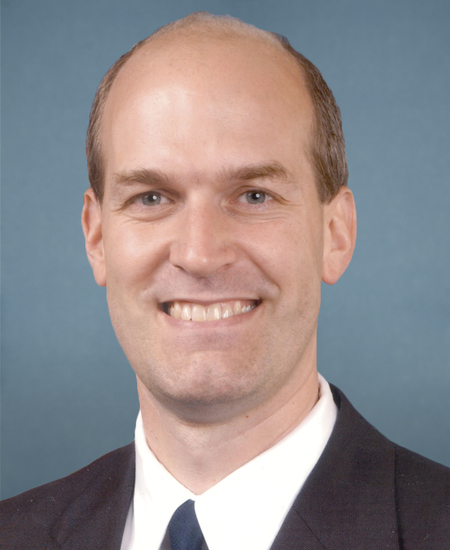
Rep. Rick Larsen
Sponsored bills
Crimea Annexation Non-Recognition Ac t This bill prohibits any federal agency from taking any action or extending any assistance that recognizes or implies recognition of Russia's sovereignty over Crimea, its airspace, or its territorial waters.
Maddy summaryThis bill adjusts federal employee pay rates for 2024. It increases basic pay for all federal workers under statutory pay systems and prevailing rate systems by 4.7%, and raises locality pay adjustments by 4.0%. These changes directly affect all federal employees covered by the specified pay systems, including those in wage areas and under sections 5348/5349 of Title 5. The bill implements these raises without altering existing pay system structures or requirements.
Maddy summaryHRES 49 is a symbolic House resolution recognizing the cultural and historical significance of Lunar New Year in 2023. It formally acknowledges Lunar New Year's origins in China over 4,000 years ago, its celebration across East and Southeast Asia (including the Year of the Rabbit in Chinese tradition and Year of the Cat in Vietnamese tradition), and its observance by millions of Asian Americans and others in the U.S. The resolution expresses respect for Asian Americans and all global communities celebrating this holiday and extends well-wishes for a prosperous new year. As a ceremonial resolution, it has no legal effect or policy changes - it solely serves to affirm cultural recognition.
Maddy summaryHR 396, the Closing the Bump Stock Loophole Act of 2023, defines "bump stock" as any device or modification that increases the firing rate of a semi-automatic weapon to mimic a machine gun. The bill amends federal tax and firearms laws to classify bump stocks as prohibited devices under the National Firearms Act, requiring existing owners to register them within one year of enactment. It directly affects individuals who currently own bump stocks by mandating registration to avoid future possession prohibitions. The law takes effect immediately for new sales but provides a one-year grace period for existing owners to comply with registration requirements.
Maddy summaryHRES 36 is a symbolic resolution supporting Korean American Day, introduced by multiple House members on January 13, 2023. It honors the 120th anniversary of the 1903 arrival of the first large wave of Korean immigrants to the U.S. and recognizes Korean Americans' contributions to U.S. society, economy, and the U.S.-South Korea alliance. The resolution urges all Americans to observe Korean American Day to appreciate these contributions but does not create new laws or affect any specific group through policy changes. It is a commemorative measure without binding requirements.
Maddy summaryThis bill requires colleges to notify students receiving federal work-study aid about their potential eligibility for the Supplemental Nutrition Assistance Program (SNAP). It mandates that institutions send electronic notifications (via email or other digital means) to these students, explaining SNAP eligibility requirements, state-specific application processes, and including a document confirming their work-study status to satisfy SNAP eligibility rules. The bill directly affects undergraduate and graduate students participating in federal work-study programs who may qualify for food assistance but lack awareness of SNAP. The key mechanism is the standardized notification developed by the Education and Agriculture Departments, designed to streamline access to nutrition benefits for students facing food insecurity.
This resolution condemns all acts of political violence, as well as attacks on health care facilities, health care personnel, and patients. The resolution also states that all people have the freedom to access reproductive health care services and medical advice without fear of violence, intimidation, or harassment. Finally, the resolution calls on the Biden Administration to use all appropriate authorities to uphold public safety, protect health care facilities, and safeguard health care personnel and patients.
Maddy summaryHR 51, the Washington, D.C. Admission Act, would admit Washington, D.C. as the 51st state, named "Washington, Douglass Commonwealth," granting its residents full representation in Congress with two Senators and one Representative. The bill establishes procedures for admission, including elections for state officials, with the state initially having one Representative until the next congressional apportionment. It would create a "Capital" area (including the White House, Capitol, and other key federal buildings) that remains under federal jurisdiction as the seat of the U.S. government, while the rest of the District becomes the new state. The bill also includes provisions to ensure continuity of federal services, property management, and legal procedures during the transition to statehood.
Commission to Study and Develop Reparation Proposals for African Americans Act This bill establishes the Commission to Study and Develop Reparation Proposals for African Americans. The commission must (1) compile documentary evidence of slavery in the United States; (2) study the role of the federal and state governments in supporting the institution of slavery; (3) analyze discriminatory laws and policies against freed African slaves and their descendants; and (4) recommend ways the United States may recognize and remedy the effects of slavery and discrimination on African Americans, including through a formal apology and compensation (i.e., reparations). The commission consists of individuals from civil society and reparations organizations and individuals appointed by the President and congressional leadership; Members of Congress and governmental employees may not serve on the commission. The commission may hold hearings, subpoena witnesses and records, and contract with other entities to conduct its work. The commission must submit its final report within 18 months of its first meeting.