

Maddy summaryThe ALERT Act (HR 7613) requires the Federal Aviation Administration to improve aviation safety through several key measures. It mandates the evaluation and potential implementation of enhanced collision avoidance systems (ACAS-Xa) for commercial aircraft and ACAS-Xr for rotorcraft, with specific deadlines for rulemaking and installation. The bill establishes committees to develop recommendations for safety technology requirements, requires safety risk assessments for air traffic controllers, and addresses operational procedures at high-traffic airports like Ronald Reagan Washington National. These provisions affect air carriers, air traffic controllers, rotorcraft operators, and Department of Defense aircraft operations. The act aims to enhance situational awareness and reduce midair collision risks through technology upgrades and improved safety protocols.
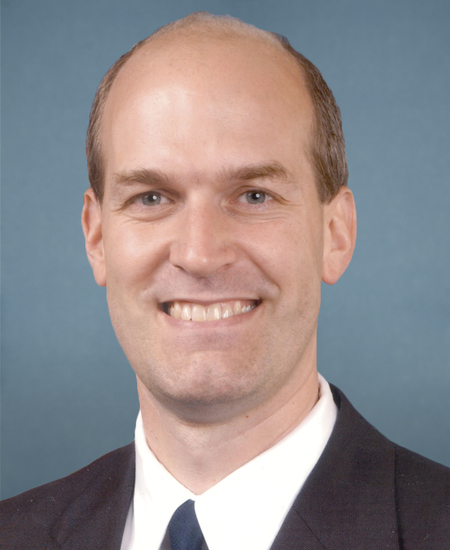
Rep. Rick Larsen
Sponsored bills
Maddy summaryThe Educational Equity Challenge Grant Act of 2026 establishes a federal grant program to help eligible educational entities address students' academic, social-emotional, mental, behavioral, and physical health needs, including those impacted by the COVID-19 pandemic. Administered by the Secretary of Education, the program awards funds for either implementing proven, evidence-based strategies or designing and evaluating new, educator-initiated proposals. Priority for these grants is given to entities serving high-need student populations, such as those in rural areas, low-income communities, and various disproportionately affected groups. Recipients must report annually on how funds were used and their impact on student outcomes.
Maddy summaryThe Books Save Lives Act requires public libraries and schools receiving federal funding to maintain diverse book collections that include works by and about members of underrepresented communities. It mandates that covered schools employ trained librarians and establishes that excluding books with a disparate impact on underrepresented groups serves as initial evidence of discrimination under existing civil rights laws. Additionally, the bill directs the Comptroller General to produce a report within 180 days on how recent book ban campaigns have affected underrepresented communities. The legislation defines underrepresented communities to include racial and ethnic minorities, LGBTQ+ individuals, religious minorities, and people with disabilities.
Maddy summaryThis bill, known as the Moral Injury Recognition and Restitution Act, changes how the Department of Veterans Affairs handles compensation claims for veterans affected by military sexual trauma. It allows veterans who receive approved claims for mental health conditions or physical injuries caused by such trauma to receive back pay starting from the day after their military discharge rather than from the date their claim was filed. The legislation defines military sexual trauma according to existing legal standards and includes both mental health conditions and physical disabilities resulting from or worsened by the trauma. This change applies retroactively to eligible veterans who have already been approved for compensation benefits.
Maddy summaryThis bill updates federal law to prohibit excluding military members from assignments or career fields based on their gender, affecting all branches of the U.S. Armed Forces. It requires the Secretary of Defense to submit annual reports detailing changes to occupational standards and data on involuntary reclassifications or separations, broken down by military job and gender. The legislation also modernizes how the military evaluates job requirements, mandating that standards be based on scientifically rigorous assessments of technical, tactical, cognitive, and physical abilities rather than gender. Additionally, it directs the Secretary of Defense to submit a full review of ground combat unit effectiveness to Congress and requires an independent audit of that review within 180 days.
Maddy summaryThis concurrent resolution formally recognizes the ongoing disparity between wages paid to men and women in the United States and reaffirms Congress's commitment to supporting equal pay. It highlights statistical data showing that women earn approximately 81 cents for every dollar earned by men, with significant variations across racial and ethnic groups, and notes that the gender wage gap has widened over the past two years. The document also identifies contributing factors such as occupational segregation, lack of family-friendly workplace policies, and workplace harassment, while emphasizing the economic impact on women's retirement security and family incomes.
Love Lives On Act of 2025 This bill extends entitlement for various benefit programs and services for surviving spouses of deceased members of the Armed Forces or veterans. The bill provides that the remarriage of a surviving spouse must not bar the furnishing of dependency and indemnity compensation or special pension benefits to such spouse. Additionally, the Department of Defense may not terminate the payment of an annuity for a surviving spouse under the Survivor Benefit Plan solely because the surviving spouse remarries. The bill also expands the definition of a dependent under TRICARE to include a remarried widow or widower whose subsequent marriage has ended due to death, divorce, or annulment.
Maddy summaryThis bill requires the Department of Veterans Affairs (VA) to cover abortion care, counseling, and related medication as part of standard hospital and medical services for eligible veterans and certain dependents. It amends VA healthcare law to explicitly include these services under existing coverage for veterans qualifying under section 1703 and dependents eligible under section 1781(a). The policy directly affects veterans and their dependents enrolled in VA healthcare programs by expanding covered benefits to include abortion-related care. This is a concrete policy change to VA healthcare benefits, not a broader abortion law.
Governing Unaccredited Representatives Defrauding VA Benefits Act or the GUARD VA Benefits Act This bill imposes fines on individuals for soliciting, contracting for, charging, or receiving any unauthorized fee or compensation with respect to the preparation, presentation, or prosecution of any claim for Department of Veterans Affairs benefits. The attempted commission of such offenses is also punishable by fine.
Enhanced Iran Sanctions Act of 2025 This bill imposes sanctions on certain foreign persons (individuals and entities) that are involved in Iran's petroleum sector as well as certain associated persons. The bill also requires or authorizes actions to facilitate the enforcement of sanctions on Iran. Specifically, the bill requires the President to impose visa- and property-blocking sanctions on any foreign person that, after the bill's enactment, knowingly engages in any transaction related to the processing, export, or sale of oil, condensates, gas, liquefied natural gas, or other petrochemical products in whole or in part from Iran. The President must also impose sanctions on certain foreign persons associated with a sanctioned individual or entity. For example, the President must sanction the subsidiaries and corporate officers of a sanctioned business. The bill provides certain exceptions to these sanctions, including specifying that sanctions do not apply to the importation of goods or to conducting or facilitating transactions for humanitarian assistance. The Department of State must establish an interagency working group that shall seek to establish a multilateral contact group to coordinate international efforts to enforce sanctions on Iran. The bill expands the State Department rewards program to authorize a reward payment to any individual who furnishes information leading to the identification of a person (1) subject to sanctions under this bill, or (2) that has attempted or is attempting to evade sanctions under this bill.