

Maddy summaryHRES 1555 is a symbolic House resolution condemning the spread of false claims and malicious rumors about disaster response efforts, which have led to credible threats against FEMA personnel and disrupted aid for survivors. It specifically references incidents after Hurricanes Helene and Milton, including a pause in North Carolina door-to-door assistance due to safety threats and antisemitic targeting of officials. The resolution formally condemns those spreading disinformation for political gain and commits Congress to supporting FEMA’s efforts to combat misinformation and promote accurate recovery information. As a non-binding resolution, it does not create new laws but expresses congressional support for protecting disaster response workers and ensuring survivors receive timely aid.
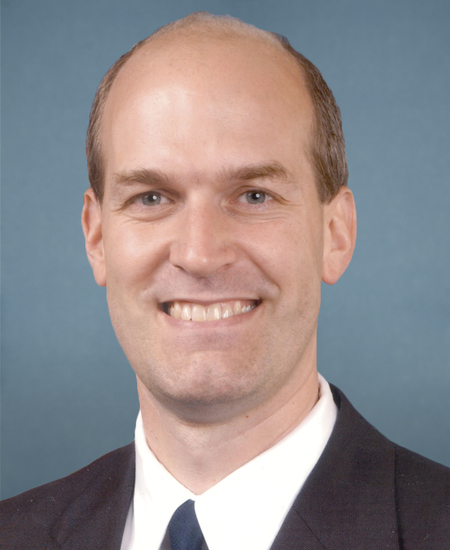
Rep. Rick Larsen
Sponsored bills
Maddy summaryHR 10047, the Closing the Substance Use Care Gap Act of 2024, authorizes $30 million annually (2025-2029) in federal grants to fund community-based harm reduction services for people with substance use disorders. The bill provides funding to states, tribes, syringe services programs, health centers, and treatment providers to support services like overdose prevention, disease prevention (e.g., syringe services), and connecting individuals to treatment and recovery support. Grant funds must include referral pathways to evidence-based treatment, and recipients must report on program impacts to Congress. The legislation directly affects individuals using substances and communities seeking to reduce health harms, with a focus on underserved and rural areas.
Maddy summaryThe Parity for Tribal Law Enforcement Act would allow tribal law enforcement officers working under federal contracts or compacts (via the Indian Self-Determination Act) to enforce federal law on tribal lands, provided they complete equivalent training, pass background checks, and receive Bureau of Indian Affairs certification. It designates these officers as federal law enforcement officers for legal protections under specific federal laws, such as the Federal Tort Claims Act. The bill requires the Secretary of the Interior to establish a credentialing process within 24 months and directs the Attorney General to coordinate federal public safety efforts in Indian communities through improved data collection and training. This policy change directly affects tribal officers and communities by expanding their enforcement authority and legal recognition.
Maddy summaryThe VA Employee Fairness Act of 2024 modifies collective bargaining rules for employees of the Veterans Health Administration (VHA). It removes existing subsections (b), (c), and (d) from the law governing VHA employee bargaining and renumbers the remaining provision. This change streamlines the collective bargaining framework but does not alter the Secretary of Veterans Affairs' existing authorities over incentive pay and expedited hiring. The bill directly affects VHA employees by changing how their collective bargaining rights are structured under federal law. The law remains neutral, focusing solely on procedural adjustments to the existing bargaining framework.
Maddy summaryThe WISER Act of 2024 provides automatic discharge status upgrades and a one-time $25,000 compensation payment to eligible female veterans who were involuntarily separated from military service under Executive Order 10240 between April 1951 and February 1976. It directly affects these veterans (and their surviving spouses if the veteran died after the bill's enactment) by treating them as if they completed their assigned duty for benefits purposes and authorizing the $25,000 payment. The bill establishes automatic eligibility for veterans separated under the executive order, with additional eligibility for those who gave birth, gained custody of a child, or experienced a pregnancy loss within 10 months of separation. The Secretary of Veterans Affairs and Secretary of Defense will administer the programs, requiring applications but not further proof of eligibility for the covered groups.
Maddy summaryThe Stop Wall Street Looting Act targets private equity fund practices that harm workers and communities by imposing new restrictions and accountability measures. It establishes joint liability for private equity firms and their executives for debts and worker protections when they acquire companies, limiting post-acquisition dividends and buybacks for four years. The bill also imposes a 100% surtax on certain payments received by investment firms from controlled target firms and requires new transparency about fund activities, including detailed financial disclosures. It strengthens worker protections in bankruptcy cases by prioritizing unpaid wages, severance pay, and pension benefits over other creditor claims. These provisions aim to prevent private equity firms from stripping assets and leaving workers and communities bearing the costs when investments fail.
Maddy summaryThis bill creates a process for state education agencies to access specific demographic data about military members and applicants who graduated high school in their state. It requires the Defense and Homeland Security Secretaries to establish a confidential data-sharing system within 18 months, enabling states to integrate information like education level, military branch, rank, AFQT test scores, and graduation details into their education databases. The data includes details for both active service members (e.g., separation dates, military specialty) and applicants denied military service. All data sharing must comply with strict privacy laws to protect individual information, with no new data collection mandated beyond existing military records.
Maddy summaryHR 9903, the Next Generation Military Education Act, requires the Department of Defense to develop and provide mandatory distance education courses on artificial intelligence (AI) fundamentals and ethical use to all members of the Armed Forces and civilian DoD employees. The bill mandates courses covering basic AI literacy - such as understanding AI capabilities, risks, data privacy, ethics, and identifying AI-generated content - and expands the Digital On-Demand Program to include all DoD personnel. It also requires integrating AI risk awareness into annual cybersecurity training and mandates annual reports to Congress on implementation progress. The policy directly affects military personnel and DoD civilians by establishing standardized AI education as a core requirement.
Maddy summaryThis bill establishes procedures for handling requests to dismiss criminal prosecutions against the President. It requires the Attorney General to submit a sworn statement confirming whether a dismissal request came from the President or their direction, and mandates that courts consider evidence of bad faith before granting such dismissals. A three-judge court must hear these cases, and the Justice Department's Inspector General must report to Congress if they find a dismissal was requested by the President. The bill directly affects the President, Attorney General, courts, and Justice Department oversight mechanisms during presidential criminal cases.
Maddy summaryThis bill creates a federal grant program to help local law enforcement combat fentanyl trafficking, allocating $70 million annually from 2025 through 2029. Eligible applicants include states, local governments, tribal entities, and multi-jurisdictional task forces, which can use funds for hiring staff, purchasing equipment, or expanding existing task forces focused on disrupting fentanyl distribution. At least 20% of the funding must support tribal efforts and 20% must go to multi-jurisdictional task forces. Grantees must submit detailed applications and report annually to Congress on program effectiveness.