

9-8-8 Implementation Act of 2022 This bill modifies provisions to increase access to behavioral health services, with a focus on crisis services and the 9-8-8 telecommunication system. (The 9-8-8 system provides callers with mental health or suicide crisis support and resources through the existing National Suicide Prevention Lifeline and is scheduled to take effect by July 16, 2022.) The bill reauthorizes through FY2027 and revises the National Suicide Prevention Lifeline program and requires a national suicide prevention media campaign. In addition, the Substance Abuse and Mental Health Services Administration (SAMHSA) must establish standards for a behavioral health crisis continuum of care that health care providers and communities may use in responding to individuals experiencing a behavioral health crisis. The continuum must include emergency treatment, stabilization, and related services. The bill expands Medicaid and other insurance coverage for such services. The bill further expands Medicaid coverage for behavioral health services. This includes permanently allowing coverage of certain community-based mobile crisis services and exempting some short-term stabilization services from coverage restrictions that apply to institutions for mental diseases. Additionally, the bill establishes (1) an office within SAMHSA to coordinate behavioral health activities; and (2) various grants, including a pilot program for mobile crisis care teams that respond to behavioral health crises rather than law enforcement and a capital improvement program for certain behavioral health facilities. The bill also reauthorizes through FY2027 and expands certain workforce programs for behavioral health providers. It also addresses training for emergency services dispatchers and coordination of the 9-1-1 system with the 9-8-8 system.
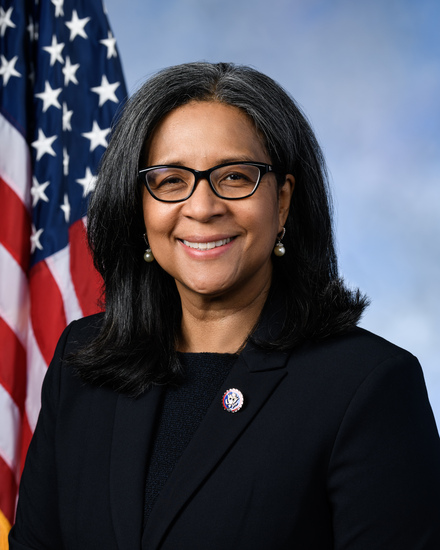
Rep. Marilyn Strickland
Sponsored bills
This bill establishes an official policy of the Department of Veterans Affairs (VA) on medicinal cannabis, requires the VA to seek to enter an agreement with a federally funded research and development center to conduct nationwide surveys to measure cannabis use by veterans, and requires the VA to provide training for all VA primary care providers in the use of medical cannabis.
Headstones for Honor Act This bill expands eligibility for Department of Veterans Affairs headstones or markers for unmarked graves (or graves in private cemeteries) of specified individuals, including enslaved individuals who served in the Armed Forces in lieu of another individual or those who performed a military function while prohibited from serving as a member of the Armed Forces on the basis of race, gender, sex, or ethnicity.
Disability ID Act of 2022 This bill requires the Department of Transportation (DOT) to establish a competitive grant program for states and tribal governments to implement programs that allow individuals with disabilities to have discrete disability identifier symbols placed on their state-issued identification cards. DOT may not award a grant to a state or tribal government that exceeds $200,000.
Creating a Respectful and Open World for Natural Hair Act of 2022 or the CROWN Act of 2022 This bill prohibits discrimination based on a person's hair texture or hairstyle if that style or texture is commonly associated with a particular race or national origin. Specifically, the bill prohibits this type of discrimination against those participating in federally assisted programs, housing programs, public accommodations, and employment. Persons shall not be deprived of equal rights under the law and shall not be subjected to prohibited practices based on their hair texture or style. The bill provides for enforcement procedures under the applicable laws.
Forced Arbitration Injustice Repeal Act of 2022 or the FAIR Act of 2022 This bill prohibits a predispute arbitration agreement from being valid or enforceable if it requires arbitration of an employment, consumer, antitrust, or civil rights dispute.
Dr. Lorna Breen Health Care Provider Protection Act This bill establishes grants and requires other activities to improve mental and behavioral health among health care providers. Specifically, the Department of Health and Human Services (HHS) must award grants to hospitals, medical professional associations, and other health care entities for programs to promote mental health and resiliency among health care providers. In addition, HHS may award grants for relevant mental and behavioral health training for health care students, residents, or professionals. Additionally, HHS must conduct a campaign to (1) encourage health care providers to seek support and treatment for mental and behavioral health concerns, and (2) disseminate best practices to prevent suicide and improve mental health and resiliency among health care providers. HHS must also study and develop policy recommendations on improving mental and behavioral health among health care providers, removing barriers to accessing care and treatment, and identifying strategies to promote resiliency. Furthermore, the Government Accountability Office must report on the extent to which relevant federal grant programs address the prevalence and severity of mental health conditions and substance use disorders among health care providers.
Cost of War Act of 2022 This bill directs the Department of Defense (DOD) to post on its public website information relating to the cost to U.S. taxpayers of any overseas contingency operation conducted by the U.S. Armed Forces on or after September 18, 2001. DOD must update such information not later than 90 days after the end of each fiscal year.
This bill establishes programs to mitigate the impact of marine traffic on marine ecosystems and wildlife, with a particular emphasis on underwater noise. The National Atmospheric and Oceanic Administration (NOAA) must maintain and expand activities to collect and assess underwater sounds in high-priority ocean and coastal locations, award grants to port authorities or related entities for implementing measures to mitigate the impact of port operations and marine traffic on marine mammals, and implement a program to reduce collisions between large whales and marine vessels. In addition, the Maritime Administration must award grants to academic or research institutions, U.S. nationals or corporations, or state or tribal governments for developing and implementing technologies that reduce underwater noise from marine vessels. The administration must also report to Congress about nonclassified naval technologies that reduce underwater noise from marine vessels.
This resolution expresses that the House of Representatives declares its gratitude on behalf of the people of the United States to the journalists and news staff who continue to put themselves in harm's way to report on the humanitarian crisis and ongoing war on the ground in Ukraine following Russian President Vladimir Putin's invasion of Ukraine; and honors the contributions of journalists and news staff reporting from the war in Ukraine as essential in the ongoing struggle for the rights of a free press and free speech internationally, pivotal in pushing back against false propaganda by tyrants, and crucial to informing Americans and the world of the horrors being wrought against the Ukrainian people.