

Greater Leadership Overseas for the Benefit of Equality Act of 2021 or the GLOBE Act of 2021 This bill contains provisions related to (1) the protection of LGBTQI individuals globally; and (2) immigration protections for vulnerable individuals. The bill establishes (1) an interagency group to respond to urgent threats to LGBTQI people in foreign countries, and (2) a permanent Special Envoy for the Human Rights of LGBTQI Peoples in the Department of State. The President shall impose visa-blocking sanctions on foreign persons responsible for violating the human rights of individuals based on sexual orientation, gender identity, or sex characteristics. The State Department shall establish the Global Equality Fund to provide assistance to nongovernmental organizations working to advance and protect human rights. The U.S. Agency for International Development shall establish the LGBTQI Global Development Partnership to work with the private sector and nongovernmental organizations to support LGBTQI rights. The bill removes prohibitions against providing foreign assistance to nongovernmental organizations that offer certain medical services (e.g., abortion-related services) using non-U.S. government funds. The bill contains several immigration-related provisions, such as those establishing that persecution based on sexual orientation or gender identity may form the basis of an asylum request, allowing certain applicants to file asylum claims more than a year after their arrival in the United States, including a permanent partnership between two partners as a marriage for immigration law purposes, providing for free counsel in certain immigration proceedings, and granting U.S. citizenship to a child born abroad through assistive reproductive technology from a U.S. citizen who is the child's nonbiological parent.
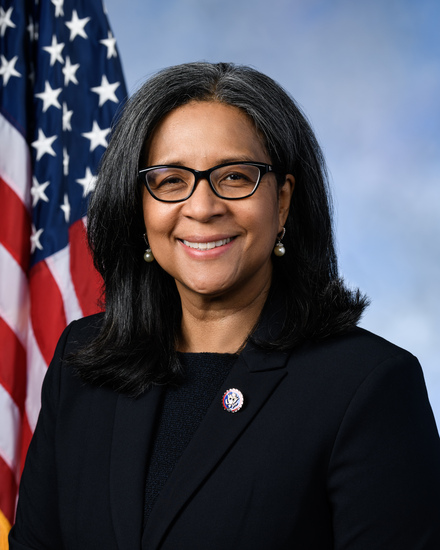
Rep. Marilyn Strickland
Sponsored bills
Enhancing Oversight to End Discrimination in Policing Act This bill expands the capacity to enforce a law that prohibits patterns or practices of misconduct by state and local law enforcement agencies. Current law prohibits state and local law enforcement agencies from engaging in patterns or practices of conduct that violate constitutional or federal rights. Further, current law authorizes the Department of Justice (DOJ) to file civil cases to eliminate the pattern or practice of misconduct. Typically, DOJ's Civil Rights Division conducts pattern-or-practice investigations and resolves any misconduct through a consent decree instead of a trial. This bill provides statutory authority for state attorneys general to bring pattern-or-practice cases in federal court. The bill also authorizes grants to help states pursue pattern-or-practice investigations and cases. Additionally, the bill authorizes additional amounts for DOJ's Civil Rights Division and requires a certain portion to be used for enforcement and technical assistance related to pattern-or-practice cases. Finally, the bill requires DOJ's Civil Rights Division to modify the procedures for consent decrees and settlement agreements to ensure that the consent decrees and settlement agreements (1) foster the creation and use of alternative remedies such as mental health support or community-based restorative justice mechanisms; and (2) incorporate community oversight requirements, such as a community oversight body.
Menstrual Equity For All Act of 2021 This bill expands access to free sanitary napkins and tampons (i.e., menstrual products) in certain locations and for particular groups. It also requires Medicaid to cover menstrual products, as well as liners, cups, and similar items used by individuals with respect to menstruation. Specifically, the bill imposes requirements to make free menstrual products available in federal and state correctional facilities (including facilities that house aliens detained by the Department of Homeland Security) and restrooms in federal buildings that are open to the public. It also establishes a demonstration grant program to support the provision of free menstrual products on campuses of institutions of higher education and permits elementary and secondary schools to use certain grants to provide menstrual products to students. Furthermore, the bill requires employers with at least 100 employees to provide free menstrual products for employees. It also permits the use of certain grants for emergency food and shelter to provide menstrual products to homeless individuals.
Afghan Allies Protection Act of 2021 This bill provides for 4,000 additional special immigrant visas to qualified nationals of Afghanistan who were employed by or on behalf of the United States or the International Security Assistance Force after October 6, 2001. The visa allotment, in addition to any unused allocations of such special immigrant visas since FY2015, shall be available beginning FY2021, and unused visas shall carry over to subsequent fiscal years until exhausted.
Extreme Risk Protection Order Act of 2021 This bill establishes grants to support the implementation of extreme risk protection order laws at the state and local levels, extends federal firearms restrictions to individuals who are subject to extreme risk protection orders, and expands related data collection. Extreme risk protection order laws, or red flag laws, generally allow certain individuals (e.g., law enforcement officers or family members) to petition a court for a temporary order that prohibits an at-risk individual from purchasing and possessing firearms. Among its provisions, the bill directs the Office of Community Oriented Policing Services within the Department of Justice to establish a grant program to help states, local governments, Indian tribes, and other entities implement extreme risk protection order laws; extends federal restrictions on the receipt, possession, shipment, and transportation of firearms and ammunition to individuals who are subject to extreme risk protection orders; and requires the Federal Bureau of Investigation to compile (and later destroy) records from federal, tribal, and state courts and other agencies that identify individuals who are subject to extreme risk protection orders.
Military Family Nutrition Act of 2022 This bill excludes military housing allowances from income when determining eligibility for the Supplemental Nutrition Assistance Program (SNAP).
Major Richard Star Act This bill provides that combat-disabled uniformed services retirees with fewer than 20 years of creditable service may concurrently receive, without reduction, veterans' disability compensation and retired pay or combat-related special compensation.
Global Malnutrition Prevention and Treatment Act of 2021 This act sets out programs and otherwise directs the U.S. Agency for International Development (USAID) to carry out activities to prevent and treat malnutrition globally. Specifically, USAID may leverage resources to address malnutrition through the Global Nutrition Coordination Plan (an interagency effort to strengthen the impact of U.S. investments in nutrition) and its role on the board of directors of the U.S. International Development Finance Corporation. USAID must also select countries based on specified malnutrition-related indicators for purposes of targeting malnutrition prevention and treatment programs and update the selection within five years. Additionally, USAID may establish the Nutrition Leadership Council to coordinate federal government activities to prevent and treat malnutrition; and target resources and nutrition interventions to the populations most susceptible to severe malnutrition and otherwise support efforts to prevent and treat malnutrition globally. The act also requires USAID to provide to Congress an implementation plan and annual reports concerning its programs for treating and preventing malnutrition. The act's provisions terminate seven years after its enactment.
This concurrent resolution commemorates the 50th anniversary of the enactment of the Federal Water Pollution Control Act Amendments of 1972, commonly known as the Clean Water Act.
Global Food Security Reauthorization Act of 2022 This bill reauthorizes through FY2028 activities to implement the Global Food Security Strategy, a whole-of-government strategy to promote global food security, resilience, and nutrition. The bill also modifies aspects of the strategy, such as requiring the strategy to seek to improve the efficiency and resilience of agricultural production. The bill also reauthorizes through FY2028 activities related to the Emergency Food Security Program, an international market-based assistance program.