

Maddy summaryHR 4796, the Restoring Essential Healthcare Act, repeals a provision that blocked Medicaid payments to certain healthcare providers during a specific period. It directly affects Medicaid beneficiaries who received care from these providers between the enactment of the prior law (Public Law 119-21) and this bill's enactment. The key provision retroactively restores Medicaid payments for services already provided during that blocked period, treating the payment restriction as if it never existed. This change ensures eligible individuals and providers receive reimbursement for covered care delivered during the prohibited timeframe.
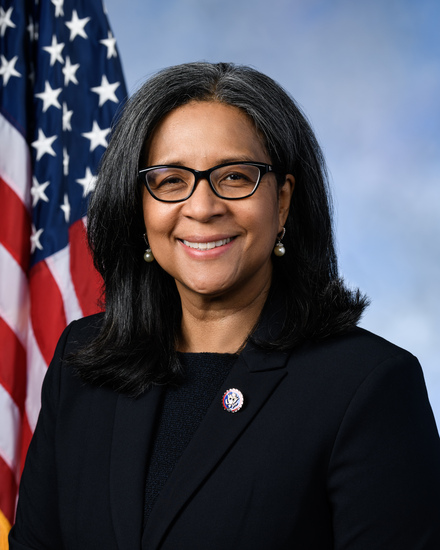
Rep. Marilyn Strickland
Sponsored bills
Maddy summaryThis bill updates the TRICARE Young Adult Program to make healthcare coverage more accessible for military dependents. It directly affects young adults (ages 21-26) who are children of active-duty service members, by eliminating a separate premium they previously paid for coverage. Key changes include removing an extra cost for young adults and adjusting eligibility rules to simplify enrollment. These amendments aim to reduce out-of-pocket expenses and streamline access to health insurance under the program.
Maddy summaryThe Parity for Tribal Law Enforcement Act enables tribal law enforcement officers who have contracted federal law enforcement duties under the Indian Self-Determination Act to enforce federal law on tribal lands. To qualify, officers must complete training comparable to Bureau of Justice Services employees, pass a background check, and receive certification from the Bureau. The bill also designates these officers as federal law enforcement officers for legal protections under the Federal Tort Claims Act and retirement benefits. Additionally, it requires the Attorney General to coordinate Department of Justice efforts to improve public safety in tribal communities through better data collection, training, and reporting.
Maddy summaryH.J. Res. 108 proposes a constitutional amendment to remove legal immunity for federal officials, including the President, from criminal prosecution for actions taken while performing official duties. It would prohibit the President from granting pardons to themselves and eliminate the defense that "official authority" excuses violations of federal or state law (with limited exceptions for certain congressional actions). If ratified, this amendment would require Congress to pass implementing laws to enforce these changes. The proposal is currently in the House Judiciary Committee and requires approval by three-fourths of state legislatures to become part of the Constitution.
Maddy summaryHR 4606, the Ally’s Act, requires private health insurance plans (including employer-sponsored plans and individual coverage) to cover hearing implants and related services. It directly affects people with hearing loss who need cochlear implants, bone conduction devices, or external sound processors, as determined by a physician or audiologist. The bill mandates coverage for devices, maintenance, repairs, upgrades every 5 years, hearing assessments, surgery, and rehabilitation - without separate cost-sharing or stricter limits than other medical services. Insurers cannot deny coverage if a provider deems the service medically necessary. The law applies to all applicable health plans and takes effect for plan years beginning January 1, 2026.
Maddy summaryHR 4621, the 320th Barrage Balloon Battalion Gold Medal Act, authorizes a single gold medal to honor the 320th Barrage Balloon Battalion - a segregated African-American unit that served during the D-Day invasion in World War II. The medal, struck by the U.S. Mint, will be presented by Congress and displayed at the Smithsonian Institution, with bronze duplicates available for sale to cover costs. The bill recognizes the unit’s role in deploying barrage balloons to protect Allied troops from air attacks on Omaha Beach and their overall contributions to the D-Day success. It does not create new laws or affect any policies, as it is purely a commemorative gesture for historical recognition.
Maddy summaryThis bill prohibits life, disability, and long-term care insurers from denying coverage, canceling policies, or increasing premiums based solely on a person's status as a living organ donor. It directly protects living organ donors by preventing insurance discrimination unrelated to actual health risks. The bill also requires the Health and Human Services Secretary to update public educational materials about organ donation benefits, risks, and insurance impacts within six months of enactment. These materials will include information on the new insurance protections established by the bill. The law relies on state insurance regulators for enforcement of the insurance provisions.
Maddy summaryThis bill establishes two grant programs to support construction and manufacturing apprenticeship colleges. It provides up to $500,000 per college for community outreach (e.g., connecting with high schools, rural businesses, and workforce boards) and student support services (e.g., academic advising, mental health resources, childcare). The grants target increasing enrollment and completion rates for underrepresented groups, including rural students, first-generation college students, and minorities. Funding of $5 million annually (2026-2030) requires colleges to report on program outcomes like retention rates and diversity metrics. The law directly affects apprenticeship colleges offering work-based training in construction and manufacturing fields.
Maddy summaryThis bill amends the Family and Medical Leave Act (FMLA) and federal employee leave rules to clarify that recovery from organ donation surgery qualifies as a "serious health condition." It directly affects private-sector workers covered by the FMLA and federal civil service employees. The key change adds "including recovery from surgery related to organ donation" to the definitions of serious health conditions in both the FMLA and federal leave statutes. This ensures eligible employees can use their existing family and medical leave benefits to recover after donating an organ, without requiring new leave entitlements.
Maddy summaryThis bill amends federal transit grant rules to incentivize local housing policies near transit. It defines "pro-housing policies" as actions removing regulatory barriers (like eliminating parking minimums or streamlining approvals for multi-family housing) and adds a 1-point scoring boost in grant evaluations for projects demonstrating such policies within walking distance of transit. Local governments and developers seeking federal transit capital grants can earn this boost by documenting these policies, with HUD consulted to assess expected housing outcomes. The policy directly affects how transit projects are scored for funding, aiming to align housing production with transit access.