This resolution supports the designation of National Asian American, Native Hawaiian, and Pacific Islander Mental Health Day.
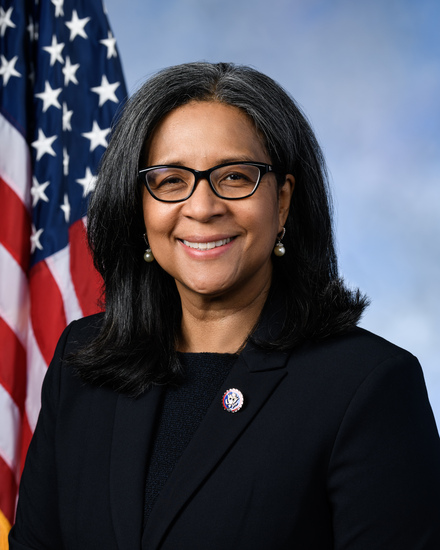
Rep. Marilyn Strickland
Sponsored bills
Convening Operations Assistance for Childcare Heroes Act or the COACH Act This bill requires the Small Business Administration to maintain a resource guide for small businesses operating as child care providers that includes guidance on topics such as operations, finances, and compliance with relevant laws.
Zero-Percent Student Loan Refinancing Act This bill establishes a temporary program through which the Department of Education (ED) must make interest-free refinancing loans to borrowers of federal student loans from August 1, 2021, through December 31, 2024. The bill requires ED to automatically refinance Federal Direct Loans and notify each borrower of the refinancing. Borrowers who have other types of eligible loans (i.e., Federal Family Education Loans, Federal Perkins Loans, and certain health profession and nursing loans) must apply for refinancing. ED and the Consumer Financial Protection Bureau must carry out a campaign to notify borrowers of these types of loans that they are eligible to apply for refinancing under the program.
Helping Ensure Life- and Limb-Saving Access to Podiatric Physicians Act or the HELLPP Act This bill adds podiatrists as covered physicians under the Medicaid program. Additionally, the bill revises certain documentation requirements related to Medicare coverage of therapeutic shoes for individuals with diabetes. Finally, the bill subjects payments made to a Medicaid provider or supplier to a continuing levy for federal taxes owed by the provider or supplier.
Connecting America's Active Transportation System Act This bill directs the Department of Transportation (DOT) to carry out an active transportation investment program to provide competitive grants to state, local, and regional government entities, and Indian tribes to construct projects that connect walking and bicycling infrastructure within and between communities, metropolitan regions, or states. The bill sets forth various limitations on the use of funds by DOT, including that it must obligate at least 30% of funds to projects that connect people with public transportation, businesses, workplaces, schools, residences, recreation areas, and other community activity centers; set aside at least $3 million to provide planning grants for eligible entities; and set aside at least $2 million to cover the costs of administration, research, technical assistance, communications, and training activities under the program. The federal share of grants must not exceed 80% of the total project cost. However, DOT may increase the federal share to 100% for disadvantaged communities with a poverty rate of over 40%.

Affordable Housing for Homeless Veterans Act of 2021 This bill reauthorizes and modifies a program of the Department of Veterans Affairs (VA) that provides housing assistance to homeless veterans. Specifically, the bill authorizes the VA to enter into agreements with specified entities (e.g., nonprofit organizations or tribal entities) through September 30, 2025, to assist homeless veterans and their families in acquiring shelter or permanent housing. Under the bill, the VA may enter into agreements where an entity that is buying, leasing, or receiving property agrees to sell or rent the property directly to homeless veterans or veterans at risk of homelessness.
Korean American Vietnam Allies Long Overdue for Relief Act or the Korean American VALOR Act This bill entitles certain veterans who served in the armed forces of the Republic of Korea to hospital and domiciliary care and medical services through the Department of Veterans Affairs (VA). Specifically, the bill entitles those veterans who served in the armed forces of the Republic of Korea in Vietnam between January 9, 1962, and May 7, 1975, or during a time period determined by the VA, and became U.S. citizens after such service.
Transit to Trails Act of 2021 This bill directs the Department of Transportation (DOT) to establish the Transit to Trails Grant Program to award grants to certain governmental and private entities for projects that increase transportation access and mobility to public lands, inland and coastal waters, parkland, or monuments for critically underserved communities. For example, DOT must (1) prioritize approving certain projects, such as projects that use low-or zero-emission vehicles and those that provide free or discounted rates for low-income riders; (2) develop transportation planning procedures for projects conducted under the program that are consistent with metropolitan and statewide planning processes; and (3) ensure that all new transportation connectors and routes developed under the program are accessible to people with disabilities. The bill requires grant awards to be at least $25,000 and not more than $500,000. Further, the bill requires publicized schedules and routes for transportation systems that are developed after the receipt of a grant under the program.
Global Investment in American Jobs Act of 2021 This bill requires the Department of Commerce to conduct an interagency review of the global competitiveness of the United States in attracting foreign direct investment and addressing foreign trade barriers that firms in advanced technology sectors face in the global digital economy. Such review shall include an assessment of (1) the current economic impact of foreign direct investment in the United States, (2) trends in global cross-border investment and data flows, (3) federal government policies that are linked to the ability of the United States to attract and retain foreign direct investment, and (4) the adequacy of federal government efforts to increase the ease for foreign firms considering investment in the United States. Commerce must report the findings of such review and submit recommendations for increasing the global competitiveness of the United States in attracting foreign direct investment and developing new technologies and services.
Global Climate Change Diplomacy Act This bill requires the Department of State to take specified actions to address global climate change. Specifically, the State Department must establish and staff Climate Change Officer positions, the holders of which shall be assigned to U.S. embassies, consulates, or diplomatic missions. Each officer shall provide climate change mitigation expertise, engage with international entities concerned with addressing climate change, and facilitate U.S. engagement in bilateral and multilateral cooperation on climate change. Each chief of mission in a foreign country must take certain climate change-related actions, including (1) developing a strategy to improve and increase studying, mitigating, and adapting to climate change; and (2) certifying that considerations related to climate change are incorporated in activities, management, and operations of the U.S. embassy or other diplomatic post under the director of the chief of mission. The State Department must also establish a curriculum at its Foreign Service Institute to provide employees with specialized climate change training, and it must ensure that embassy personnel responsible for contracts, grants, or acquisitions are trained on evaluating such agreements for considerations related to sustainability and climate change.