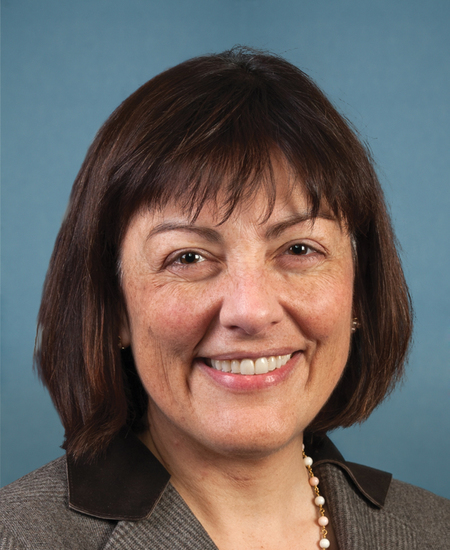
Photo of Suzan K. DelBene
D United States House · District 1 · Washington On the 2026 ballot

Rep. Suzan K. DelBene

Compare
Total votes
2,837
all sessions
Attendance
99%
16 missed
Near the chamber average
With party
98%
of cast votes
Higher than 89% of chamber peers
Bipartisan score
1%
crosses aisle rarely
Lower than 90% of chamber peers
Sponsored
1,708
bills & resolutions
Higher than 89% of chamber peers
Committees
4
assignments
1,708 bills and resolutions

Sponsored bills

Total
1,708
Primary
60
Co-sponsor
1,648
This page
1,708
matching current filters
Co-sponsor HRES 1402
In committee · Indiana House · Co-sponsor
Supporting the goals and ideals of Alzheimer's and Brain Awareness Month.

Maddy summaryThis resolution expresses the House of Representatives' support for the goals of Alzheimer's and Brain Awareness Month, which takes place in June. It aims to raise public awareness about Alzheimer's disease and other forms of dementia while encouraging individuals to educate themselves and advocate for better research and care services. The document highlights the significant impact of these conditions on millions of Americans and calls for increased support for patients, their families, and caregivers.

In committee Jun 30, 2026 1 co-sponsor
Co-sponsor HR 9432
In committee · Indiana House · Co-sponsor
LIFT the BAR Act

Maddy summaryThe LIFT the BAR Act aims to restore access to federal benefits for lawfully present noncitizens by repealing several restrictions imposed by the 1996 welfare reform law and a 2024 reconciliation bill. Specifically, it would allow eligible noncitizens to receive SNAP food assistance, Medicaid, CHIP, and child nutrition programs, while also updating legal terminology to refer to "noncitizens" rather than "aliens" in relevant statutes. The legislation includes provisions to ensure these individuals can qualify for premium tax credits and would require federal agencies to issue implementation guidance within 180 days of enactment.

In committee Jun 30, 2026 1 co-sponsor
Co-sponsor HR 9519
In committee · Indiana House · Co-sponsor
Social Security 2100 Act

Maddy summaryThe Social Security 2100 Act proposes significant changes to the U.S. retirement system, primarily increasing benefits for retirees, disabled individuals, and their families while also restructuring how the program is funded and administered. Key provisions include raising the maximum benefit percentage to 93 percent, adjusting cost-of-living calculations to better reflect inflation for elderly consumers, and creating new credits for caregivers of dependent relatives. The bill also extends disability benefits to children in college until age 26, eliminates the five-month waiting period for disability claims, and removes the cap on earnings subject to Social Security taxes after 2026. Additionally, it establishes a single Social Security Trust Fund to consolidate current accounts and mandates stricter protections for beneficiary data, including limits on access by political appointees and requirements for public notice before closing field offices.

In committee Jun 29, 2026 1 co-sponsor
Primary HR 9509
In committee · Indiana House · Lead sponsor
Kidney Disease Education Access Expansion Act of 2026

Maddy summaryThe Kidney Disease Education Access Expansion Act of 2026 expands Medicare coverage to include kidney disease education services for individuals with hypertension, diabetes, or any stage of chronic kidney disease, rather than limiting them to those with advanced disease. This bill broadens the range of eligible providers to include community health workers and clinical social workers, allows these services to be delivered in group settings or with caregivers present, and adds new topics such as transition assistance for transplant recipients. Starting in 2027, the law also requires private health insurance plans to cover these education services and establishes a working group to develop methods for measuring the effectiveness of the program.

In committee Jun 29, 2026 0 co-sponsors
Co-sponsor HR 6461
In committee · Indiana House · Co-sponsor
READ AI Models Act

Maddy summaryThe READ AI Models Act directs the National Institute of Standards and Technology (NIST) to develop a free, flexible template for documenting artificial intelligence (AI) models. The template would require basic details like developer information, training data cutoff dates, supported languages, and terms of service for both public and private sector AI models. NIST must gather public input through a 60-day comment period before finalizing the template and technical guidelines. If the pilot program proves effective, NIST would publish the template publicly and report to Congress within one year.

In committee Jun 25, 2026 1 co-sponsor
Co-sponsor HR 2385
In committee · Indiana House · Co-sponsor
CREATE AI Act of 2025

Creating Resources for Every American To Experiment with Artificial Intelligence Act of 2025 or the CREATE AI Act of 2025 This bill establishes a national program to provide U.S. researchers, educators, and students with access to artificial intelligence (AI) data, computational resources, educational tools and services, and testbeds. The program, to be known as the National Artificial Intelligence Research Resource (NAIRR), must be established by the National Science Foundation (NSF) to improve U.S. AI research capacity and spur the strategic development of AI capabilities. NAIRR may accept and use donated resources from the private sector and federal agencies. Those eligible to use NAIRR resources are (1) researchers, educators, and students based in the United States and affiliated with a U.S. institution of higher education, nonprofit, executive agency, or other specified entity; and (2) employees of U.S. executive agencies or federally funded research and development centers with a demonstrable mission need. NSF must select a nongovernmental organization to operate NAIRR (i.e., an operating entity ) through a competitive and transparent process. The operating entity must ensure that a significant percentage of the annual allotment of computational resources is provided to projects primarily focused on AI privacy, ethics, safety, security, risk mitigation, or trustworthiness. The operating entity must also establish minimum security requirements for all individuals interacting with NAIRR. The operating entity may establish a fee schedule for access to NAIRR, which must include a free tier of access and must ensure that the primary purpose of NAIRR is to support research.


In committee Jun 25, 2026 1 co-sponsor
Co-sponsor HR 9250
In committee · Indiana House · Co-sponsor
Great American Outdoors Act 250

Maddy summaryThis bill redesignates the existing National Parks and Public Land Legacy Restoration Fund as the America's Legacy Restoration Fund to address deferred maintenance on federal lands. It directs revenue from recreation fees and a portion of energy development income into the fund, which must be used primarily for repairing critical infrastructure like roads, trails, and buildings managed by agencies such as the National Park Service and the Forest Service. The legislation establishes strict rules requiring that most funds go toward non-transportation projects, mandates transparency through public dashboards tracking project status, and sets aside a small percentage for matching private donations. Additionally, the bill increases entrance fees for foreign visitors to ensure they contribute to the fund, while prohibiting the use of these specific funds for land acquisition or employee bonuses.

In committee Jun 24, 2026 1 co-sponsor
Co-sponsor HR 9414
In committee · Indiana House · Co-sponsor
Pell Grant Preservation and Expansion Act of 2026

Maddy summaryThe Pell Grant Preservation and Expansion Act of 2026 aims to increase financial aid for college students by raising the maximum Pell Grant amount to $15,000 by the 2031-2032 award year and ensuring the program is fully funded through mandatory spending rather than annual appropriations. The bill also expands eligibility for students who receive means-tested government benefits by automatically assigning them a lower financial need score, while simultaneously allowing Dreamer students - undocumented immigrants who meet specific criteria such as graduating high school or serving in the military - to qualify for federal aid. Additional provisions restore the total number of semesters a student can receive Pell Grants from 12 to 18 and adjust the rules for satisfactory academic progress to reduce penalties for students who struggle to meet grade requirements. Finally, the legislation restores Pell Grant eligibility for some students who previously received outside scholarships and sets the law's effective date for July 1, 2026.

In committee Jun 23, 2026 1 co-sponsor
Co-sponsor HR 9401
In committee · Indiana House · Co-sponsor
Latonya Reeves Freedom Act of 2026

Maddy summaryThe Latonya Reeves Freedom Act of 2026 strengthens the Americans with Disabilities Act to ensure individuals with long-term service and support needs have a federally protected right to live in their communities rather than institutions. It requires states and insurance providers to offer community-based services that allow people to maintain independence, control their own care, and access affordable, integrated housing. The bill mandates that public entities and insurers create enforceable transition plans to move people out of institutions, conduct self-evaluations to identify barriers, and establish clear grievance procedures for resolving complaints. Enforcement is handled by the Department of Justice, which can investigate violations, while individuals may also file civil lawsuits to seek damages or court orders preventing institutionalization.

In committee Jun 23, 2026 1 co-sponsor
Co-sponsor HR 9383
In committee · Indiana House · Co-sponsor
Small Business and Consumer Credit Act of 2026

Maddy summaryThe Small Business and Consumer Credit Act of 2026 changes how certain financial institutions can use tax losses to offset future profits. It allows these banks to carry forward net operating losses for up to 20 years, with additional rules allowing them to carry losses back to previous years starting in 2028. The law specifically applies to independent banks and certain affiliated groups, requiring them to make an irrevocable election on their tax returns to use these new provisions.

In committee Jun 22, 2026 1 co-sponsor
Showing 41 to 50 of 1,708 bills
Previous 1 … 4 5 6 … 171 Next