

Maddy summaryHR 4180, "Canyon’s Law," prohibits the use of M-44 devices - predator control tools containing highly toxic sodium cyanide - on public lands managed by federal agencies like the National Park Service, Fish and Wildlife Service, and Forest Service. The bill requires all federal, state, and county agencies to remove existing M-44 devices from public lands within 30 days of enactment. It directly affects agencies and land managers who previously deployed these devices, which have caused human poisonings (including incidents involving children), killed over 50 family dogs, and harmed endangered species. The law aims to eliminate the risk of accidental exposure and non-target wildlife deaths by banning the devices' use on public lands.
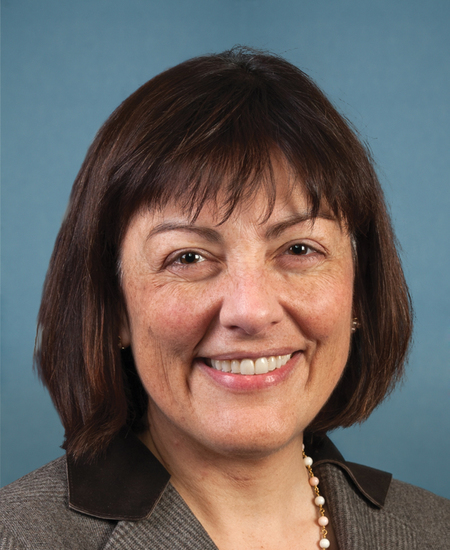
Rep. Suzan K. DelBene
Sponsored bills
Maddy summaryThe Equal Dignity for Married Taxpayers Act amends the Internal Revenue Code to replace gendered terms like "husband and wife" with gender-neutral language such as "married couple" or "spouses" throughout tax law. This bill affects all married couples filing federal taxes by making the tax code consistent for all married couples regardless of gender. It makes over 30 specific changes to tax code sections, including replacing "his spouse" with "the individual's spouse" and updating references to marital status. The bill does not alter tax rates, deductions, or credits - it only updates language to be more inclusive. This is a technical language update to ensure the tax code treats all married couples equally without gendered references.
Maddy summaryThis bill prohibits defendants in federal criminal cases from using a victim's LGBTQ identity (sexual orientation, gender identity, or expression) as a defense to excuse or reduce punishment for violent crimes. It amends federal law to ban arguments that claim a "nonviolent sexual advance" or inaccurate perception of someone's LGBTQ status justified the defendant's actions. The law allows limited admission of past trauma evidence under standard federal rules but requires the Attorney General to annually report on federal prosecutions involving bias-motivated violence against LGBTQ individuals. This directly affects defendants in federal court cases where such defenses were previously used, aiming to end the practice of treating LGBTQ victims' identities as justification for violence.
Maddy summaryThe PRIDE Act of 2025 updates the Internal Revenue Code by replacing gender-specific terms like "husband and wife" with gender-neutral terms such as "married couple" or "spouse" across over 30 tax code provisions. This change affects all married couples filing federal taxes and the IRS, as it modernizes tax law language to be inclusive of all married individuals regardless of gender. The bill makes specific textual amendments to sections dealing with filing status, deductions, credits, and estate tax provisions without creating new tax benefits. It ensures tax law language does not assume the gender of spouses, making the tax code more equitable for all married couples. This is a language update to existing tax law, not a change in tax policy or benefits.
Maddy summaryThe Women's Health Protection Act of 2025 would protect access to abortion services across the United States by prohibiting states from imposing restrictions that are more burdensome than those on comparable medical procedures. The bill directly affects people seeking abortion care and health care providers by banning restrictions such as mandatory in-person visits, requirements for specific tests, limitations on telemedicine, and rules based on a patient's reason for seeking abortion. It prohibits state laws that single out abortion for unnecessary restrictions while allowing post-viability abortions when necessary to protect a patient's life or health. The bill preempts conflicting state laws and provides enforcement mechanisms through private lawsuits and actions by the Attorney General.
Maddy summaryHR 4106, the Prevent Illegal Gun Sales Act, strengthens gun dealer oversight by requiring three annual compliance inspections (up from one) and increasing penalties for violations to up to five years in prison. It imposes $10,000 civil penalties per violation for unsafe gun storage or failures to maintain records, and mandates physical inventory checks if a dealer unlawfully transfers firearms or 10+ crime guns are traced to them. The bill allows the Attorney General to suspend or revoke dealer licenses for serious violations, including felony convictions, and requires dealers to maintain secure storage. These changes directly affect licensed gun dealers, manufacturers, and importers by tightening accountability for compliance with federal gun laws.
Maddy summaryHR 4108, the Refuge From Cruel Trapping Act, bans the possession or use of body-gripping traps (traps that kill or severely injure wildlife) in National Wildlife Refuges. It directly affects visitors, hunters, and trappers using such traps within refuge boundaries, with limited exceptions for federal agencies managing invasive species or endangered wildlife, dismantling traps, Alaska-specific use, and tribal subsistence hunting. The bill includes penalties of up to $500 per trap, potential jail time, and forfeiture of traps or captured wildlife for violations. It requires the Secretary of the Interior to issue implementing regulations within 120 days but takes effect 120 days after enactment.
Maddy summaryThis bill prohibits state officials from blocking abortion access for patients traveling from other states, including restricting providers who offer legal abortions in their state to out-of-state patients. It protects people traveling across state lines for legal abortions, those assisting such travel, and the interstate transport of FDA-approved abortion medication. Violations can be challenged by the Justice Department or affected individuals through civil lawsuits seeking injunctions and damages. The law applies broadly across all states, territories, and tribal nations, defining "abortion service" to include both medical procedures and related care.
Maddy summaryHR 4104 would expand access to Medicaid, CHIP, and Affordable Care Act (ACA) health coverage for immigrants lawfully present in the U.S., including those with deferred action or pending immigration applications. It removes state-level barriers to Medicaid/CHIP eligibility for lawfully present individuals, treats Federally authorized presence as "lawfully present" for ACA subsidies, and allows states to choose to cover undocumented individuals through Medicaid or CHIP. The bill also extends these changes to Medicare Part A and Part B, ensuring lawfully present immigrants qualify for coverage and subsidies under existing programs. These provisions apply to all federally funded health programs and take effect in 2026 for most ACA-related changes.
Maddy summaryThis bill creates federal funding for community-based violence intervention programs in high-violence areas, targeting communities with 35+ homicides annually or 20+ homicides with rates double the national average. It establishes grants for community organizations to implement trauma-informed violence interruption strategies, hospital-based programs for injured patients, and job training for "opportunity youth" (16-25 year olds not in school or work). The legislation authorizes $300 million in 2026, increasing to $700 million annually through 2033, with requirements for evidence-based approaches that reduce violence without contributing to mass incarceration. It creates a National Community Violence Response Center to coordinate data collection, research, and best practices for these programs. The focus is on prevention through economic opportunity, trauma care, and community-driven interventions rather than traditional law enforcement approaches.