

Maddy summaryHR 1522, the Federal Retirement Fairness Act, changes federal retirement rules to include temporary employees' service after January 1, 1988, in retirement benefit calculations. It directly affects temporary federal employees (including U.S. Postal Service workers) and Members of Congress who served after that date. The bill removes a previous cutoff date in retirement law, allowing their temporary service to count toward retirement eligibility. This means eligible temporary workers can now have their full service period considered when calculating retirement benefits.
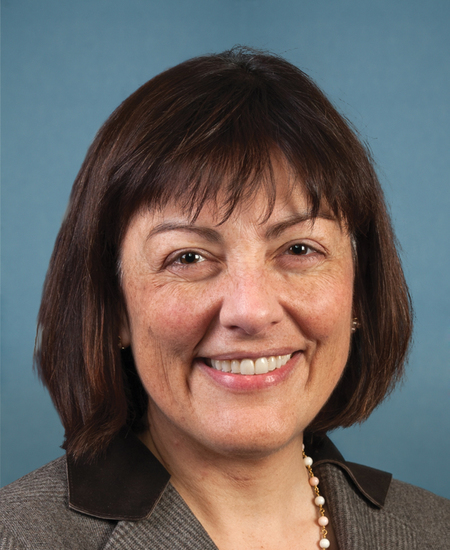
Rep. Suzan K. DelBene
Sponsored bills
Maddy summaryHR 4516, the Saving Lives and Taxpayer Dollars Act, prohibits the U.S. government or its aid partners from destroying food, medicine, vaccines, or other foreign assistance commodities before they expire, requiring these items to be redirected to intended beneficiaries instead. The bill mandates that agencies like USAID, State, and Agriculture must make every effort to donate or sell expired aid items to those in need before disposal. It also requires annual reports to Congress detailing any expired, spoiled, or destroyed aid items, including reasons for not redirecting them and associated costs. This directly affects U.S. foreign aid agencies and their global partners, ensuring aid reaches people facing hunger, disease, or health crises rather than being wasted.
Maddy summaryHR 4484 (ADAPT Act) adds Medicare coverage for psychological services provided by supervised trainees - doctoral interns or postdoctoral residents in APA-accredited programs under licensed psychologists' supervision. It requires a new billing code (GC modifier) for these services and directs the Health Secretary to issue Medicaid/CHIP guidance to states on implementing similar coverage, including recommended billing codes and state examples. The bill directly affects trainees seeking licensure and their supervising psychologists by enabling federal billing for their services. States would use the guidance to adjust coverage policies for trainee services under Medicaid and CHIP programs.
Maddy summaryThis bill prohibits federal and state governments from restricting access to FDA-approved medicines. It guarantees individuals the right to obtain these medicines without coercion and allows healthcare providers (like doctors and pharmacists) to prescribe or refer for them. The law blocks governments from implementing rules that single out or hinder the sale, provision, or use of FDA-approved drugs, such as bans on specific medicines or barriers to patient access. It does not affect the FDA's drug approval process or existing health insurance coverage requirements.
Maddy summaryThis bill establishes federal worker heat protection standards to prevent heat-related illness and injury. It requires employers to provide a workplace free from heat stress hazards, including access to cool water, scheduled rest breaks, shaded cooling areas, and training on heat illness symptoms. The Secretary of Labor must create these standards within one year, incorporating evidence-based practices like engineering controls (e.g., ventilation), administrative measures (e.g., adjusted schedules), and employer-paid personal protective equipment. The law directly affects all employers in high-heat work environments - such as construction, agriculture, and manufacturing - and strengthens whistleblower protections for workers reporting safety violations.
Maddy summaryHR 4470, the *Removing Burdens From Organ Donation Act*, requires hospitals to electronically notify organ procurement agencies when a potential donor is deceased or near death, with remote access to updated electronic health records (EHRs). This applies to most hospitals starting two years after the law's enactment, but allows exemptions for rural hospitals lacking reliable internet, those hit by cyberattacks, or disaster-affected facilities. The bill mandates federal guidance for hospitals and EHR companies on implementation, plus annual reports on exemptions and a GAO study on costs, rural challenges, and transplant outcomes. It directly affects hospitals, organ procurement agencies, and EHR providers by streamlining donor notification processes.
Maddy summaryThe Child Care for Working Families Act creates a federal program to provide affordable, high-quality child care for working families with children under age 6. It would provide direct child care assistance through certificates or grants to parents, with no copayment required for families at or below 85% of state median income. The program requires states to implement quality standards for child care providers, including a tiered quality system and minimum wage requirements for staff (at least a living wage equivalent to elementary educators). The bill appropriates $20 billion for the program over five years, with additional funding for quality improvement initiatives and universal preschool services.
Maddy summaryThis non-binding House resolution (HRES 577) demands that the current administration immediately release all unclassified federal documents related to Jeffrey Epstein, including flight logs, correspondence, and evidence. It specifically requires the release of materials involving Epstein, Ghislaine Maxwell, and known associates, with redactions only to protect minor victims' identities and ongoing prosecutions. The resolution also calls for the Department of Justice and FBI to submit a report on any delays or evidence suppression related to the case. As a resolution, it does not create new law but serves as a formal congressional demand for transparency regarding Epstein-related investigations.
Maddy summaryHR 4382 authorizes the U.S. Mint to produce commemorative coins for the 2028 Los Angeles Olympics/Paralympics and 2034 Salt Lake City Winter Olympics/Paralympics. It specifies gold, silver, and half-dollar coin designs with defined mintage limits (e.g., up to 100,000 $5 gold coins for each event), all bearing inscriptions like "2028" or "2034" and standard coin features. A surcharge ($5-$50 per coin) is added to sales, with all funds directed to the respective Olympic committees to support event hosting and legacy programs like youth sports. The bill ensures no net cost to the government by requiring surcharge revenues to cover all design, production, and marketing expenses before funds are disbursed.
Maddy summaryHCONRES 42 is a symbolic congressional resolution recognizing the persistent wage gap between Black women and White, non-Hispanic men in the U.S. It highlights that Black women earn 66 cents for every dollar earned by White, non-Hispanic men working full-time year-round, with the gap taking over 200 years to close at current rates. The resolution emphasizes how this disparity - rooted in both racial and gender discrimination - impacts Black women’s ability to afford essentials like education, childcare, and housing. It does not create new laws or policies but formally acknowledges the issue on Black Women’s Equal Pay Day (July 10, 2025) and reaffirms support for equal pay.