

Domestic Workers Bill of Rights Act This bill provides rights and protections for domestic workers (e.g., housekeepers, nannies, caretakers, personal assistants, and chauffeurs), including pay and leave rights, and health and safety protections. Specifically, the bill repeals the exemption of domestic live-in employees from certain minimum wage and maximum hour requirements. Employers must provide written notice of termination and provide at least 30 days of lodging and two weeks of severance pay to terminated live-in employees. Live-in employees also must be provided with reasonable access to telephone and internet service during their employment. The bill requires employers to provide domestic workers with a written agreement covering wages, sick leave, benefits, and other matters. Further, domestic workers may request and be granted changes to work schedules due to personal events. The bill also provides domestic workers with certain privacy rights, extends to domestic workers protections against discrimination in employment, and increases the federal medical assistance percentage (FMAP) for certain Medicaid-funded medical services provided by domestic workers. The Department of Labor must (1) award grants for a domestic worker national hotline for reporting emergencies, training on hazards facing domestic workers, and workforce investment activities for domestic workers; and (2) establish a Domestic Worker Wage and Standards Board to investigate standards in the domestic workers industry. Labor must publish online a document that describes the rights and protections for domestic workers under this bill.
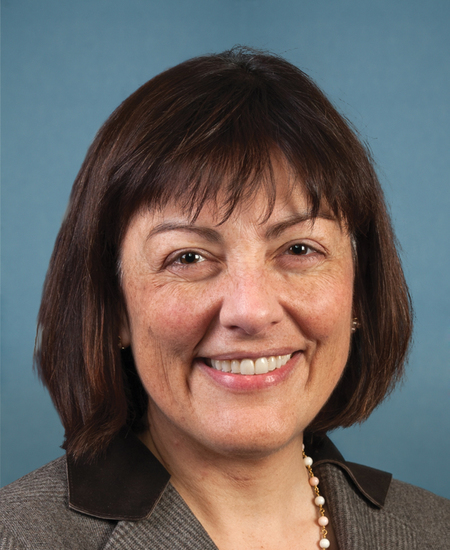
Rep. Suzan K. DelBene
Sponsored bills
Pension and Budget Integrity Act of 20 21 This bill prohibits certain provisions from being counted as an offset to determine budget points of order for legislation in the House of Representatives or the Senate. Specifically, a provision that increases or extends an increase of single-employer pension program premiums payable to the Pension Benefit Guaranty Corporation (PBGC) may not be counted as such an offset. (The PBGC is a federal agency that insures the benefits of private sector, defined benefit pension plans. The PBGC is financed by insurance premiums paid by sponsors of the plans, investment income, assets from pension plans taken over by the PBGC, and recoveries from the companies formerly responsible for the plans.)
Stop Copay Overpay Act This bill prohibits the Department of Defense (DOD) from charging a covered individual (i.e., individuals enrolled under the TRICARE program) a co-payment exceeding a certain rate for an outpatient visit for mental health or behavioral health under the TRICARE program, regardless of whether the visit is furnished by a specialty care provider. Specifically, the co-payment amount may not exceed the amount of a co-payment that would be charged under the TRICARE program for an outpatient visit for primary care services. During the one-year period after this bill is enacted, DOD may not increase the co-payment amount charged to a covered individual for any service (1) furnished by a specialty care provider under the TRICARE program, and (2) that is not mental or behavioral health care.
Affordable EVs for Working Families Act This bill allows an income-based tax credit for the purchase of a previously-owned qualified plug-in electric drive motor vehicle. The credit is limited to 30% of the sales price of such a vehicle. The bill defines previously-owned qualified plug-in electric drive motor vehicle to mean a motor vehicle the model year of which is at least two years earlier than the calendar year in which the vehicle is acquired and that meets certain requirements under the Clean Air Act.
Respond, Innovate, Succeed, and Empower Act of 2021 or the RISE Act of 2021 This bill establishes requirements for institutions of higher education (IHEs) concerning students with disabilities. Specifically, the bill requires IHEs to allow students to use certain documents, such as individualized education programs, to establish their disabilities. In addition, IHEs must make the process for determining the eligibility for accommodations transparent. Finally, IHEs must submit key data related to their undergraduate students with disabilities for inclusion in federal postsecondary institution data collection efforts.
Distillery Revitalization Act This bill requires the Small Business Administration to modify the Restaurant Revitalization Program, established to support food and beverage purveyors in response to COVID-19, to allow certain distilleries to participate in the program. To be program-eligible, a distillery must have at least 33% of revenue from on-site sales. However, certain states limit the percentage of revenue that a distillery may have from on-site sales to less than 33%. For a distillery located in such a state, the bill allows the distillery to use its combined revenue from on-site sales and sales to retailers for on-site sales to reach the 33% threshold.
Seniors' Chronic Care Management Improvement Act of 2021 This bill eliminates cost-sharing for chronic care management services under Medicare.
Captive Primate Safety Act This bill limits the trade and possession of nonhuman primates. For example, the bill prohibits most individuals from owning a nonhuman primate as a pet.
Bear Protection Act of 2021 This bill prohibits the import, export, and commerce of bear viscera or related products except for limited acts carried out solely to enforce wildlife protection laws.
Exposing Discrimination in Higher Education Act This bill requires the Department of Education's Office for Civil Rights to publish prominently on its website the names of the institutions of higher education (IHEs) that request, and the names of the IHEs that receive, religious exemptions from the prohibition on sex discrimination in federally funded education programs and activities. It also requires an IHE that requests, receives, exercises, or intends to exercise such a religious exemption to publish prominently on its website certain information with respect to such exemption.