

Health Equity and Accountability Act of 2022 This bill directs the Department of Health and Human Services (HHS) and others to undertake efforts to reduce health disparities. For example, the bill (1) requires more detailed reporting of demographic and health disparities data, including related to public health emergencies; (2) directs certain components of HHS to support health workforce diversity; and (3) increases access to culturally and linguistically appropriate health care. The bill also modifies eligibility and other requirements for Medicare, Medicaid, private health insurance, nutrition assistance, and other programs to reduce health disparities among vulnerable populations. The bill includes specific provisions with respect to noncitizens; maternal, infant, and child health; mental and behavioral health; specified conditions that disproportionately affect racial and ethnic minority groups, such as certain cancers, HIV/AIDS, kidney disease, and diabetes; investments in communities facing health and other inequities; and nondiscrimination in the provision of services in federally supported health programs. Additionally, the bill (1) revises health information technology programs to address health disparities, and (2) supports health impact assessments and other efforts pertaining to environmental justice and social determinants of health (i.e., nonmedical factors that influence health outcomes, such as income and educational attainment). The bill also requires various studies and reports on issues related to health care and health disparities, including a report by the Government Accountability Office on health workforce diversity.
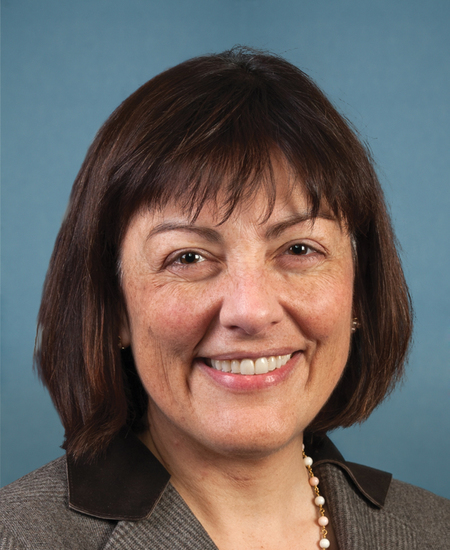
Rep. Suzan K. DelBene
Sponsored bills
Stop Anti-Abortion Disinformation Act or the SAD Act This bill prohibits advertisements that use deceptive or misleading statements related to the provision of abortion services. Abortion services include (1) surgical and non-surgical procedures to terminate a pregnancy, or (2) providing referrals for such procedures. The Federal Trade Commission must promulgate rules to implement the prohibition, and the bill provides for enforcement by the commission.
Save America’s Forgotten Equines Act of 2021 or the SAFE Act of 2021 This bill prohibits the transporting, receiving, possessing, purchasing, selling, or donation by a person of an equine (e.g., horse) that the person has reason to believe will be slaughtered for human consumption.
Affordable and Accessible Infant Formula Act This bill provides through November 14, 2022, duty-free treatment to infant formula. During this time period, articles of infant formula shall not be subject to (1) any additional safeguard duties that may be imposed under subchapter IV of chapter 99 of the Harmonized Tariff Schedule; or (2) any other import quotas, tariff-rate quotas, additional duties, or any other duties, fees, exactions, or charges that otherwise would apply to such articles. Importers shall provide the applicable and anticipated tariff classifications for articles of infant formula on applicable customs entry documents.
This resolution celebrates the 50th anniversary of the Federal Pell Grant program and expresses support for the designation of National Federal Pell Grant Day.
This resolution recognizes the historical significance to the nation of Juneteenth Independence Day (commemorating the end of slavery in the United States).
Recovering America’s Wildlife Act of 2022 This bill provides funding for the conservation or restoration of wildlife and plant species of greatest conservation need, including endangered or threatened species, and establishes related requirements. TITLE I--WILDLIFE CONSERVATION AND RESTORATION (Sec. 101) This title establishes and funds a subaccount of the Wildlife Conservation and Restoration Account, which was established under the Pittman-Robertson Wildlife Restoration Act. The subaccount must be used to support efforts of states, territories, or the District of Columbia to recover and manage wildlife and plant species of greatest conservation need. The Department of the Interior must use a portion of the funding from the subaccount for grants to state fish and wildlife departments, the District of Columbia fish and wildlife department, fish and wildlife departments of territories, nonprofit organizations, or regional associations of fish and wildlife departments. The grants must be used for innovative recovery efforts for species of greatest conservation need, species listed as endangered or threatened species, or the habitats of such species. Funding for the subaccount must supplement existing funds available to the states from funds distributed under the Dingell-Johnson Sport Fish Restoration Act and the Wildlife Conservation and Restoration Account. Recipients of the funding from the subaccount must match federal funds as specified by the title. The Government Accountability Office must study and report on the progress of states, territories, the District of Columbia, and Indian tribes in protecting species of greatest conservation need, endangered species, and threatened species. TITLE II--TRIBAL WILDLIFE CONSERVATION AND RESTORATION (Sec. 201) This title establishes and funds a Tribal Wildlife Conservation and Restoration Account to support Indian tribes' efforts to recover and manage wildlife and plant species of greatest conservation need. Indian tribes are not required to provide matching funds. TITLE III--ENDANGERED SPECIES RECOVERY AND HABITAT CONSERVATION LEGACY FUND (Sec. 301) This title establishes and funds through FY2026 the Endangered Species Recovery and Habitat Conservation Legacy Fund. The U.S. Fish and Wildlife Service must use the fund to (1) implement an Endangered Species Recovery Grant Program; (2) address its interagency consultation responsibilities under the Endangered Species Act of 1973; (3) work with nonfederal entities to conserve wildlife habitat and at-risk species, threatened or endangered species, or species proposed to be listed as threatened or endangered species; or (4) address the development and permitting of voluntary conservation agreements under such act. Amounts made available under the fund must supplement other federal amounts made available to carry out such activities. The President must annually submit to Congress, together with the annual budget of the United States, a list of threatened species and endangered species for which recovery plans will be developed or implemented with amounts from the Endangered Species Recovery and Habitat Conservation Legacy Fund. TITLE IV--REPORT (Sec. 401) Interior must also report on information concerning the amount of grants and contracts that were awarded or are allocated under this bill to Historically Black Colleges and Universities, Hispanic-serving educational institutions, tribally controlled colleges and universities, minority-serving educational institutions, minority-owned business enterprises, women-owned business enterprises, and community-based organizations that are principally administered by, operated by, or serving minority communities.
Advanced Aviation Infrastructure Modernization Act or the AAIM Act This bill establishes a pilot grant program to support advanced air mobility (AAM) infrastructure. AAM infrastructure refers to an air transportation system that transports individuals and property between points in the United States in both controlled and uncontrolled airspace using certain aircraft, including remotely piloted, autonomous, or vertical take-off and landing aircraft. The Department of Transportation (DOT) must award planning grants for AAM infrastructure to (1) state, local, or tribal governments; (2) airport sponsors; (3) transit agencies; (4) port authorities; (5) metropolitan planning organizations; or (6) consortia of such entities. Entities that receive these grants must develop a comprehensive plan for AAM infrastructure, including vertiports (sites that support the landing, takeoff, loading, and other operations of vertical take-off and landing aircraft). Topics covered in the plan must address matters such as identifying locations for AAM infrastructure and available sources of funding. DOT must brief Congress about the plans it receives. The briefing must include an evaluation of the planned or proposed locations for vertiports and a description of best practices or lessons learned through the review of comprehensive plans. If the Federal Aviation Administration issues type certificates for at least two aircraft models designed to provide AAM transportation and other requirements are met, DOT may award construction grants to entities that submitted comprehensive plans. Recipients may use grant funds for design, environmental studies, and other capital costs related to the construction of a public-use vertiport or associated infrastructure. Grants may not be awarded after September 30, 2023.
Commission To Study the Potential Creation of a National Museum of Asian Pacific American History and Culture Act This bill establishes a Commission to Study the Potential Creation of a National Museum of Asian Pacific American History and Culture. The commission must (1) report recommendations for a plan of action for the establishment and maintenance of a National Museum of Asian Pacific American History and Culture in Washington, DC; (2) develop a fundraising plan to support the establishment, operation, and maintenance of the museum through public contributions; (3) obtain an independent review of this fundraising plan, including an analysis of the resources necessary to fund the construction of the museum and its operations and maintenance in perpetuity without reliance on federal funds; and (4) submit a legislative plan of action to establish and construct the museum. The commission may convene a national conference relating to the museum. The commission shall be solely responsible for acceptance of contributions to it and payment of its expenses. No federal funding may be obligated to carry out this bill.
Military Spouse Hiring Act This bill expands the Work Opportunity Tax Credit (WOTC) to include the hiring of a qualified military spouse. (The WOTC permits employers who hire individuals who are members of a targeted group such as qualified veterans, ex-felons, or long-term unemployment recipients to claim a tax credit equal to a portion of the wages paid to those individuals.) A qualified military spouse is any individual who is certified by the designated local agency as being (as of the hiring date) a spouse of a member of the Armed Forces.