

Maddy summaryThe Poll Worker Tax Cut Act (H.R. 8342) proposes to reduce the federal income tax burden for individuals who serve as temporary poll workers during elections. It amends the Internal Revenue Code to exclude compensation received by poll workers from their gross income for federal income tax purposes. However, this exclusion would not apply to employment taxes, meaning poll worker compensation would still be subject to taxes like Social Security and Medicare. These changes would take effect for compensation received after December 31, 2025.
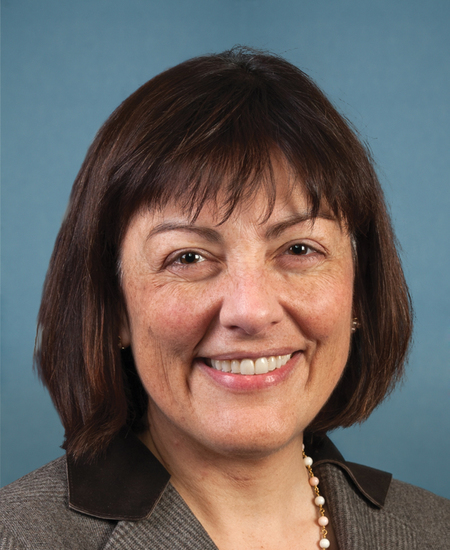
Rep. Suzan K. DelBene
Sponsored bills
Maddy summaryThe KIDNEY Remote Monitoring Act (H.R. 8319) aims to ensure Medicare payment for remote physiologic monitoring services provided to individuals with end-stage renal disease (ESRD) who receive home dialysis. The bill amends the Social Security Act to direct that these monitoring services, when furnished by a physician, will be paid for under Medicare Part B. This change would take effect for services provided on or after January 1, 2028, aligning their payment with the standard fee schedule for physician services.
Maddy summaryThis concurrent resolution (HCONRES 40) directs the President to remove U.S. military forces from hostilities with Iran, as required by the War Powers Resolution. It applies directly to U.S. Armed Forces deployed in conflict with Iran, except for forces needed to defend the U.S. or allies from imminent attack. The bill mandates removal unless the President complies with War Powers Resolution reporting requirements for self-defense actions, without needing new congressional authorization. As a procedural resolution, it does not create new law but compels executive action under existing legal framework.
Maddy summaryThis resolution commemorates the fifth anniversary of the April 15, 2021, mass shooting in Indianapolis that killed eight people, including four members of the Sikh community, and denounces anti-Asian hate and xenophobic rhetoric. It formally condemns violence and discrimination against South Asian Americans, Arabs, Hindus, Muslims, and Sikhs, while also criticizing white supremacist ideology and anti-immigrant policies. The bill calls for expanded federal hate crime data collection and prevention programs, restoration of immigration processing, and reaffirms the government's commitment to protecting civil rights. As a House resolution, it expresses congressional sentiment and recommendations rather than enacting new laws or regulations.
Maddy summaryThe OPTIONS Act establishes a new type of employer-sponsored benefit arrangement called a Qualified Benefit Options Plan (QBOP), affecting employers and their employees. Under a QBOP, employees can choose how their employer's contributions are allocated among various pre-tax qualified benefits, such as contributions to retirement plans, health savings accounts, or educational assistance programs. A key distinction is that employees cannot opt to receive cash or other taxable benefits instead of these qualified benefits. Employer contributions made through a QBOP are excluded from an employee's taxable income, offering a tax-advantaged way for employers to provide flexible benefit options. The bill includes rules to ensure benefits are not disproportionately skewed towards highly compensated employees and applies to taxable years beginning after December 31, 2025.
Maddy summaryThe Responder and Recovery Safety in EV Fires Act establishes an Electric Vehicle Fire Response Working Group under the Secretary of Transportation. This group, composed of emergency responders, towing professionals, automotive manufacturers, and federal agencies, will continuously review risks and best practices related to electric vehicle (EV) fires. Its key functions include issuing updated guidance for responding to EV fires and reporting roadside EV fire incidents to a national database. These efforts aim to enhance safety and improve response protocols for EV fire incidents, directly affecting those involved in roadside emergency response and recovery.
Maddy summaryThis bill establishes a 17-member Commission on Presidential Capacity to Discharge the Powers and Duties of the Office. This commission, composed primarily of medical professionals and former high-ranking executive officials, would be activated by a concurrent resolution of Congress. Its duty would be to conduct a medical examination of the President to determine if they are mentally or physically unable to discharge the powers and duties of the office due to conditions such as illness, disability, or substance use. Following the examination, the commission would report its findings and a declaration on the President's capacity to Congress and the Vice President, with any refusal by the President to undergo examination taken into consideration.
Maddy summaryHR 8261, the Chronic Care Management Improvement Act of 2026, aims to reduce healthcare costs for Medicare Part B beneficiaries receiving chronic care management services. Effective January 1, 2027, the bill mandates that Medicare will cover 100% of the cost for these specific services. This means individuals will no longer be responsible for any copayments or deductibles for chronic care management. The change directly affects Medicare Part B enrollees who utilize these services, making them more affordable by eliminating out-of-pocket costs.
Maddy summaryThis bill cancels a presidential proclamation that would have imposed a temporary import surcharge on goods entering the United States. It directly affects businesses and consumers by declaring the surcharge invalid and prohibiting the government from collecting or spending money on it. The legislation also requires the President to refund any tariffs already collected under the canceled proclamation. This action effectively removes the proposed import tax and restores the previous trade policy status.
Maddy summaryThe Maternal Vaccination Act amends the Public Health Service Act to expand a federal campaign focused on increasing vaccination rates among pregnant and postpartum individuals and their children. This legislation directly affects public health programs by updating language to explicitly include these populations and directing funding toward outreach efforts that address disparities among racial and ethnic minority groups. Key provisions modify existing sections of the Public Health Service Act to broaden the campaign's scope and increase the authorized funding amount from $15 million to $17 million per fiscal year for the period 2027 through 2031. The bill aims to improve vaccination equity by ensuring federal resources specifically target maternal and pediatric immunization efforts.