

Maddy summaryThe Protecting Young Minds Online Act requires the Center for Mental Health Services to develop and implement a strategy helping local communities address how new technologies, such as social media, affect children's mental health. This strategy will provide communities with practical resources and guidance to support children's well-being in digital environments. The bill amends the Public Health Service Act to add this specific requirement for the Center. It directly affects the Center for Mental Health Services (which must create the strategy) and local communities (which will use the strategy to address technology-related mental health challenges for children).
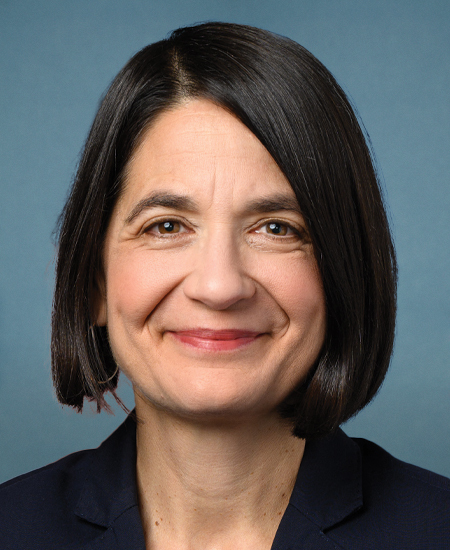
Rep. Becca Balint
Sponsored bills
Maddy summaryHR 5048, the "Don’t STEAL Act," amends the Fair Labor Standards Act to ensure workers receive the highest wage promised in their contracts or collective bargaining agreements, whichever exceeds federal or state minimum wage requirements. It directly affects employees engaged in commerce or working for businesses involved in commerce, requiring employers to pay at least the higher of their agreed-upon wage or the legal minimum. The bill establishes criminal penalties for willful wage theft exceeding $1,000 (up to 5 years in prison) and civil penalties for all unpaid wages, with fines funding the Department of Labor’s Wage and Hour Division enforcement efforts. These changes apply to violations occurring 90 days after enactment.
Maddy summaryThis bill permanently establishes the Coordinator for Afghan Relocation Efforts (CARE) within the State Department, expanding their role to prioritize family reunification for U.S. military personnel and veterans with Afghan allies. It mandates the Coordinator to collect detailed data on Afghan applicants (including special immigrant visa seekers, refugees, and parolees), vetting timelines, and pending family reunification cases into a centralized database. The Coordinator must report this data to Congress every 90 days to ensure transparency and inform policy decisions. The law directly affects Afghan allies and their families seeking U.S. relocation, particularly those connected to U.S. military service.
Maddy summaryThe SUN Act (HR 4998) requires the President to submit a detailed report to Congress within 15 days whenever National Guard members are deployed domestically for non-disaster purposes under specific laws. The report must include the legal basis for the deployment, evidence of reduced violence, input from local law enforcement, total costs, and a certification that the deployment won’t interfere with disaster response capabilities. It applies to all domestic uses of the National Guard except for responses to natural disasters under the Stafford Act. The bill aims to enhance congressional oversight of military deployments on U.S. soil.
Maddy summaryHJRES 113 designates August 20 as Slavery Remembrance Day to commemorate the arrival of the first 20 enslaved Africans in Virginia in 1619 and honor the enduring legacy of slavery. The resolution requests the President issue a proclamation encouraging the public to observe this day through ceremonies and activities that acknowledge slavery's horrors and its lasting impacts. It includes historical context about the transatlantic slave trade, the Middle Passage, and figures like Harriet Tubman, while posthumously recognizing Reconstruction-era Black Congress members. As a symbolic commemorative resolution, it does not create new laws or directly affect any group, but serves to raise awareness about slavery's history and consequences.
Maddy summaryThis bill (HJRES 115) terminates a presidential emergency declaration made on August 11, 2025, which claimed a "crime emergency" in Washington, D.C. It directly affects the District of Columbia by ending federal restrictions that prevented D.C. from using $1 billion in locally-raised funds for public safety, law enforcement, fire services, and schools. The resolution cites that the emergency declaration was legally flawed - section 740 of the DC Home Rule Act does not permit federalizing the Metropolitan Police Department - and notes that D.C. violent crime has reached a 30-year low. The bill formally ends the emergency under the DC Home Rule Act, restoring D.C.'s authority over its own budget and public safety resources.
Maddy summaryHR 4959, the "Land of the Free Act of 2025," repeals a specific deportation provision in immigration law. It removes Section 237(a)(4)(C) of the Immigration and Nationality Act (8 U.S.C. 1227(a)(4)(C)), which previously allowed non-citizens to be deported for engaging in "protected speech activities." This change directly affects non-citizens who might have faced deportation under that provision for exercising free speech rights. The bill makes a concrete policy change by eliminating this exception to deportation.
Maddy summaryHR 4966 prohibits grocery stores from selling items at "grossly excessive prices," defined as 120% or more above the average market price over the previous six months (with exceptions for unavoidable cost increases like supply chain issues). It bans using facial recognition or personal data to set different prices for individual customers (e.g., adjusting prices based on shopping history) and requires clear signage if facial recognition is used. Stores over 10,000 square feet must replace electronic shelf labels with physical price tags. The Federal Trade Commission enforces these rules, allowing consumers to seek $3,000 per violation or actual damages, with penalties for willful violations.
Maddy summaryHR 4917, the Expanding the VOTE Act, amends the Voting Rights Act to increase language access for voters. It expands the definition of "voting materials" to include digital formats and requires states to provide language assistance (both written and oral) for minority language groups, with special provisions for American Indian and Alaska Native languages when written translations aren't feasible. The bill creates grants to help jurisdictions provide voting materials in languages that don't currently trigger Section 203 coverage, and mandates a study on lowering population thresholds for language assistance requirements. This directly affects states, local election jurisdictions, and voters who speak minority languages, including those in communities not currently covered by existing language access rules.
Maddy summaryThe Election Mail Act (HR 4915) establishes new standards for handling voting-by-mail materials in Federal elections. It requires the Postal Service to process absentee ballots the same day received, add postmarks showing mailing dates, and treat election mail as first-class with free postage for completed ballots. States must provide ballot return envelopes with tracking barcodes and accept mailed ballots postmarked on election day if received within 7 days. These provisions apply to Federal elections starting in 2026, with some requirements taking effect sooner.