

Maddy summaryThis bill prohibits providing, facilitating, or possessing wireless devices (like cell phones) in U.S. detention facilities (e.g., prisons, jails) if such actions violate existing federal or state laws. It imposes civil fines up to $50,000 per violation (capped at $1 million total) or criminal fines up to $50,000 for intentional violations. The law explicitly excludes lawful law enforcement activities and state enforcement powers, and defines "detention facility" broadly to include all correctional and penal institutions. It applies to conduct occurring after enactment.
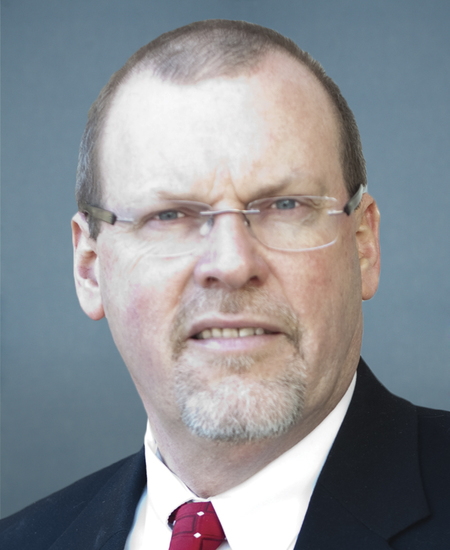
Rep. H. Morgan Griffith
Sponsored bills
Maddy summaryHR 3982, the Methane Reduction and Economic Growth Act, creates a new tax credit for businesses capturing methane from mining operations. It directly affects mining facilities that capture at least 2,500 metric tons of methane annually from underground, abandoned, surface mines, or related activities, requiring the methane to be used for energy (with minimal leaks) or injected into compliant pipelines. The credit replaces carbon capture provisions in the tax code, defining "qualified methane" as methane captured at the source and verified for use or storage. The credit applies to methane captured after December 31, 2022, for facilities beginning construction before January 1, 2033.
Maddy summaryThis bill requires federal agencies to incorporate bird-safe design features in public buildings during construction, acquisition, or major renovations (over 50% facade alteration). It mandates the General Services Administration to develop and update a design guide with strategies like specialized glass, lighting modifications, and maintenance practices to reduce bird collisions. The guide must be shared with all federal agencies and include input from bird conservation experts. Exemptions apply to historic sites, the White House, Supreme Court, and Capitol complex. Annual reports on compliance and bird fatality assessments must be submitted to Congress.
Maddy summaryThis bill prohibits the Department of Veterans Affairs from changing its anesthesia care policies to allow nurse anesthetists (CRNAs) to provide anesthesia independently without a physician anesthesiologist. It specifically blocks implementation of a 2016 proposed rule that would have expanded CRNAs' authority in VA facilities. The law maintains current requirements that physician anesthesiologists must oversee or provide anesthesia care for veterans during surgical procedures. Emergency orders for veteran safety during surgery remain permitted under the bill's exception clause.
Maddy summaryThe HALT Fentanyl Act expands the definition of fentanyl-related substances in the Controlled Substances Act to include many structurally similar compounds, making it easier to regulate new fentanyl analogs without individual listing. It defines these substances based on specific chemical modifications to fentanyl, with limited exceptions for substances already controlled or listed elsewhere. The bill also streamlines research procedures for schedule I substances by creating expedited registration processes and allowing multiple studies under one registration, while requiring the Attorney General to publish a list of substances meeting the new definition.
Barriers and Regulatory Obstacles Avoids Deployment of Broadband Access and Needs Deregulatory Leadership Act or the BROADBAND Leadership Act This bill limits the authority of a state or locality to regulate the placement, construction, or modification of telecommunications service facilities. States and localities may not discriminate in such regulations among providers of functionally equivalent services, including based on the technology used to provide services. In addition, they may not regulate in a manner that effectively prohibits the provision or improvement of interstate or intrastate telecommunications services. However, states and localities may charge reasonable, cost-based fees for (1) reviewing requests to place, construct, or modify telecommunications service facilities; or (2) using property owned or managed by the state or locality for placing, constructing, or modifying those facilities. Additionally, states or localities must respond to requests for placing, constructing, or modifying facilities and for other actions related to those facilities by specified deadlines. If a decision is not made by the deadline, the request is deemed to be approved. Further, denials of requests must be (1) written, (2) supported by substantial evidence, and (3) publicly released on the same day the decision is made. An adversely affected person may petition the courts to review the actions of a state or locality, and the courts must review in an expedited manner.
Maddy summaryThe Pay Our Correctional Officers Fairly Act adjusts pay for Bureau of Prisons employees currently assigned to the "Rest of U.S." pay locality. It directs that if an employee's worksite is within 200 miles of another pay locality, they will be paid according to the nearest locality with the highest pay rate - replacing the lower "Rest of U.S." rate. This applies to correctional officers and other Bureau of Prisons staff, but excludes employees whose worksite is more than 200 miles from any other locality. The change takes effect 180 days after the bill is enacted.
This bill allows the child tax credit to be used for stillbirths. A stillbirth is delivery after the involuntary death of an unborn child who was carried in the womb for 20 weeks or more.
Maddy summaryHRES 341 is a nonbinding resolution expressing the House's support for maintaining cash as a viable payment option. It highlights that 18.6% of U.S. households (nearly 6 million) rely solely on cash due to lack of bank access, privacy concerns, and risks associated with digital payments like data breaches. The resolution cites legal tender status under U.S. Code and Federal Reserve Chair Powell's testimony emphasizing cash's critical role for unbanked and low-income communities. It does not create new laws but urges businesses to accept cash to protect consumer privacy and financial security.
This resolution expresses U.S. support for Israel and its efforts to defend its right to existence. The resolution also declares that the United States and international community must prevent Iran from acquiring or building nuclear weapons.