

Maddy summaryThis bill requires cities with populations over 100,000 that apply for federal hate crime grants to credibly report hate crime data to the FBI. It mandates the Attorney General to evaluate each year whether such jurisdictions are reporting hate crimes (not reporting zero incidents or nothing), with failure to do so risking loss of grant funding. Jurisdictions can avoid penalties by implementing "significant community initiatives," such as adopting hate crime reporting policies, creating specialized units, or holding public education forums about hate crimes and victim services. The bill also requires annual public reports on jurisdictions meeting these initiative standards, aiming to improve data accuracy for federal hate crime statistics.
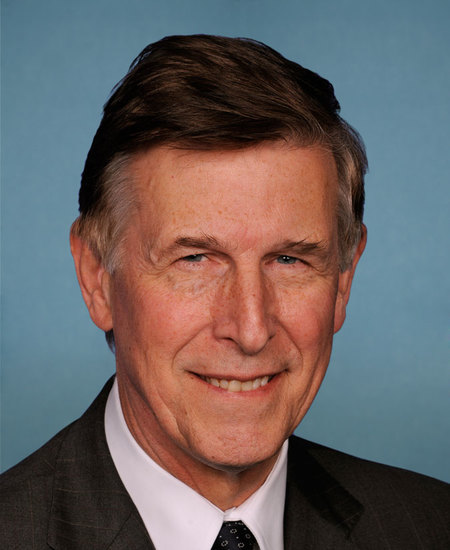
Rep. Donald S. Beyer, Jr.
Sponsored bills
Maddy summaryThis concurrent resolution (HCONRES 97) recognizes the gender wage gap, noting that women working full-time earn 84 cents for every dollar earned by men. It highlights racial disparities (e.g., Latinas earn 57 cents, Black women 69 cents) and the economic impact of the gap, including $965 billion in annual lost wages for women. As a symbolic resolution, it does not create new laws or policies but formally acknowledges the issue and reaffirms Congress’s commitment to addressing wage inequality.
Maddy summaryHRES 1074 is a symbolic House resolution reaffirming congressional support for a two-state solution to the Israel-Palestine conflict. It explicitly states the House supports Israel's right to exist as a Jewish, democratic state and recognizes Palestinians' right to sovereignty through a separate state. The resolution identifies a two-state solution as the best path to lasting peace and condemns efforts opposing this approach. As a non-binding resolution, it does not create new law or policy but formally expresses the House's position on this issue. It was introduced by multiple House members on March 12, 2024.
Maddy summaryHR 7629, the Protect Our Letter Carriers Act of 2024, allocates $1.4 billion annually (2025-2029) to the U.S. Postal Service for high-security collection boxes and replacing physical universal mailbox keys with electronic versions, directly affecting USPS operations and letter carriers. It requires the Attorney General to appoint specialized prosecutors in each district to coordinate investigations and prosecutions of postal-related crimes, such as assaults on carriers or mail theft. The bill also mandates the U.S. Sentencing Commission to adjust guidelines so that assaults or robberies against postal employees are treated with the same severity as assaults against law enforcement officers. These provisions aim to enhance safety through infrastructure upgrades, improved prosecution, and stricter sentencing for crimes targeting postal workers.
Maddy summaryThe American High-Speed Rail Act authorizes $35 billion annually for high-speed rail corridor development (with $3 billion for corridor planning), requiring at least 20% of project costs to come from non-Federal sources. It defines "high-speed rail" as services reaching 186+ mph and "higher-speed rail" as 110-186 mph, with no more than 20% of funds allocated to higher-speed rail projects. Key provisions include allowing advance acquisition of rail corridors before environmental reviews, creating tax exclusions for rail carriers selling property to high-speed rail projects, and requiring consideration of equity, sustainability, and economic development impacts in planning. The bill affects federal agencies, state and local governments, rail carriers, and communities along proposed rail corridors.
Maddy summaryHR 7550, the Washington, DC, Area Helicopter Noise Information Exchange Act, requires the Federal Aviation Administration (FAA) to create a public website sharing helicopter noise complaint data within 180 days of enactment. Helicopter operators in the Washington, DC, area (defined as within a 30-mile radius of Reagan National Airport) must submit noise complaint data to the FAA through this system. The data includes location, event times, aircraft description, and airport name, but excludes personal identifiers of complainants. This bill establishes a mechanism for information sharing based on a 2021 GAO report, directly affecting FAA operations, helicopter operators, and the public seeking noise complaint details.
Maddy summaryHR 533, the "Promoting a Resolution to the Tibet-China Dispute Act," establishes U.S. policy recognizing Tibetans' right to self-determination under international law and rejects China's historical claims about Tibet. It directs the State Department to counter Chinese disinformation about Tibet’s history and status, including claims that Tibet has been part of China "since ancient times," and amends the 2002 Tibetan Policy Act to require specific disinformation countermeasures. The bill defines "Tibet" to include the Tibet Autonomous Region and Tibetan areas in Qinghai, Sichuan, Gansu, and Yunnan provinces. These provisions aim to guide U.S. diplomatic efforts toward resolving the Tibet-China dispute through dialogue and factual representation.
Maddy summaryHRES 1003 is a symbolic resolution recognizing the contributions of Vietnamese Americans. It acknowledges that approximately 800,000 Vietnamese refugees resettled in the U.S. after the Vietnam War and that over 1.7 million Vietnamese Americans now live in the U.S., forming the fourth largest Asian American group. The resolution highlights their achievements in fields like business, education, the military, and public service, as well as their support for democracy and cultural diversity. As a non-binding resolution, it has no legal effect or direct impact on policy or individuals.
Maddy summaryHR 7252, the Child and Dependent Care Tax Credit Enhancement Act of 2024, increases the maximum credit amounts for child and dependent care expenses to $8,000 for one child and $16,000 for two or more children. It adjusts income thresholds so the credit begins phasing out at $125,000 of adjusted gross income and slows the phaseout rate above $400,000. The bill also makes the credit refundable for eligible taxpayers (allowing refunds even if no tax is owed) and adds automatic annual inflation adjustments to the credit limits starting in 2025. These changes directly affect families paying for childcare or dependent care to work or seek employment.
Maddy summaryHR 7197, the Artificial Intelligence Environmental Impacts Act of 2024, requires the Environmental Protection Agency (EPA) to conduct a comprehensive study on AI's environmental footprint - including energy use, water consumption, e-waste, and pollution across AI models' full lifecycle - and to solicit public input. It establishes a voluntary reporting system for AI companies (voluntary reporting entities) to share data on their environmental impacts, supported by guidelines developed with a stakeholder consortium focused on creating measurement standards. The bill mandates a 4-year report to Congress detailing the consortium’s findings, the reporting system’s design, and recommendations for future action to address negative impacts or promote positive ones. This legislation does not impose mandatory regulations but aims to build data and standards for informed decision-making about AI’s environmental effects.