

Maddy summaryHCONRES 4 is a symbolic resolution expressing Congress's support for tax-exempt fraternal benefit societies (like mutual aid organizations). It recognizes these groups, which have over 7 million members nationwide, as historically and currently providing critical community benefits - including life/health insurance, charitable work, and volunteer services - valued at over $3.8 billion annually. The resolution affirms that their tax-exempt status under Section 501(c)(8) of the Internal Revenue Code remains beneficial and should continue to be promoted. This is a non-binding expression of congressional sentiment, not a policy change.
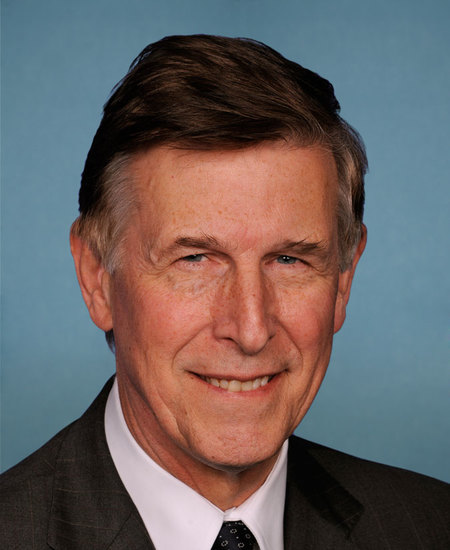
Rep. Donald S. Beyer, Jr.
Sponsored bills
Maddy summaryThis resolution expresses the House of Representatives' position that Congress should take steps to prevent the privatization of the United States Postal Service (USPS), ensuring it remains a federal independent agency. It highlights USPS’s constitutional role, self-sustaining nature (relying on service revenue, not taxpayer funds), and critical functions - serving 168 million addresses daily, supporting rural communities, and underpinning e-commerce. The resolution opposes privatization, noting it would raise prices, reduce services, and harm the $1.9 trillion mailing industry. As a non-binding resolution, it reflects the House’s stance but does not create new law or policy.
Maddy summaryHR 764, the Global Health, Empowerment and Rights Act, removes two barriers for foreign nongovernmental organizations (NGOs) seeking U.S. foreign assistance. It ensures these organizations cannot be denied funding solely because they provide health services (like counseling and referrals) using non-U.S. government funds, as long as those services comply with local laws. The bill also requires that foreign NGOs face the same rules on using non-U.S. funds for advocacy and lobbying as U.S. NGOs receiving similar aid. This directly affects international health-focused NGOs working in countries where U.S. aid is provided.
Maddy summaryHRES 68 is a non-binding House resolution expressing strong disapproval of the President’s announcement to withdraw the U.S. from the Paris Agreement. It commends states, businesses, and citizens supporting the Agreement, urges the President to reverse the withdrawal decision, and calls for Congress to prioritize U.S. climate leadership. The resolution does not create new laws or affect specific groups but formally states the House’s position against withdrawing from the international climate accord. It was introduced by 115 co-sponsors and reflects broad congressional concern about reversing U.S. climate commitments.
Maddy summaryHR 717 establishes a grant program to fund projects improving habitat connectivity for migratory wildlife, primarily benefiting big game species like deer, elk, and pronghorn. The bill provides federal funding (with up to 90% federal share) for states, tribes, nonprofits, and landowners to implement habitat improvements such as fence modifications, wildlife crossings, and habitat restoration in identified movement areas. Projects must include support from state or tribal wildlife agencies, and at least 50% of funding must target big game movement areas. The program coordinates with existing initiatives like the Migratory Big Game Initiative and requires annual reporting on conservation outcomes.
Maddy summaryHR 669, the "Restricting First Use of Nuclear Weapons Act of 2025," requires Congress to declare war before the U.S. can conduct a first-use nuclear strike. It directly affects the President (who currently has sole authority to authorize such strikes), military commanders, and Congress by mandating that federal funds cannot be used for a first-use attack without a congressional declaration of war. The bill defines a "first-use nuclear strike" as an attack launched without prior confirmation that the U.S., its territories, or allies were first hit with nuclear weapons. This law changes policy by creating a constitutional check on presidential nuclear authority, requiring explicit congressional approval for the initial use of nuclear weapons.
Boundary Waters Wilderness Protection and Pollution Prevention Act This bill protects and preserves approximately 225,504 acres of federal land and waters in a specified area in the Rainy River Watershed of Superior National Forest in Minnesota from certain mining, such as sulfide-ore copper mining. (The area is upstream from the Boundary Waters Canoe Area Wilderness.) Specifically, the bill withdraws those acres from entry, appropriation, and disposal under the public land laws; location, entry, and patent under the mining laws; and operation of the mineral leasing, mineral materials, and geothermal leasing laws. However, the Forest Service is authorized to permit the removal of sand, granite, iron ore, and taconite from national forest system lands within such area if the removal is not detrimental to the water quality, air quality, and health of forest habitat within the Rainy River Watershed. Land or interest in land within such area that is acquired by the United States must be immediately withdrawn in accordance with this bill.
Maddy summaryThe Inaugural Fund Integrity Act regulates donations to official presidential inaugural committees. It prohibits these committees from accepting money from corporations, foreign nationals, or donations made under another person's name. Individuals can donate up to $50,000 annually (adjusted for inflation), and committees must disclose all donations over $1,000 within 24 hours, plus detailed final reports showing all spending over $200. Unused funds may still be transferred to tax-exempt charities. This applies to inaugural committees organizing the 2029 and later presidential inaugurations.
Maddy summaryThis bill prohibits discrimination based on gender identity, sexual orientation, or sex characteristics in military service. It requires that eligibility for military service and all personnel policies consider only an individual's ability to meet job-specific military standards, banning the use of race, color, national origin, religion, or gender-related factors. The law directly affects all current and prospective members of the Armed Forces by mandating that military occupational standards apply equally to everyone. It amends Title 10 of the U.S. Code to establish these protections as a formal requirement for all military personnel policies.
Maddy summaryThis bill creates special tax rules for certain Taiwanese residents with income from U.S. sources, primarily addressing double taxation concerns. It reduces withholding tax rates on interest, dividends, and royalties from 30% to 10% (or 15% for certain dividends) for qualified Taiwanese residents, and eliminates tax on certain wages paid to Taiwanese workers in the U.S. It also sets a $30,000 annual limit on tax-free income from entertainment or athletic activities. To qualify, individuals must meet specific residency and ownership criteria, and the bill requires reciprocal tax benefits from Taiwan before taking effect. This legislation is designed to facilitate economic activity between the U.S. and Taiwan without requiring a formal tax treaty.