

Maddy summaryHRES 684 is a non-binding House resolution designating September 9, 2025, as "National Firearm Suicide Prevention Day." It aims to raise public awareness about firearm suicide statistics (including that firearms were used in 55% of U.S. suicides in 2023) and promote safe firearm storage as a key suicide prevention strategy. The resolution encourages health professionals to discuss safe storage with patients and supports existing awareness efforts led by organizations like Brady and End Family Fire. It directly affects the public and healthcare providers by emphasizing evidence-based prevention practices, not by creating new laws.
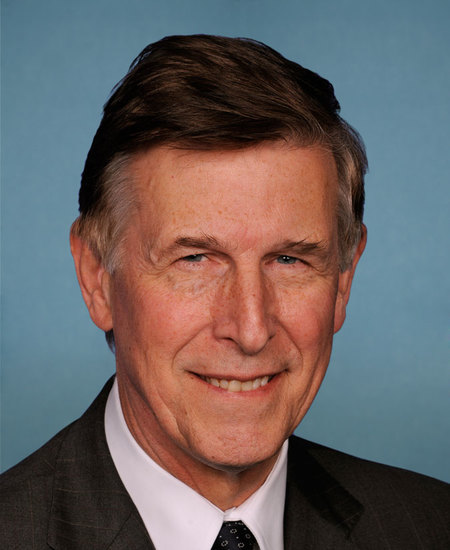
Rep. Donald S. Beyer, Jr.
Sponsored bills
Maddy summaryThis bill extends preferential U.S. trade benefits for Haitian exports until 2037 (previously ending in 2025) under the Caribbean Basin Economic Recovery Act. It requires Haitian producers to comply with core labor standards and Haitian labor laws related to minimum wages, working hours, and safe conditions to maintain these benefits. The bill also creates a new technical assistance program where the U.S. Trade Representative will work with Haitian government agencies, businesses, labor groups, and trade support institutions to boost exports - focusing on agricultural processing, apparel sector competitiveness, and export strategy development. These changes directly affect Haitian exporters seeking U.S. trade preferences and U.S. agencies administering trade programs.
Maddy summaryThe Appalachian Trail Centennial Act designates the Appalachian Trail Conservancy as the official "Designated Operational Partner" for the Appalachian National Scenic Trail, establishing a formal framework for federal-volunteer partnerships in trail management. It creates processes for developing "land and resource protection priority lists" to guide federal funding decisions for trail conservation, while ensuring volunteer organizations can continue their crucial role in trail maintenance and stewardship. The bill also requires regular economic impact assessments for communities near the trail ("gateway communities") and sets protocols for determining visitor capacity on specific trail segments. This legislation codifies and enhances the longstanding partnership model that has successfully maintained the Appalachian Trail for over a century, with potential application to other national scenic and historic trails.
Maddy summaryThis bill allows federal or state courts to determine unpaid federal tax liabilities (including penalties) for businesses or assets under court-appointed receivership. It directly affects receivers managing failed entities (like banks or corporations), the estates they oversee, and tax authorities. Courts can resolve tax disputes within 60 days if the government doesn’t review a receiver’s tax return, or 180 days if an audit is needed, with exceptions for prior court decisions, refund requests (requiring 120 days), and expired property tax challenges. The bill also requires government tax units to pay owed taxes without claiming sovereign immunity, ensuring they can’t avoid accountability.
Maddy summaryThe Quiet Communities Act of 2025 reestablishes the Environmental Protection Agency’s Office of Noise Abatement and Control, which was defunded in 1982. This office will provide grants to states for local noise control programs, conduct national research on noise health impacts, develop public education materials, and create regional technical assistance centers. The bill authorizes $25 million annually (2026-2030) to fund these activities, directly supporting communities affected by noise pollution - particularly the estimated 28 million U.S. residents with hearing impairments linked to noise exposure. It emphasizes state/local solutions, market incentives, and coordination with other agencies to address noise from aircraft, traffic, and other sources.
Maddy summaryThis bill requires federal law enforcement officers to wear body cameras during most public interactions, with specific rules for activation (during calls for service and enforcement stops) and deactivation (only with consent from those being recorded). It mandates that body camera footage be retained for six months generally, or three years for incidents involving use of force or complaints, while establishing procedures for public access to footage with privacy protections. The bill prohibits the use of facial recognition technology with body cameras or in-car recording systems and requires patrol vehicles to have in-car video recording equipment that captures audio and video for at least 10 hours. It also includes detailed provisions for handling footage, redaction requirements, and specific rules for use of force investigations and public disclosure.
Maddy summaryThis bill (HJRES 115) terminates a presidential emergency declaration made on August 11, 2025, which claimed a "crime emergency" in Washington, D.C. It directly affects the District of Columbia by ending federal restrictions that prevented D.C. from using $1 billion in locally-raised funds for public safety, law enforcement, fire services, and schools. The resolution cites that the emergency declaration was legally flawed - section 740 of the DC Home Rule Act does not permit federalizing the Metropolitan Police Department - and notes that D.C. violent crime has reached a 30-year low. The bill formally ends the emergency under the DC Home Rule Act, restoring D.C.'s authority over its own budget and public safety resources.
Maddy summaryThis bill amends the Higher Education Act to include Fulbright Teacher Exchange Program and Fulbright English Teaching Assistant Program participation as qualifying public service employment for student loan forgiveness. It directly affects teachers who serve in these Fulbright programs, allowing them to count their service toward existing loan cancellation benefits under the public service repayment plan. The key provision adds a specific definition to the law, treating Fulbright teaching roles as equivalent to other public service jobs for loan forgiveness eligibility. This change expands access to an existing program without altering the core loan forgiveness mechanism. The bill does not create new benefits but makes Fulbright teaching service eligible under current rules.
Maddy summaryHR 4918, the Advancing Gun Safety Technology Act, authorizes a $10 million pilot program for fiscal year 2026 to fund small businesses (under 500 employees) developing gun safety technology. The program provides grants to create devices like smart guns, childproof locks, or personalized safes that reduce accidental or unauthorized use. Grantees must report on milestones including prototype development, testing, and plans for bringing these technologies to market. The bill directly affects small gun technology developers by providing federal funding and reporting requirements for their safety-focused products.
Maddy summaryThe Sustaining Our Democracy Act establishes a federal program providing funding to states for election administration improvements, increased voter access, and protection of election workers. States must submit detailed plans for using funds to upgrade voting equipment, expand early and mail voting options, secure election infrastructure, and address disparities in voting access for underserved communities. The bill prohibits states from using funds for activities that restrict voting access or suppress participation, and creates an Office of Democracy Advancement and Innovation to administer the program. Funded through a $2.5 billion Trust Fund for fiscal years 2026-2035, this legislation directly affects all 50 states, the District of Columbia, and U.S. territories receiving federal election funding.