

Fracturing Responsibility and Awareness of Chemicals Act of 2021 This bill revises drinking water requirements concerning hydraulic fracturing (fracking) operations. Hydraulic fracturing, or fracking, is a process to extract underground resources such as oil or gas from a geologic formation by injecting water, a propping agent (e.g., sand), and chemical additives into a well under enough pressure to fracture the geologic formation. The bill gives the Environmental Protection Agency (EPA) the authority to protect groundwater sources (e.g., wells) from certain pollution risks posed by fracking operations. The bill also establishes requirements for disclosing the chemicals intended for use in fracking operations as well as the chemicals actually used in the operations. If the proprietary chemical formulas of chemicals used in fracking operations are necessary for treatment in medical emergencies, then the operations must disclose the formulas or the specific chemical identities of trade secret chemicals to the state, the EPA, or the treating physicians or nurses upon request, regardless of whether written statements of need or confidentiality agreements have been provided.
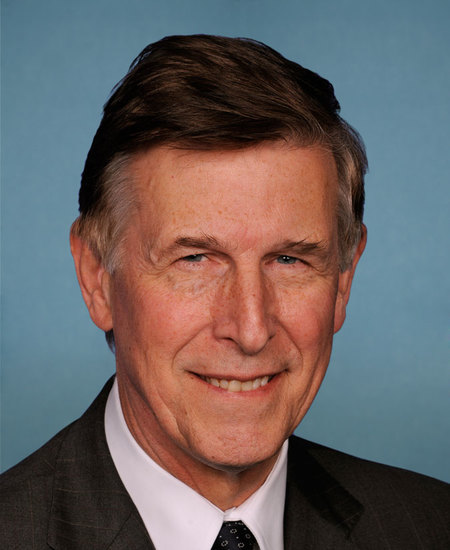
Rep. Donald S. Beyer, Jr.
Sponsored bills
Willie O'Ree Congressional Gold Medal Act This bill provides for the award of a Congressional Gold Medal to Willie O'Ree or, if unavailable, to a member of his family, in recognition of his contributions and commitment to hockey, inclusion, and recreational opportunity.
This bill requires the Joint Committee on the Library to enter into an agreement to obtain a statue of Shirley Chisholm, the first African American woman elected to Congress. The committee shall place the statue in a permanent public location in the U.S. Capitol.
Emmett Till and Mamie Till-Mobley Congressional Gold Medal Act of 2021 This bill provides for the posthumous presentation of a Congressional Gold Medal in commemoration of Emmett Till and Mamie Till-Mobley. After the award the medal shall be given to the National Museum of African American History and Culture.
This bill directs the Department of State to include additional information in its annual reports concerning Taiwan's participation at the World Health Organization's World Health Assembly (WHA) as an observer. The report shall describe changes and improvements to the State Department's plan to support Taiwan's observer status at the WHA, following any meetings at which Taiwan did not participate under such status. (China has opposed Taiwan's participation in the WHA.)
Protecting Americans with Pre-Existing Conditions Act of 2021 This bill nullifies specified guidance and final rule provisions pertaining to Section 1332 waivers (also known as State Innovation Waivers or State Relief and Empowerment Waivers) issued by the Department of the Treasury and the Department of Health and Human Services. The provisions allow states to forego certain requirements of the Patient Protection and Affordable Care Act in order to implement experimental plans for health care coverage, as long as the resulting coverage meets certain statutory criteria. The provisions, which supersede earlier guidance from 2015, alter agency interpretation of how states may satisfy the statutory criteria for waiver approval. For example, the provisions (1) redefine acceptable coverage under such waivers to include short-term, limited-duration insurance and association health plans; (2) allow the comprehensiveness and affordability of coverage under such waivers to be assessed based on projected availability, rather than enrollment; and (3) allow the level of coverage to be assessed based on the effects over the entire course of the waiver, rather than per year.
Safe Hydration is an American Right in Energy Development Act of 2021 This bill requires hydraulic fracturing operations to test for and report on underground sources of drinking water that are contaminated by such operations. Hydraulic fracturing, or fracking, is a process to extract underground resources such as oil or gas from a geologic formation by injecting water, a propping agent (e.g., sand), and chemical additives into a well under enough pressure to fracture the formation. Specifically, this bill revises requirements governing state underground injection control programs. In order to obtain primary enforcement responsibility for such programs, states must prohibit the underground injection of fluids or propping agents pursuant to hydraulic fracturing operations related to oil, gas, or geothermal production activities unless the hydraulic fracturing operations agree to test for and report on contamination of drinking water. Hydraulic fracturing operations are exempted from those testing and reporting requirements if there is no accessible underground source of drinking water within a radius of one mile of the site where the operations occur. The Environmental Protection Agency must establish and maintain a publicly accessible and searchable database of the testing results.
Focused Reduction of Effluence and Stormwater runoff through Hydrofracking Environmental Regulation Act of 2021 or the FRESHER Act of 2021 This bill addresses stormwater runoff from mining, oil, or gas operations. Specifically, it eliminates a prohibition on the Environmental Protection Agency from requiring a permit under the National Pollutant Discharge Elimination System for discharges of certain collected, uncontaminated stormwater runoff from mining operations or oil and gas operations. In addition, the Department of the Interior must study stormwater runoff associated with oil or gas operations, including an analysis of (1) measurable contamination, (2) groundwater resources, and (3) the susceptibility of aquifers to contamination from stormwater runoff associated with the operations.
CLEANER Act of 2021 or the Closing Loopholes and Ending Arbitrary and Needless Evasion of Regulations Act of 2021 This bill eliminates the exemption of waste associated with the exploration, development, or production of crude oil, natural gas, or geothermal energy from regulations governing the disposal of hazardous waste. Within a year of enactment, the Environmental Protection Agency (EPA) must determine whether such waste meets the criteria for hazardous waste, promulgate regulations concerning the disposal of such waste if the EPA determines it is hazardous, and revise regulations applicable to solid waste management and disposal facilities (e.g., landfills) to address such waste that is nonhazardous.
Children and Media Research Advancement Act or the CAMRA Act This bill requires the National Institutes of Health to fund research regarding the effects of media on infants, children, and adolescents. Such research must examine the impact of media (e.g., social media, television, video games) on cognitive, physical, and social-emotional development.