

Maddy summaryHR 7615, the RELIEF Act, requires the U.S. Customs and Border Protection Commissioner to refund all tariffs collected under emergency economic powers laws (specifically the International Emergency Economic Powers Act) for imports entered on or after January 1, 2025. It mandates these refunds be processed automatically within 90 days of the bill's enactment, without importers needing to file applications or protests. The refund applies to all importers of record for goods subject to these tariffs, covering entries including withdrawals from warehouses for consumption. This directly affects businesses importing goods subject to those specific tariffs by returning funds collected under the emergency authority.
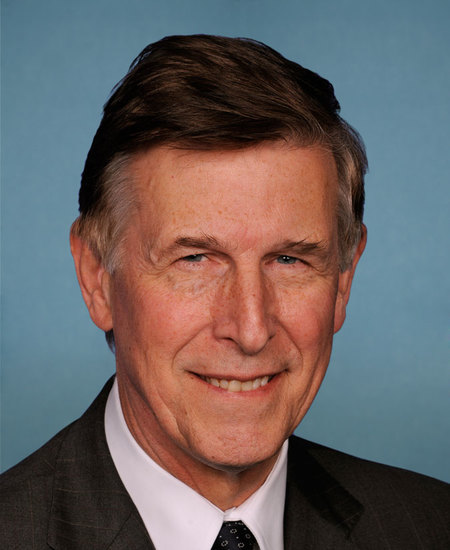
Rep. Donald S. Beyer, Jr.
Sponsored bills
Maddy summaryHR 7599 creates a federal framework for extreme risk protection orders (ERPOs), allowing family members or law enforcement to petition courts to temporarily prohibit individuals from possessing firearms when they pose a risk of harm to themselves or others. The bill establishes a process for issuing ex parte orders (up to 14 days) followed by a hearing within 72 hours to determine if a longer-term order (up to 180 days) should be issued, requiring respondents to surrender firearms to U.S. Marshals or designated law enforcement. Courts must consider specific factors like recent threats, violence, substance abuse, or cruelty to animals before issuing orders, with no fees for petitioners. The law requires law enforcement training to address bias, includes annual reporting requirements, and ensures firearms are returned once the order expires and the individual is eligible to own firearms under federal law.
Maddy summaryThis bill requires most employers to provide workers with earned paid sick leave. Employees would earn 1 hour of paid sick time for every 30 hours worked, up to 56 hours per year, which can be used for their own illness, medical care, caring for family members (including children, parents, spouses, domestic partners, or other family-like relationships), or addressing domestic violence, sexual assault, or stalking situations. The bill prohibits employers from retaliating against workers who use this leave and requires employers to inform employees about their rights. It ensures that workers who leave and return to the same employer within a year can reinstate their unused sick leave. This law would not override more generous state or local paid leave policies.
Maddy summaryHR 7524, the Older Workers’ Bureau Act, establishes a new bureau within the Department of Labor to address workplace challenges for older workers. The bureau will conduct research on issues like age discrimination, wage disparities, retirement readiness, and access to workplace flexibility for workers aged 55 and older, and administer grant programs to combat structural ageism and improve employment opportunities. It requires annual reports on federal programs supporting older workers and prioritizes grants for organizations serving disadvantaged older workers in areas lacking targeted training. The act authorizes $10 million annually for these research and grant activities starting in fiscal year 2028. This directly affects older workers (55+) and organizations providing services to them, focusing on concrete policy research and program coordination.
Maddy summaryHRES 1059 is a resolution requesting the President to provide the House of Representatives with documents about the Department of Government Efficiency's (DOGE) access to Social Security Administration data. It specifically asks for information on DOGE's efforts to share Social Security data with organizations related to voter rolls or election results, sharing data with the Department of Homeland Security, using third-party servers like Cloudflare, and any actions potentially violating court orders. The President must submit these documents within 14 days of the resolution's adoption. This resolution is a congressional oversight measure to examine compliance with data privacy laws and court orders, not a policy change.
Maddy summaryHR 7507, the Fiscal Harms of Federal Firings Act, mandates the Government Accountability Office (GAO) to study how federal workforce reductions (RIFs) impact state and local government budgets. The study will examine increased costs for services like unemployment insurance and Medicaid, reduced tax revenues, regional economic shifts, and varying fiscal challenges across states. It requires the GAO to consult with state officials, economists, and federal agencies, then submit a public report to Congress within 18 months detailing findings, historical case studies, and policy options. This bill does not change federal policy but aims to provide data for future decisions about RIFs' fiscal effects.
Maddy summaryHR 7516, the "No Funds for Forced Labor Act," requires the U.S. Treasury to direct American representatives at international financial institutions (like the World Bank) to oppose loans for projects that use or risk using forced labor, particularly those involving state-run entities in Xinjiang. It mandates these institutions to vet projects for forced labor risks, explain their vetting process, and detail mitigation steps before funding. The bill directly affects international financial institutions and the projects they fund, especially those linked to Xinjiang. It does not ban all loans but targets projects with documented forced labor concerns, requiring annual reports to Congress on implementation. The law focuses on policy changes to prevent U.S.-aligned financial support for forced labor practices.
Maddy summaryHR 7486, the Protecting Hospitals from Disaster Act of 2026, requires Quality Improvement Organizations (QIOs) to help hospitals and specific healthcare facilities prepare for and respond to extreme weather events. The bill allocates $50 million from Medicare funds in fiscal year 2026 to support this QIO assistance. It directly affects hospitals, psychiatric hospitals, skilled nursing facilities, critical access hospitals, long-term care hospitals, rural emergency hospitals, and inpatient rehabilitation facilities. The key mechanism is mandating QIOs to provide preparedness support to these facilities using the dedicated funding.
Maddy summaryHR 7480, the FAIR Act, sets pay adjustments for federal employees in 2027. It increases base pay by 3.1% for most federal workers under standard pay systems and for employees paid according to local civilian wages in high-cost areas. Additionally, it raises locality pay adjustments by 1% for 2027. The bill directly affects all federal employees covered by these pay systems through concrete, formula-based adjustments.
Maddy summaryHR 7460, the Airborne Act of 2026, creates a new tax credit for property owners to improve indoor air quality in commercial, public, and nonprofit buildings. It provides tax credits of $1 per square foot for air quality assessments, $5 per square foot for air cleaning system upgrades, and $50 per square foot for HVAC upgrades, with higher rates ($25/$250) if projects meet prevailing wage and 15% apprentice labor requirements. The credit applies only to properties meeting ASHRAE air quality standards (62.1-2022 or 241-2023) and requires certification by the Department of Energy. Property owners can claim the credit against federal taxes, with annual limits capping upgrade credits at 50% of related costs.