

Green Vehicle Adoption Nationwide Act of 2021 or the Green VAN Act of 2021 This bill allows a new tax credit through 2031 for an amount equal to 30% of the basis of a qualified commercial electric vehicle. A qualified commercial electric vehicle must meet certain eligibility requirements, and must be mobile machinery and primarily propelled by an electric motor that draws electricity from a battery that (1) has a capacity of not less than 30 kilowatt hours, (2) is capable of being recharged from an external source of electricity, and (3) is not powered or charged by an internal combustion engine.
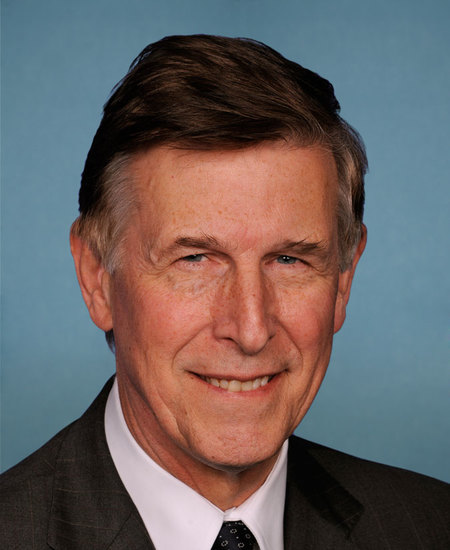
Rep. Donald S. Beyer, Jr.
Sponsored bills
Negating Emissions to Zero Act of 2021 or the NET Zero Act of 2021 This bill extends through 2031 the tax credit for carbon oxide sequestration. It also modifies carbon oxide capture requirements and sets forth a special rule for determining the applicable dollar amount for the deduction of costs relating to direct air capture facilities.
Clean Hydrogen Production and Investment Tax Credit Act of 2021 This bill allows a new tax credit for the production of qualified clean hydrogen. The bill defines qualified clean hydrogen as hydrogen produced through a process that, as compared to hydrogen produced by steam-methane reforming, achieves a percentage reduction in lifecycle greenhouse gas emissions that is not less than 40%. The bill also (1) expands the tax credit for electricity produced from renewable resources if the electricity is used to produce clean hydrogen, (2) allows an election to treat clean hydrogen production facilities as energy property for purposes of the energy tax credit, and (3) eliminates the excise tax credit for liquefied hydrogen.
Energy Efficient Commercial Buildings Act of 2021 This bill temporarily modifies the tax deduction for energy efficient commercial buildings for taxable years beginning after December 31, 2021, and before January 1, 2032. Among other provisions, the bill provides for a lower (25%) reduction of annual energy and power costs for certain energy systems, revises the maximum amount of the deduction, and allows an alternative deduction for costs relating to energy efficient retrofit building property.
Advancing America's Interests Act This bill limits the ability of certain persons (e.g., patent or trademark holders) to bring complaints before the U.S. International Trade Commission (ITC), and it requires the ITC to consider the public interest when determining whether to exclude articles that are under investigation. A complainant before the ITC must satisfy a domestic industry requirement obliging them to have made significant investment in the United States related to the articles that are the subject of the matter. One method to establish domestic industry is through reliance on licensing activities. The bill requires a complainant attempting to demonstrate domestic industry through licensing activities to show that those activities led to the adoption and development of articles that incorporate the patent, copyright, trademark, mask work, or design at issue. Further, the bill prohibits a complainant from relying upon activities by a licensee to demonstrate domestic industry unless the license leads to the adoption and development of articles that incorporate the claimed patent, copyright, trademark, mask work, or design for sale in the United States. In addition, the bill requires the ITC to determine that any exclusion of articles pursuant to an investigation is in the public interest. The ITC must also identify at the beginning of an investigation whether the matter involves a dispositive issue that is appropriate for expedited initial determination and direct the assigned judge to issue such determination not later than 100 days after the investigation is instituted.
Fair COLA for Seniors Act This bill bases cost-of-living adjustments for certain benefits available through federal and military retirement programs, Social Security, and specified programs for veterans on a price index that tracks the spending patterns of older consumers. The Bureau of Labor Statistics of the Department of Labor must publish that price index on a monthly basis.
Improving Medicare Coverage Act This bill temporarily expands eligibility for Medicare. It also temporarily establishes a premium and cost-sharing assistance program for low-income beneficiaries. Specifically, the bill lowers the age of eligibility for Medicare from 65 to 60. The Centers for Medicare & Medicaid Services must establish procedures to provide for automatic enrollment of qualifying individuals. Enrollment must be completed within 11 months of the bill's enactment. The bill also establishes a program under Medicare to assist low-income Medicare beneficiaries with premiums, coinsurance, deductibles, and other costs. Currently, such assistance is provided through Medicare Savings Programs, which are administered by state Medicaid programs. The bill also establishes a related special enrollment period under Medicare, expands eligibility for assistance to beneficiaries with income up to 200% of the federal poverty line, and provides for joint eligibility determinations with respect to the bill's program and the low-income subsidy program under the Medicare prescription drug benefit. The bill's provisions generally take effect six months after the bill's enactment and terminate five years later.
Incentivizing Solar Deployment Act of 2021 This bill extends the tax credit for the production of electricity from solar energy.
Harlem Hellfighters Congressional Gold Medal Act This bill provides for the award of a Congressional Gold Medal to the 369th Infantry Regiment, commonly known as the Harlem Hellfighters, in recognition of their bravery and outstanding service during World War I.
Protecting Vulnerable Patients Act This bill requires health care providers to receive a COVID-19 vaccine as a condition of Medicare and Medicaid participation. Specifically, participating providers must receive a COVID-19 vaccine by the date on which a vaccine is fully approved by the Food and Drug Administration. Providers who choose not to receive the vaccine due to medical necessity or religious beliefs must publicly disclose their vaccination status prior to furnishing services.