

Maddy summaryThis House Resolution recognizes the efforts and public safety contributions of linemen and the important role they play in maintaining the nation's energy infrastructure. It expresses support for designating April 18, 2026, as "National Lineman Appreciation Day" and acknowledges linemen as first responders.
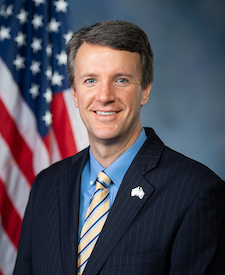
Rep. Ben Cline
Sponsored bills
Maddy summaryThe Equal Treatment for Farmers Act removes references to 'socially disadvantaged farmers and ranchers' from multiple federal agricultural laws and programs. This bill amends various statutes including the Federal Crop Insurance Act, Consolidated Farm and Rural Development Act, and other agricultural legislation to eliminate special preferences or categories based on social disadvantage status. The legislation also prohibits the USDA from providing any preference, priority consideration, or enhanced benefits based on race or gender in its programs. These changes affect how federal agricultural assistance, loans, and benefits are categorized and distributed to farmers and ranchers.
Maddy summaryHR 1071, the "No Censors on our Shores Act," amends U.S. immigration law to make certain foreign government officials inadmissible or deportable if they censor U.S. citizens within the United States. Specifically, it targets officials who directly carried out censorship against U.S. citizens in the U.S. that would violate the First Amendment if done by a U.S. official. The bill adds new grounds for inadmissibility (under Section 212(a)(2)(J)) and deportability (under Section 237(a)(2)(G)) based on this censorship. It directly affects foreign government officials whose actions meet this standard, not the general public or U.S. citizens. The law focuses on immigration consequences for foreign officials engaging in speech suppression that would breach First Amendment protections domestically.
Maddy summaryThis bill, the Bankruptcy Venue Reform Act, aims to reduce forum shopping by restricting where companies and individuals can file for Chapter 11 bankruptcy. It directly affects businesses and individuals seeking bankruptcy protection by requiring cases to be filed in districts where the entity has maintained its principal place of business or principal assets for at least 180 days prior to filing, rather than allowing filings in any district with a legal connection. The law also prevents last-minute changes to an entity's location or ownership for the purpose of establishing venue and places the burden of proof on the filer to demonstrate proper venue. Additionally, the bill clarifies that cash and cash equivalents do not count as principal assets and allows government attorneys to appear in bankruptcy courts without meeting local rules about local counsel.
Maddy summaryThis bill, titled the Fair Treatment of Religious Organizations Act of 2026, establishes rules for how religious organizations are treated under federal tax law and financial assistance programs. It directs the IRS to determine whether an organization's purpose is religious without considering its specific beliefs about marriage, sexuality, or gender identity, even if those beliefs conflict with current laws. The legislation also prohibits federal agencies from discriminating against religious employers that receive federal funding if those employers hire staff based on their religious standards. These protections apply to religious corporations, associations, educational institutions, and societies, ensuring they can maintain employment practices aligned with their faith when receiving government support.
Maddy summaryHR 3447, the Chip Security Act, requires manufacturers to equip specific advanced integrated circuits (classified under export control numbers like 3A090) with security mechanisms before exporting them. These mechanisms must verify location and prevent unauthorized access, diversion, or tampering. The law mandates this for covered chips within 180 days of enactment, with a follow-up assessment within one year to develop additional security requirements. It directly affects U.S. chip exporters and importers of these high-tech products, aiming to strengthen export control compliance and national security.
Maddy summaryThis resolution formally recognizes the 100th anniversary of the Sporting Arms and Ammunition Manufacturers' Institute (SAAMI), a trade organization founded in 1926. The bill commends SAAMI for developing industry standards that ensure firearms and ammunition are safe, reliable, and interchangeable. It acknowledges the organization's work in coordinating with government bodies, international standards groups, and industry stakeholders to maintain consistent safety practices. This measure is a ceremonial resolution that does not change any laws or regulations but serves to honor SAAMI's century of leadership in the firearms industry.
Maddy summaryThis bill, the 287(g) Cooperation Act of 2026, requires state and local law enforcement agencies to sign a formal agreement with the Department of Homeland Security to remain eligible for federal Community Oriented Policing Services grants. The law mandates that agencies must have this written memorandum of agreement in place within 180 days of the bill's enactment, or they will be ineligible to receive funding for the program. The Attorney General and Secretary of Homeland Security must establish procedures to verify that agencies have completed this agreement before approving any grant awards. The changes apply to grant applications starting with fiscal year 2027 and all subsequent years.
Maddy summaryThis bill proposes adding a new article to the U.S. Constitution to explicitly state that only citizens can vote in federal elections. The amendment would apply to all federal elections, including those for President, Vice President, Senators, and Representatives. It gives state legislatures the authority to create enforcement rules while reserving the power for Congress to make or alter regulations and enforce the rule in Washington, D.C. The measure would require ratification by conventions in three-fourths of the states before becoming part of the Constitution.
Maddy summaryHR 556, the Protecting Access for Hunters and Anglers Act, prevents federal agencies from banning lead ammunition or tackle on public lands and waters managed for hunting or fishing. It directly affects hunters and anglers using federal lands (like national wildlife refuges, public forests, and BLM lands) by blocking nationwide restrictions on lead products. The bill allows limited exceptions only for specific locations where wildlife decline is directly linked to lead use, and the restriction must align with state law or get approval from the state wildlife agency. This changes how federal land managers can regulate lead, requiring state coordination for any local restrictions.