

Maddy summaryHR 1839, the Combating Illicit Xylazine Act, makes the illicit use and distribution of xylazine a federal crime by adding it to the Controlled Substances Act. The bill broadly defines xylazine to cover numerous chemical variants and prohibits human use or non-licit distribution, while preserving legitimate veterinary and pharmaceutical uses. It requires tracking xylazine in drug supply chains and mandates two reports to Congress within 1 and 4 years on its prevalence, sources, and whether it should be rescheduled. The bill directly affects individuals distributing or using xylazine illicitly, including as an additive to drugs like fentanyl, and aims to address its public health risks. Congress declared illicit xylazine an "emerging drug threat" under existing law.
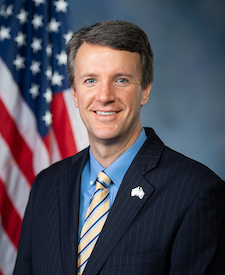
Rep. Ben Cline
Sponsored bills
Maddy summaryHR 1581, the America Works Act of 2023, modifies work requirement exemptions for the Supplemental Nutrition Assistance Program (SNAP). It expands direct exemptions to include individuals medically certified as unfit for work, parents or caregivers of children under 7, and pregnant women, while removing a specific enforcement clause (Section 6(o)(4)(A)(ii)). The bill adjusts existing exemption rules to clarify that certain exemptions apply retroactively to cases beginning before the bill's enactment date. These changes directly affect SNAP recipients who would otherwise face work requirements under federal law.
Maddy summaryThe PRECISE Act (HR 1459) modifies existing USDA loan and conservation programs to specifically support farmers and ranchers adopting precision agriculture technologies. It expands eligibility for loan guarantees and increases payments under the Environmental Quality Incentives Program (EQIP) and Conservation Stewardship Program (CSP) for practices involving precision agriculture - such as GPS-guided equipment, soil sensors, and data management software. The bill defines "precision agriculture" broadly to include technologies that reduce input use (like fertilizer or water) while improving efficiency, and requires USDA agencies to coordinate on these programs. Directly affects farmers using EQIP/CSP, with special provisions for socially disadvantaged and beginning farmers. It does not create new programs but adjusts existing funding mechanisms to prioritize precision agriculture adoption.
Maddy summaryHR 2453, the Immigration Parole Reform Act of 2023, amends U.S. immigration law to clarify and expand when the Secretary of Homeland Security may temporarily parole individuals into the U.S. It directly affects aliens seeking entry for urgent humanitarian reasons (like life-threatening medical needs or family emergencies) or significant public benefit (such as assisting law enforcement), as well as specific groups: spouses/children of active-duty military members, Cuban nationals with approved petitions meeting U.S.-Cuba migration agreements, and individuals needing to attend immigration hearings. Key provisions include requiring case-by-case decisions (not class-based eligibility), limiting parole to 1 year (with possible 1-year extensions), mandating annual public reporting on parole usage, and clarifying that parole does not count as admission or allow work authorization except for military family members and Cubans. The bill aims to standardize parole authority while preventing its use for purposes beyond the specified humanitarian or public benefit scenarios.
Migrant Processing and Protection Act of 2023 This bill expands the category of non-U.S. nationals ( aliens under federal law) who are subject to expedited removal (i.e., removal without further hearing or review) and addresses related issues. Specifically, this bill requires expedited removal for individuals who are unlawfully present or who unlawfully entered the United States. (Currently, DHS may, but is not required to, apply expedited removal to unlawfully present individuals who have been physically present in the United States for less than two years.) This section also requires detention for individuals who (1) are subject to expedited removal, (2) are subject to expedited removal and have expressed an intention to apply for asylum, or (3) have established a credible fear of persecution and are awaiting consideration of an asylum application. If DHS cannot comply with this detention requirement or remove an individual to a safe third country, DHS must return the individual to the neighboring country that the individual traveled through to reach the United States while the individual's case is pending.
Covenant School Heroes Congressional Gold Medal Act This bill provides for the award of Congressional Gold Medals to Officer Michael Collazo and Officer Rex Englebert of the Metropolitan Nashville Police Department in recognition of their exceptional bravery and valor in confronting an active shooter at The Covenant School in Nashville, Tennessee.
Maddy summaryHR 1831 would award Billie Jean King a Congressional Gold Medal to honor her lifelong advocacy for equal rights in sports and society. The bill directs the Secretary of the Treasury to strike the medal and have it presented by congressional leaders, recognizing her pivotal role in advancing women's equality through tennis (including founding the Women’s Tennis Association and securing equal prize money) and her broader impact on society through initiatives like Title IX advocacy.
Maddy summaryThis bill prohibits public colleges receiving federal funds under the Higher Education Act from denying religious student groups equal access to campus facilities and official recognition that is available to other student organizations. It directly affects public institutions of higher education that receive federal funding, requiring them to treat religious groups the same as secular groups regarding access to spaces and official status. The key provision states that schools cannot withhold these rights based on a group's religious beliefs, practices, speech, leadership standards, or conduct. The law aims to ensure religious student organizations have the same opportunities as non-religious groups on campus.
Maddy summaryHR 5, the Parents Bill of Rights Act, would require public schools receiving federal funding to provide parents with greater access to educational information. The bill mandates that schools post curricula online or widely distribute it to parents, include school budgets in report cards, and provide specific information about school activities including violent incidents and plans to eliminate gifted programs. It also guarantees parents the right to meet with teachers twice a year, review library materials, and address school boards. These requirements would apply to all local educational agencies and schools covered by the Elementary and Secondary Education Act. The bill amends existing education laws to strengthen parental transparency and involvement in their children's education.
Maddy summaryThis non-binding resolution states that Congress believes nuclear power is essential as a reliable, clean energy source to support a stable electric grid alongside variable sources like solar and wind. It emphasizes nuclear power's role in achieving clean energy goals, reducing carbon emissions, and advancing U.S. energy independence. The resolution does not create new laws or regulations but formally expresses congressional support for nuclear energy as a necessary component of a "green" grid. It was introduced in March 2023 by multiple lawmakers across party lines.