

Maddy summaryHR 8979, the "No Bias in the Baseline Act," changes how federal budget baselines are calculated. It modifies the Balanced Budget and Emergency Deficit Control Act by removing inflation adjustments from baseline projections and excluding emergency funding and supplemental appropriations from baseline calculations. This procedural bill affects only the technical process used by the Congressional Budget Office (CBO) to project future spending and revenue, not actual government programs or beneficiaries. The change ensures baseline projections assume current law without adjustments for inflation or emergency funding, altering how budget scores are generated.
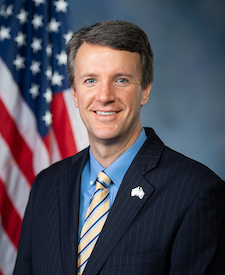
Rep. Ben Cline
Sponsored bills
Maddy summaryThis bill prohibits federal funding for elementary and secondary schools that partner with Chinese government-funded programs, including Confucius Institutes, Confucius Classrooms, or other entities receiving support from China's government (e.g., through teaching materials, personnel, or funds). It directly affects schools with these specific ties to the People's Republic of China. The prohibition takes effect one year after enactment, with the Education Secretary required to notify schools and provide compliance guidance within 90 days of enactment. The policy change blocks federal education funds for schools meeting the defined criteria, without altering existing educational content or curriculum standards.
Maddy summaryHR 8290, the Foreign Grant Reporting Act, requires certain tax-exempt organizations (501(c) groups) to report specific details about grants they provide to foreign entities when filing their annual IRS returns. Organizations must disclose the foreign recipient's name and address, the total grant amount, and whether the recipient qualifies as a foreign charity, a US 501(c)(3) organization, or meets other specified criteria. This applies to direct and indirect grants to any foreign entity (defined as an organization created outside the United States). The requirement applies only to organizations already mandated to file annual IRS returns under Section 6033, effective for returns filed after the bill's enactment.
Maddy summaryHRES 1317 designates the week of June 24-July 3, 2024, as "National Tire Safety Week" to promote public education on proper tire maintenance, such as checking tire pressure and tread depth. It encourages American motorists to learn about these practices, which can prevent accidents by reducing tire-related failures like underinflation or worn treads. The resolution expresses congressional support for this observance but does not create new laws or regulations. It aligns with existing tire safety recommendations from the U.S. Tire Manufacturers Association.
Maddy summaryThis bill rescinds unspent funds from specific federal programs. It targets leftover money from pandemic relief (like the CARES Act and American Rescue Plan) and certain infrastructure initiatives (including education stabilization funds and transportation programs like the Congestion Mitigation Program). The rescission is limited to amounts already allocated for Israel, Ukraine, and Indo-Pacific security supplements under recent appropriations. Unspent funds must be returned to the Treasury, with no new spending created.
Maddy summaryThis bill amends the International Religious Freedom Act and Foreign Assistance Act to restrict U.S. foreign aid funding for non-theist groups. It requires that U.S. diplomatic missions ensure foreign aid programs do not promote non-theist ideologies or expand non-theist group membership, and mandates proportional funding to religious groups if non-theist groups receive support. The bill also requires annual reports listing all grants to religious, atheist, agnostic, and humanist groups worldwide, including funding details and compliance with constitutional religious freedom principles. These changes directly affect U.S. diplomatic missions and foreign organizations receiving U.S. government aid.
Maddy summaryHRES 965 is a non-binding resolution calling for the immediate release of Ryan Corbett, a U.S. citizen wrongfully detained by the Taliban in Afghanistan since August 2022. It directly affects Corbett (held in poor conditions without charges) and other Americans detained by the Taliban. The resolution demands the Taliban release Corbett unconditionally, urges respect for his human rights, commends Qatar’s role as U.S. protecting power, and condemns the Taliban’s practice of detaining U.S. citizens. It does not create new law but formally expresses congressional support for Corbett and other wrongfully detained Americans.
Maddy summaryThis bill makes e-commerce platforms liable for counterfeit goods that pose health or safety risks (like fake medicine or unsafe toys) unless they implement specific safeguards. Platforms must verify seller identities, screen listings for fake marks, quickly remove confirmed counterfeits, terminate repeat offenders, and prevent banned sellers from returning under new identities. These requirements apply to platforms with over $500,000 in annual sales or after receiving 10 verified notices of health/safety-related counterfeits. The law targets dangerous counterfeits, not all fake goods, and focuses on concrete platform actions rather than outcomes.
Maddy summaryThis resolution (HRES 1285) is a symbolic statement by a group of House members condemning the Biden administration's approach to mifepristone (the abortion pill), specifically the 2023 FDA decision allowing mail-order and pharmacy dispensing of the drug without in-person provider visits. It argues this policy eliminates safety safeguards like in-person ultrasounds to detect ectopic pregnancies, gestational age checks, and provider screening for coercion, potentially increasing health risks for patients. The resolution does not change any laws or policies but expresses disapproval of the FDA’s regulatory changes regarding mifepristone distribution. As a non-binding resolution, it has no legal effect on abortion access or drug regulations.
Maddy summaryHR 8653 authorizes the posthumous award of a Congressional Gold Medal to Major Thomas D. Howie, a U.S. Army officer who died during the Battle of Normandy in WWII. The bill specifies the medal will be presented to his nephew, Tom Howie, or his next of kin, and then permanently displayed at The Citadel Museum. It also permits the U.S. Mint to produce and sell bronze duplicates to cover costs. This is a commemorative measure honoring Major Howie's military service and sacrifice, with no substantive policy changes.