

Maddy summaryThis bill, the Senior Hunger Prevention Act of 2023, aims to improve access to nutrition assistance for older adults and people with disabilities through several key changes to the Supplemental Nutrition Assistance Program (SNAP) and related programs. It extends SNAP certification periods to 36 months, establishes a standard medical expense deduction for elderly/disabled participants, and creates streamlined application processes (Elderly Simplified Application Program and Combined Application Program) to reduce administrative burdens for eligible households. The bill also establishes a pilot program to improve enrollment among older adults, kinship families, and people with disabilities, and adds provisions for food delivery services for SNAP participants who are elderly or disabled and unable to shop. Additionally, it increases funding for the Seniors Farmers' Market Nutrition Program and creates infrastructure funding for farmers' markets to improve access to fresh food in underserved communities.
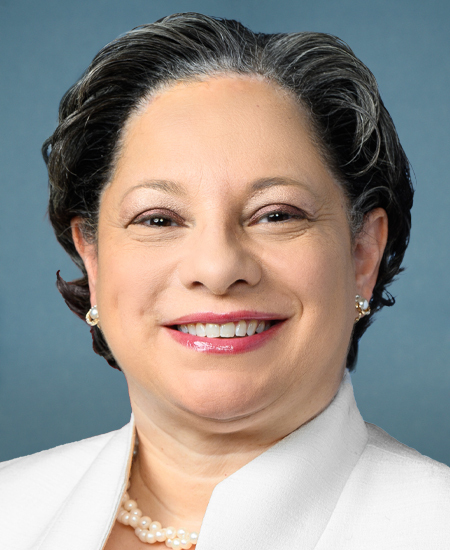
Rep. Jennifer L. McClellan
Sponsored bills
Maddy summaryThe LGBTQI+ and Women's History Education Act of 2023 would provide $2 million annually for five years to develop educational resources about women's and LGBTQI+ history for K-12 classrooms. The bill directs the Smithsonian's National Museum of American History to create inclusive teaching materials that address historical gaps where women and LGBTQI+ individuals, particularly those of color and with disabilities, have been underrepresented. These resources would include digital content, print materials, and professional development for teachers to help implement more comprehensive curricula. The bill aims to address findings showing only 13% of named historical figures in textbooks are women and that LGBTQI+ history is often omitted or marginalized in school curricula. The program would require annual reports to Congress on how funds are used, with the program set to sunset in 2028.
Maddy summaryHJRES 76 proposes renaming the Robert E. Lee Memorial in Arlington National Cemetery to the "Arlington House National Historic Site." This procedural bill would replace all official references to the memorial with the new name and repeal two prior resolutions (1955 and 1972) that established the memorial. The change affects how the site is identified in federal laws, documents, and records but does not alter its management or historical significance. The bill focuses solely on the official designation, not on policy changes or historical interpretation.
Maddy summaryThis bill improves the VA Work-Study program for veterans and active-duty military members by expanding eligible work opportunities to include roles with state/local governments and nonprofits that support veterans. It establishes a higher minimum wage standard, requiring payments to meet the highest of federal, state, or local minimum wage rates. The bill also requires electronic time tracking for participants and annual public reporting on program data, including participant demographics, wages, hours worked, and participating schools. These changes apply to work-study payments made on or after January 1, 2026.
Maddy summaryThe Equality Act (HR 15) would amend federal civil rights laws to explicitly prohibit discrimination based on sexual orientation and gender identity in public accommodations, housing, employment, credit, and jury service. It amends the Civil Rights Act of 1964 to include sexual orientation and gender identity as protected characteristics under existing sex discrimination provisions. The bill would require businesses, housing providers, employers, and government entities to provide equal access and services without regard to a person's sexual orientation or gender identity. It includes specific definitions for gender identity and sexual orientation to clarify protections across all covered areas. The law would apply to all entities covered by the Civil Rights Act of 1964, including those receiving federal funding.
Maddy summaryThis symbolic House Resolution (HRES 526) reaffirms U.S. commitment to refugee safety and well-being, introduced around World Refugee Day (June 20, 2023). It cites UNHCR data showing over 108 million displaced people globally and highlights historically low U.S. refugee admissions (11,411 in FY2021, 25,465 in FY2022). The resolution calls on U.S. officials to restore asylum protections, meet robust refugee admissions goals, support host countries, and advance refugee rights through international partnerships. It does not create new law but expresses bipartisan support for strengthening U.S. leadership in refugee protection.
Maddy summaryThe Protecting Moms and Infants Reauthorization Act of 2023 increases annual federal funding for residential treatment programs supporting pregnant and postpartum women from $29,931,000 to $38,931,000, covering fiscal years 2024 through 2028. It directly affects these treatment programs by providing higher annual funding to maintain services. The key provision is the specific funding amount change, extending the program's authorization period without altering eligibility or service requirements. This reauthorization ensures continued access to specialized care for this population through 2028.
Maddy summaryHR 4121, the Right to Contraception Act, establishes a federal statutory right for individuals to access contraceptives and contraception services without government restriction or coercion, directly affecting all people seeking reproductive care and health care providers. The bill prohibits state or federal laws that limit access to contraceptives (defined broadly to include devices, drugs, and fertility methods), prevent individuals from obtaining or using them, or allow providers to refuse services based on personal beliefs. It preempts conflicting state laws, requires any restrictions to be justified by "clear and convincing evidence" of advancing access with no less restrictive alternative, and allows private lawsuits to challenge violations. The Act applies nationwide to all health care providers and individuals, protecting access regardless of factors like race, income, or location.
Maddy summaryThis bill expands funding eligibility for graduate programs at Historically Black Colleges and Universities (HBCUs) and Predominantly Black Institutions (PBIs) under the Higher Education Act. It adds new criteria allowing HBCUs and PBIs offering qualified master's degree programs (that weren't previously covered) to access existing funding streams. Specifically, it modifies funding formulas to direct unused funds toward these institutions after other allocations, adjusting the wording for how leftover funds are distributed. The change directly affects qualifying HBCUs and PBIs seeking to strengthen their graduate education programs.
Maddy summaryHR 4184 repeals legal protections for gun manufacturers and sellers under the Protection of Lawful Commerce in Arms Act. It allows victims of gun violence to use gun trace data from the ATF's Firearms Trace System in civil court cases. This data, previously protected from discovery, can now be subpoenaed, admitted as evidence, and relied upon in lawsuits against gun sellers or manufacturers. The bill directly affects victims seeking legal recourse and gun industry defendants in civil litigation.