

Maddy summaryHRES 831 is a symbolic congressional resolution supporting October as "National Domestic Violence Awareness Month." It does not create new laws or allocate funding, but formally expresses the House of Representatives' support for the goals of raising awareness about domestic violence. The resolution urges Congress to continue highlighting domestic violence's impact and backing programs that prevent and address it. It directly affects public awareness efforts and serves as a non-binding statement of congressional support for victims and advocacy organizations.
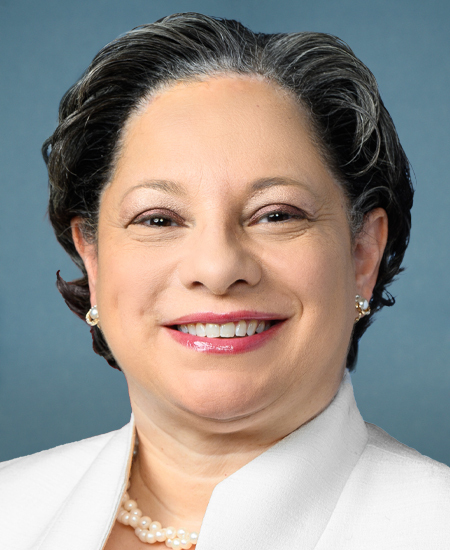
Rep. Jennifer L. McClellan
Sponsored bills
Maddy summaryThis bill requires the Department of Defense (DoD) to request state or EPA permit modifications for military facilities to mandate quarterly testing of PFAS chemicals in stormwater runoff and implement controls to reduce discharges. It directly affects DoD facilities, which use PFAS-containing firefighting foams, and the states or EPA issuing their stormwater permits. Key provisions include a one-year deadline for permit revisions (requiring quarterly PFAS monitoring and best management practices) and dedicating at least 1% of annual PFAS remediation funds for stormwater testing at military sites. The bill aims to reduce PFAS pollution from military operations into waterways through enforceable monitoring and control measures.
Maddy summaryHR 5983, the Clean Water Act of 2023, redefines "protected water resources" under federal law to explicitly include all interstate and intrastate waters (such as intermittent and ephemeral streams), wetlands, and their tributaries. This directly affects federal agencies like the EPA, states managing water quality, and developers or landowners needing permits for activities near these waters. The bill eliminates the Supreme Court’s narrow "navigable waters" definition from Sackett v. EPA (2023), restoring protections for tens of millions of acres of wetlands and millions of miles of small streams. Key mechanisms require the EPA to annually review and adjust exclusions from protections based on scientific evidence, ensuring water bodies critical to drinking water, flood control, and ecosystems remain safeguarded.
Maddy summaryThe SCEE Act (HR 5899) increases annual funding for the Southeastern Crescent Regional Commission from $5 million to $10 million per year (2024-2028) and expands eligible uses for economic development grants. It adds provisions to fund climate-adaptive infrastructure, housing projects meeting workforce needs, and workforce capacity programs. The bill also raises required matching funds for some grants from 80% to 90% and extends commission funding through 2032 with higher annual allocations ($50 million for 2024-2027, $60 million for 2028-2032). This directly affects designated states in the Southeastern Crescent region (as defined in Title 40, U.S. Code) by providing increased resources for local economic development initiatives.
Maddy summaryThis resolution (HRES 817) formally recognizes four African American legislators - James Lewis, John Willis Menard, Pinckney B.S. Pinchback, and Josiah Thomas Walls - as former Members of the House. It states they duly won election during the Reconstruction Era (1869-1874) but were wrongly denied seats due to contested credentials. The resolution directs the House to recognize them as former Members and display oil portraits of them in a House corridor. This is a symbolic gesture of historical acknowledgment, not a legal change to their status or voting rights.
Maddy summaryHRES 819 is a symbolic resolution recognizing the 5-year anniversary of the October 27, 2018, antisemitic attack at Pittsburgh’s Tree of Life Synagogue, which killed 11 people. It condemns antisemitism and references rising hate incidents, including the Anti-Defamation League’s 2022 report of record antisemitic activity (3,697 incidents). The resolution honors the victims, expresses solidarity with affected Jewish communities, and reaffirms the U.S. commitment to combatting hate and protecting religious freedom. As a procedural resolution (not a law), it has no binding effect but serves as a formal statement of congressional stance.
Maddy summaryHRES 771 is a non-binding resolution expressing the U.S. House of Representatives' support for Israel following Hamas' October 7, 2023, attack. It condemns Hamas' actions, affirms Israel's right to self-defense, and calls for the immediate release of hostages. The resolution also urges enforcement of existing laws restricting aid to terrorists and sanctions against Iran for supporting Hamas. It does not create new policies or allocate funds, as it is a symbolic statement of congressional support.
Maddy summaryHRES 768 is a symbolic House Resolution expressing congressional support for Israel following Hamas' October 7, 2023 attacks. It condemns Hamas' actions, reaffirms Israel's right to self-defense, and calls for the immediate release of hostages. The resolution references the U.S. commitment to Israel's security through existing military aid programs, including the 2016 U.S.-Israel Memorandum of Understanding, and emphasizes enforcement of laws like the Taylor Force Act to prevent U.S. aid from reaching terrorist groups. As a symbolic resolution, it does not create new policy but serves as a statement of congressional support for Israel.
Maddy summaryThe Safe Schools Improvement Act (HR 6031) requires public elementary and secondary schools to implement comprehensive anti-bullying policies that specifically prohibit harassment based on protected characteristics like race, gender identity, disability, religion, and sexual orientation. It mandates schools to collect and publicly report annual data on bullying incidents while establishing clear grievance procedures for students and parents. The bill also requires states to submit biennial reports on school compliance and supports evidence-based interventions, such as restorative practices, to reduce exclusionary discipline. This legislation directly affects all public K-12 schools and students in the U.S., aiming to create safer learning environments through standardized policy requirements and data transparency.
Maddy summaryThis bill prevents health insurance plans from charging extra out-of-pocket costs for prenatal services when a pregnancy ends in miscarriage or stillbirth before delivery. Specifically, if a plan covers prenatal care as part of a bundled childbirth payment and a loss occurs, the plan cannot require additional deductibles, coinsurance, or copayments for those prenatal services beyond what would have been charged for a full birth. It applies to group and individual health plans covering such bundled payments, effective January 1, 2025. The law directly affects pregnant individuals experiencing pregnancy loss and their health insurance providers.