

Maddy summaryThe CCAMPIS Reauthorization Act (HR 9559) reauthorizes federal grants to colleges and universities to provide child care services for student parents. Eligible institutions - those with at least 150 students qualifying for Federal Pell Grants - can receive annual grants between $75,000 and $2 million to establish campus-based child care, offer subsidized care through sliding fee scales, or provide before/after school programs. The bill requires grantees to report annually on student parent demographics, program outcomes, and quality metrics, and authorizes $500 million per year for fiscal years 2025-2030. This directly supports low-income student parents pursuing postsecondary education by addressing a key barrier to their academic success.
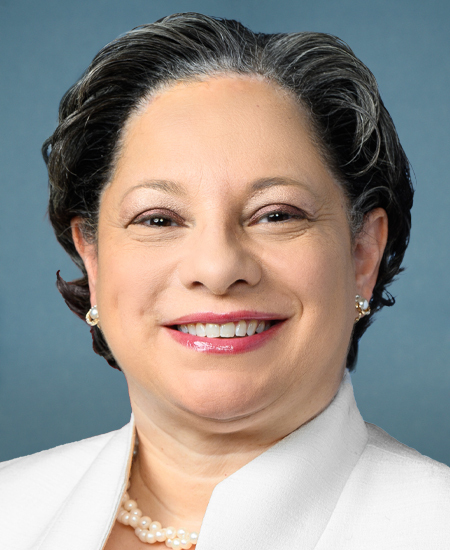
Rep. Jennifer L. McClellan
Sponsored bills
Maddy summaryThis bill caps the interest rate at 6% on student loans that active-duty servicemembers (or their spouses jointly) consolidate or refinance *during* military service, but only if those loans were originally taken out *before* they joined the military. It directly affects servicemembers who use consolidation or refinancing to manage pre-service student debt while serving. The key provision limits interest rates on these specific consolidated/refinanced loans to 6% for the duration of military service, excluding other types of debt. The bill defines "student loan" to include both federal loans under the Higher Education Act and qualifying private loans.
Maddy summaryHRES 1432 designates September 10, 2024, as "National Firearm Suicide Prevention Day" to raise public awareness about firearm suicides and promote safe storage practices. The resolution encourages healthcare professionals to discuss safe firearm storage with patients and supports the day's goals of reducing firearm suicides through education. It directly affects the general public and healthcare providers by highlighting evidence that safe storage lowers suicide risk, referencing statistics like 54.6% of U.S. suicides in 2022 involving firearms. The bill is symbolic, with no new legal requirements, and aligns with existing awareness efforts like Firearm Suicide Prevention Day.
Maddy summaryThe Stand with Ukraine Act of 2024 establishes a framework for sustained U.S. security assistance to Ukraine in response to Russia's invasion. It endorses a 10-year bilateral security agreement and directs the U.S. government to provide military equipment, training, and security assistance to strengthen Ukraine's defense capabilities against Russian aggression. Key provisions include treating Ukraine as a major non-NATO ally for defense transfers, fast-tracking military sales through the Foreign Military Sales program, and creating mechanisms to prioritize defense article transfers. The bill also includes specific support for Ukraine's recovery, reconstruction, and demining efforts following the conflict. This legislation directly affects U.S. foreign policy implementation, military assistance programs, and Ukraine's ability to build a credible defense against Russian threats.
Maddy summaryHRES 1419 is a symbolic resolution recognizing Overdose Awareness Day and committing the House to strengthen efforts against the opioid crisis. It does not create new law but formally: (1) recognizes Overdose Awareness Day, (2) pledges to advance bipartisan policies reducing stigma around substance use disorders, and (3) commits to collaborating with states, communities, and organizations to support prevention, treatment, harm reduction, and recovery services. The resolution highlights the crisis' severity - including 932,000 overdose deaths since 1999 and a $1 trillion annual economic burden - but focuses on shared goals rather than specific policy changes. It directly affects congressional action and public messaging, not individual citizens or programs.
Maddy summaryHR 9425, the Tobacco User Fee Modernization Act of 2024, updates how tobacco product manufacturers and importers pay fees to fund FDA oversight. It increases the total annual fee to $826.2 million for 2025, then adjusts future fees annually based on inflation (Consumer Price Index). The bill expands fee collection to cover all tobacco products (not just specific classes) starting in 2028, requiring manufacturers to report quarterly sales data to calculate their share. Fees are allocated based on each company's share of total U.S. sales for their product categories, with reporting deadlines beginning in 2027.
Maddy summaryThe Healthy Food Access for All Americans Act creates a tax credit and grant program to improve access to healthy food in underserved communities. It provides a 15% tax credit for new grocery stores or 10% for renovations in food deserts (areas with limited access to affordable nutritious food), plus grants covering 15% of construction costs for permanent food banks or 10% of operational costs for temporary food access providers like mobile markets and farmers markets. To qualify, providers must be located in designated food deserts, meet specific requirements regarding food sales and location, and receive certification from the Treasury Department in coordination with the Agriculture Department. The program requires annual updates to the USDA's Food Access Research Atlas to track food retailers and ensure proper targeting of resources. This legislation directly affects grocery store operators, food banks, and mobile food vendors seeking to serve communities lacking adequate food access.
Maddy summaryHR 7585, the Enhanced Cybersecurity for SNAP Act of 2024, requires states to transition all SNAP (food stamp) EBT cards to chip-enabled technology by 2029, phasing out magnetic stripes. It mandates states to provide mobile-friendly digital interfaces for managing EBT accounts, including real-time transaction alerts, fraud reporting tools, and virtual card numbers for online purchases. The bill prohibits states from using outdated password requirements inconsistent with federal cybersecurity standards and ensures no replacement fees for cards lost, stolen, or damaged due to fraud or expiration. States will receive reimbursement for costs related to upgrading cards and payment terminals, directly affecting 40 million SNAP recipients and state agencies managing the program.
Maddy summaryHR 9363, the Empowering Women in Agriculture Act, requires U.S. Department of Agriculture programs to prioritize support for socially disadvantaged women farmers and ranchers. The bill amends existing law to explicitly include gender prejudice in anti-discrimination definitions and defines "women’s nonprofit organization" for the first time. Key provisions mandate that at least 10% of funds under the Beginning Farmer and Rancher Development Grant Program must serve socially disadvantaged women farmers, and extend program funding periods through 2029. This directly affects women farmers facing systemic barriers and the nonprofit organizations serving them, with concrete policy changes focused on equitable resource allocation.
Maddy summaryHR 9274, the SHAWL Act, establishes two new Smithsonian museums: the National Museum of the American Latino and the American Women’s History Museum. It authorizes both museums to be located within the National Mall’s "Reserve" area, overriding prior restrictions, and requires federal agencies managing potential sites to transfer jurisdiction to the Smithsonian after notifying congressional committees. The bill mandates that both museums accurately represent diverse cultures, histories, and viewpoints within Latino and women’s communities through exhibits and programs, requiring input from a broad range of community experts. It also requires the Smithsonian to submit biennial reports to Congress detailing compliance with these representation requirements.