

Maddy summaryThe MENTOR Act of 2024 requires federal research agencies to develop guidelines addressing mental health and mentorship for graduate and postdoctoral researchers funded by federal grants. It mandates agencies to define bullying/harassment, require institutions to report incidents, and implement confidential reporting systems for researchers. The bill also requires principal investigators to submit mentoring plans with grant applications, detail benefits like mental health coverage, and incorporate mentorship evaluations into funding decisions. Institutions must report on support systems for underrepresented researchers and ensure access to affordable mental health care. These guidelines must be implemented within one year of adoption and updated every five years based on biennial mental health data collected by the National Science Foundation.
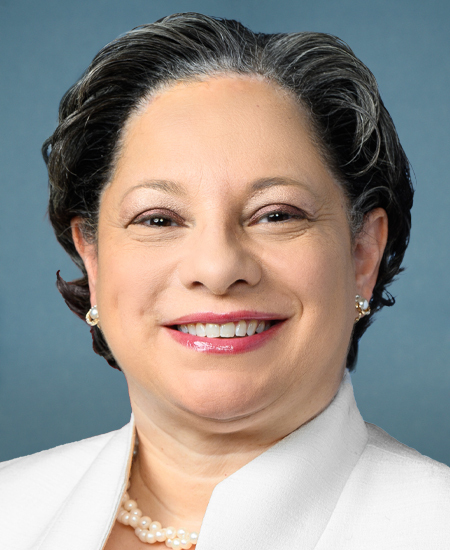
Rep. Jennifer L. McClellan
Sponsored bills
Maddy summaryThis bill establishes a commission to study whether the Weitzman National Museum of American Jewish History in Philadelphia should be transferred to the Smithsonian Institution. The commission, composed of 8 members appointed by congressional leaders with expertise in Jewish American history and museum administration, will examine the museum's collections, financial status, governance, and feasibility of transfer within two years. The commission must submit a report detailing findings, a fundraising plan, and legislative recommendations for any potential transfer. The bill does not transfer the museum but creates a process to evaluate the possibility.
Maddy summaryHR 7438 directs the U.S. Treasury to mint commemorative coins for the 2026 FIFA World Cup, including 100,000 $5 gold coins, 500,000 $1 silver coins, and 750,000 half-dollar coins. The coins will be sold to the public at face value plus surcharges ($35, $10, and $5 per coin, respectively), with all surcharge revenue paid to FWC2026 US, Inc. for U.S. soccer programs. These funds must support soccer initiatives, particularly in underserved communities and youth development, as specified in the bill. The coins are legal tender but will only be issued during 2026, with no net cost to the U.S. government.
Maddy summaryHRES 1613 is a non-binding resolution recognizing the U.S. House of Representatives' support for continued U.S. leadership in ending pediatric HIV/AIDS globally. It highlights that 57% of children with HIV were on treatment in 2023 (compared to 77% of adults) and calls for scaling up prevention of mother-to-child transmission and expanding pediatric HIV treatment access. The resolution specifically encourages the PEPFAR program to develop a dedicated pediatric HIV strategy aligned with global goals. As a formal expression of congressional support, it does not create new law but reaffirms the U.S. commitment to reducing new pediatric HIV infections.
Maddy summaryHR 10337, the Expanding the Health Care Workforce Act, creates a federal grant program to develop health care career pathways for high school students. It provides grants to hospitals partnering with secondary schools to establish structured work-based learning programs, requiring students to complete 20-100 hours of hands-on training in hospitals over five years, with specific hour requirements per grade. Priority is given to projects serving medically underserved communities, and grants must expand existing programs in 25% of cases. The program mandates annual reporting on student outcomes, including graduation rates, health care workforce entry, and post-secondary enrollment, with a final evaluation report to Congress after five years. This initiative directly affects secondary school students in underserved areas and participating hospitals through new educational partnerships.
Maddy summaryHR 6751 authorizes the U.S. Mint to produce commemorative coins honoring Roberto Clemente, a Hall of Fame baseball player and humanitarian, including 50,000 $5 gold coins, 400,000 $1 silver coins, and 750,000 half-dollar coins. The coins must feature Clemente's image and inscriptions like "Roberto Clemente" and "2027," with all sales including a surcharge ($5-$35 per coin) paid to the Roberto Clemente Foundation. The foundation, which supports youth sports, education, and disaster relief programs, will use these funds for its mission, while the U.S. Treasury must recover all production costs. The coins will be sold exclusively in 2027, with no net cost to the government.
Maddy summaryThe Jeanette Acosta Invest in Women’s Health Act of 2024 would expand access to preventive cancer screenings (including breast, cervical, ovarian, and uterine cancer screenings) for women, with a focus on low-income women, women of color, rural communities, and underserved populations. It authorizes $20 million annually for grants to health care providers - such as family planning centers - to increase screenings and establishes a training program for health care providers on best practices and cultural competency to address racial disparities. The bill also mandates a study analyzing cancer screening rates and disparities by race, income, geography, and insurance status, with reports to Congress every five years. These provisions aim to improve early detection, reduce mortality, and address systemic barriers in women’s cancer care.
Maddy summaryThis House resolution supports the goals of World AIDS Day by encouraging efforts to end the HIV epidemic by 2030, aiming for zero new infections, zero discrimination, and zero AIDS-related deaths. It specifically urges sharing of U=U (Undetectable=Untransmittable) information and PrEP (pre-exposure prophylaxis) to prevent transmission, and calls for increased funding for HIV prevention, treatment, and research - particularly for communities disproportionately affected by HIV, such as racial minorities, men who have sex with men, and transgender individuals. The resolution commends existing programs like PEPFAR and the Ryan White CARE Act while advocating for expanded testing, antiretroviral treatment, and comprehensive prevention services, including a National PrEP Program.
Maddy summaryHRES 1591 is a symbolic resolution recognizing November 2024 as "National Family Caregivers Month." It does not create new laws or provide funding but formally acknowledges the work of over 53 million unpaid family caregivers in the U.S., who support loved ones with health needs. The resolution commends caregivers, encourages federal and state agencies to advance existing support policies (like tax credits and respite care), and urges broader community recognition - without imposing new requirements or changing current programs. As a ceremonial measure, it has no direct effect on legislation or affected individuals.
Maddy summaryHRES 1594 is a symbolic House resolution supporting the designation of "National Rural Health Day," observed annually on the third Thursday of November. It recognizes rural health care providers and the communities they serve, highlighting challenges like hospital closures, workforce shortages, and access barriers in rural areas. The resolution expresses the House's commitment to improving rural health care accessibility and affordability but does not create new laws or allocate funding. It is a non-binding gesture aligning with an existing observance since 2011, organized by the National Rural Health Association.