

This concurrent resolution expresses opposition to the application of criminal laws to pregnancy outcomes and affirms that people deserve access to high-quality health care without fear of reprisal or punishment.
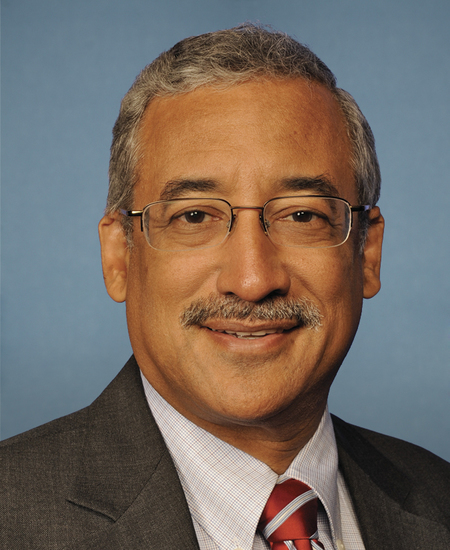
Rep. Robert C. "Bobby" Scott
Sponsored bills
Maddy summaryHJRES 53 proposes a constitutional amendment to ban slavery and involuntary servitude as a criminal punishment. Currently, the 13th Amendment to the U.S. Constitution permits such punishments for crimes, creating a legal loophole. If ratified by 3/4 of state legislatures, this amendment would eliminate that exception nationwide, making it unconstitutional to impose forced labor or slavery as part of criminal sentences. The change would directly affect all states' criminal justice systems, particularly prison labor practices, by prohibiting these punishments for any offense.
This resolution expresses support for the designation of National Voting Rights Month, encourages people to uphold the right to vote, encourages Congress to pass certain voting rights legislation, encourages the development of strategies to educate students about voting, encourages the U.S. Postal Service to issue a special Representative John R. Lewis stamp during the month of September, and invites Congress to allocate funds for public service announcements regarding elections.
Maddy summaryThis resolution (HRES 981) commemorates the one-year anniversary of the March 16, 2021, Atlanta spa shootings that killed eight people, six of whom were Asian women, and denounces anti-Asian hate. It formally condemns the violence, honors the victims, and recognizes the ongoing impact of anti-Asian hate crimes on the Asian American and Pacific Islander community. The resolution reaffirms support for the existing COVID-19 Hate Crimes Act and commits the federal government to combating hate and violence against AAPI communities. As a symbolic measure, it does not create new laws or funding but serves as a formal statement of solidarity.
This resolution expresses the sense of the House of Representatives that the proposed constitutional amendment known as the Equal Rights Amendment has been duly proposed by Congress and ratified by the states and is therefore valid as the Twenty-Eighth Amendment to the Constitution. (The proposed amendment prohibits the United States or any state from denying or abridging equal rights under the law on account of sex.)
Justice and Mental Health Collaboration Reauthorization Act of 2022 This bill modifies and reauthorizes through FY2026 the Justice and Mental Health Collaboration Program. The program provides state, local, and tribal grants to improve the criminal justice system's response to people with mental health disorders. Among the modifications, the bill allows funds for diversion and alternative prosecution and sentencing programs to be used for training for state and local prosecutors related to diversion programs; allows funds for multidisciplinary teams to be used to support police officers and mental health crisis workers responding together to mental health calls; and allows grants to be awarded for additional purposes such as suicide prevention programs and services, case management services, and state and local implementation of the 988 suicide hotline. Additionally, the bill reauthorizes through FY2026 the requirement for the Department of Justice to examine and report on the prevalence of mentally ill offenders in prisons and jails.
PREA Rights Enforcement Act of 2022 This bill allows a person to file a civil action against the United States for violations in a federal prison of established national standards for the detection, prevention, reduction, and punishment of prison rape.
Maddy summaryThis bill adds a Federal Public or Community Defender as a nonvoting member to the U.S. Sentencing Commission, increasing the total nonvoting members from one to two. The defender would be designated by the Defender Services Advisory Group and serve alongside existing ex officio nonvoting members. The change requires amending Title 28 of the U.S. Code and the Sentencing Reform Act of 1984 to adjust the Commission’s structure to 10 total members (9 voting, 3 nonvoting). It directly affects the Commission’s composition but does not alter voting authority or sentencing policies.
This bill extends posthumous citizenship to an otherwise qualified noncitizen who enlisted, reenlisted, extended enlistment, or was inducted into the U.S. Armed Forces in the Philippines and died as a result of such active duty service during the period beginning September 1, 1939, and ending December 31, 1946. The executive department under which an individual served must determine whether the individual satisfied the requirements for posthumous citizenship under this bill. Specified naturalization and other posthumous benefit provisions shall not apply to the surviving spouse, child, or parent of such an individual.
Restoring Justice for Workers Act This bill prohibits predispute arbitration agreements that require arbitration of an employment dispute. It allows a postdispute arbitration agreement if the employee enters into it voluntarily without coercion and is informed in writing of rights and protections under such agreement. An employer may not retaliate against an employee for refusing to enter into an agreement for arbitrating an employment dispute.