

Maddy summaryThe Better CARE for Animals Act of 2023 amends the Animal Welfare Act to strengthen enforcement of animal welfare standards. It gives the Attorney General authority to bring civil cases for violations, including seeking penalties up to $10,000 per day per violation and injunctions to remove or relocate animals. The bill also requires the Secretary of Agriculture and Attorney General to coordinate through a new Memorandum of Understanding, focusing on repeat violators. These changes directly affect dealers, exhibitors, and enforcement agencies by expanding civil enforcement tools and clarifying jurisdiction over rule violations.
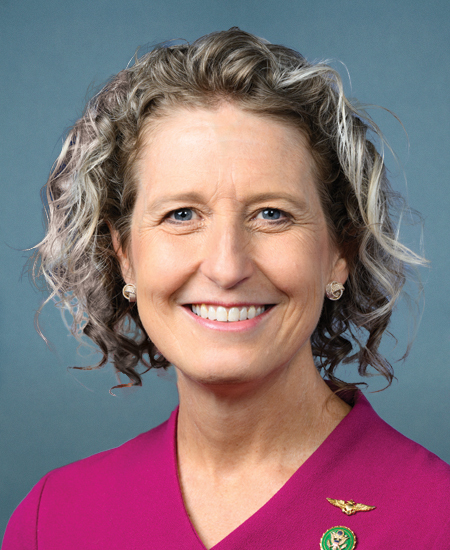
Rep. Jennifer A. Kiggans
Sponsored bills
Patawomeck Indian Tribe of Virginia Federal Recognition Act This bill extends federal recognition to the Patawomeck Indian Tribe. Specifically, the bill makes the tribe and its members eligible for services and benefits provided to federally recognized tribes, without regard to the existence of a reservation for the tribe. The service area of the tribe is considered to be Stafford and King George Counties, Virginia. Next, the bill sets forth requirements for the tribe regarding its membership roll, governing documents, and governing body. Interior, upon the request of the tribe, may take certain land into trust for the benefit of the tribe. Further, the bill prohibits the tribe from conducting gaming activities.
Maddy summaryHJRES 89 requires the President to obtain Senate approval (with a two-thirds vote) or new congressional legislation to suspend, terminate, or withdraw from the North Atlantic Treaty (NATO). It prohibits using federal funds for such actions until Congress passes a two-thirds resolution or enacts a law authorizing withdrawal. The bill mandates 180-day written notification to relevant congressional committees (Foreign Affairs and Foreign Relations) before any withdrawal action and authorizes Congress to sue to block unilateral executive moves. This directly affects the executive branch's ability to act unilaterally on NATO membership, reinforcing congressional oversight of treaty obligations.
Maddy summaryThis bill requires parties in civil lawsuits to disclose any foreign entities funding their case - including names, addresses, and countries of origin - within 30 days of filing or signing funding agreements. It specifically prohibits foreign governments and sovereign wealth funds from funding litigation where payment depends on the case outcome, banning such agreements entirely. Parties must also certify if foreign money is used and submit annual reports to Congress detailing foreign funders, judicial districts involved, and case types. The law applies to all civil cases filed after enactment, aiming to increase transparency about foreign influence in U.S. courts.
Maddy summaryHR 3152, the "Fight CRIME Act," aims to maintain international restrictions on Iran's missile-related activities by requiring diplomatic efforts to extend these restrictions before they expire in October 2023. The bill mandates annual reports detailing U.S. diplomatic strategies, potential impacts of expiration, and measures to deter missile technology transfers to Iran. It establishes sanctions against foreign individuals or entities that knowingly support Iran's missile or drone programs, including asset freezes and visa restrictions. These sanctions apply regardless of whether UN restrictions remain in effect after their expiration, directly affecting foreign entities involved in these activities.
Maddy summaryHR 940, the Information Security Investment Act of 2023, requires Members of Congress (including delegates and resident commissioners) and the President and Vice President to complete mandatory training on handling classified information. Members must finish this training within 90 days of taking office (or 180 days for the first session of the 118th Congress), while the President and Vice President must complete it within 30 days of starting their term and every two years thereafter. The bill establishes specific deadlines for completing this training and mandates that relevant committees (House Administration and Senate Rules) issue regulations to implement the requirement. This procedural bill directly affects elected officials and the executive branch leadership by imposing standardized training obligations on handling classified information.
Women in Agriculture Act This bill directs the Department of Agriculture (USDA) to establish the position of Women Farmers and Ranchers Liaison within USDA. Among other things, the liaison must advocate on behalf of women who are farmers and ranchers in interactions with USDA employees and promote the advancement of women in USDA leadership roles. The liaison may also enter into a contract or cooperative agreement to conduct various research, training, and other activities with respect to women who are farmers and ranchers. The liaison must submit an annual report to Congress on USDA grants, loans, loan guarantees, and cost-share programs for woman-owned agriculture operations. In addition, the bill expands the USDA high-priority research and extension areas to authorize grants for developing and making widely available agriculture equipment and machinery that is ergonomically designed for use by women. Further, USDA must give priority to certain loans or grants to address the availability, quality, or cost of childcare in an agricultural or rural community.
Rural Hospital Technical Assistance Program Act This bill provides statutory authority for the Rural Hospital Technical Assistance Program within the Department of Agriculture (USDA). Under the bill, USDA must establish and maintain (directly or by grant, contract, or cooperative agreement) a program to help eligible hospital facilities in rural areas with a population of 50,000 inhabitants or less. The program must provide tailored technical assistance and training to hospital facilities to identify development needs for maintaining essential health care services and support action plans for financial, operational, and quality improvement projects to meet these needs. Development needs include (1) constructing, expanding, and modernizing health care facilities; (2) increasing telehealth capabilities; and (3) acquiring or upgrading health care information systems (e.g., electronic health records). The program must also provide technical assistance and training to help hospital facilities to better manage their financial and business strategies and identify, and apply for assistance from, USDA loan and grant programs. In selecting eligible hospital facilities to participate in the program, USDA must give priority to borrowers and grantees of certain USDA rural assistance programs. USDA must also submit an annual report to Congress on the progress and results of the program.
Maddy summaryThe CARE Act of 2023 amends the program for family caregivers of veterans to improve transparency and accessibility. It requires the Department of Veterans Affairs (VA) to include relevant medical specialists in caregiver evaluations, provide detailed annual reports to Congress on application outcomes (broken down by race, gender, and service details), and clarify how eligibility decisions are made. The bill also creates a fee-free process for recognizing organizations and individuals who help veterans, family members, and caregivers navigate VA services without charging users. These changes directly affect veterans' family caregivers and VA administrative processes, focusing on clearer eligibility standards and data-driven accountability.
Maddy summaryHR 5147, the Investing in VETS Act, increases the federal government's goal for contracting with service-disabled veteran-owned small businesses from 3% to 5% of total federal contract dollars. It directly affects federal agencies, which must now aim for this higher 5% target, and service-disabled veteran-owned businesses that seek to qualify for these contracts. The bill adds a key provision requiring only businesses officially certified under Section 36 (not self-certified claims) to count toward the 5% goal and agency-specific targets. This change ensures the goal applies only to businesses with verified certification, improving accountability in the program.