

Maddy summaryThis bill grants federal recognition to the Cheroenhaka (Nottoway) Indian Tribe of Virginia, making it the first federally recognized tribe in the state. It establishes the tribe's membership based on its existing rolls, authorizes the Secretary of the Interior to hold tribal land in trust (within Southampton County), and ensures the tribe qualifies for federal services and benefits. The bill explicitly prohibits the tribe from conducting gaming activities under federal law, while preserving existing hunting, fishing, and water rights. This recognition directly affects the tribe's 300+ enrolled members and their 263-acre reservation land.
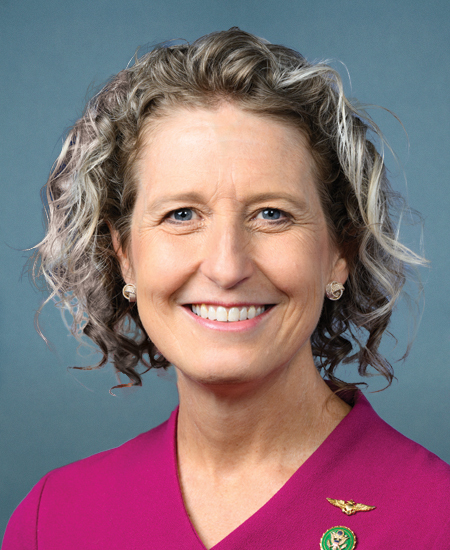
Rep. Jennifer A. Kiggans
Sponsored bills
Maddy summaryThis bill amends VA law to add a specific representative from the National Association of State Veterans Homes (NASVH) to the Geriatrics and Gerontology Advisory Committee. The new member must hold a professional nursing home administration license and will consult with the NASVH president on matters related to the association. The change directly affects the VA committee's composition, ensuring input from state veterans home organizations on geriatric care policies.
Maddy summaryThis bill reauthorizes and updates the VA's Staff Sergeant Parker Gordon Fox Suicide Prevention Grant Program. It requires grantees to use the Columbia Suicide Severity Rating Scale (C-SRRS) for screening and mandates that veterans referred for care receive emergency services within 72 hours if not served promptly. VA medical centers within 100 miles of grant recipients must receive quarterly briefings to improve coordination. The program's deadline is extended to September 30, 2027, and grants may now use up to 5% of funds for food/non-alcoholic beverages. The changes directly affect veterans at risk of suicide, VA medical centers, and grant-funded suicide prevention programs.
Maddy summaryHR 705, the Veterans 2nd Amendment Protection Act, prohibits the Department of Veterans Affairs (VA) from automatically sending veterans' personal information to the national background check system solely because a fiduciary (like a guardian) manages their benefits. It specifically blocks the VA from sharing this data with the Justice Department without a court order finding the veteran a danger to themselves or others. This directly affects veterans who have a fiduciary appointed due to incapacity but are not deemed dangerous, preventing automatic barriers to firearm purchases based only on their fiduciary status. The bill amends 38 U.S.C. § 5501B to require judicial authorization before such data can be transmitted.
Maddy summaryHRES 1447 is a non-binding resolution expressing support for designating the week of September 22-28, 2024, as "Gold Star Families Remembrance Week." It directly honors families who lost loved ones while serving in the U.S. military (referred to as "Gold Star Families") and families of veterans. The resolution encourages Americans to observe the week by performing community service and celebrating the sacrifices of fallen service members, without creating new laws or obligations. It aligns with existing recognition of Gold Star Mother’s Day (the last Sunday in September) but expands the focus to all affected families.
Maddy summaryThis bill adds the Secretary of Agriculture to the Committee on Foreign Investment in the U.S. (CFIUS) for transactions involving agricultural land, biotechnology, or agriculture-related infrastructure (like transportation, storage, or processing). It requires the Secretary to notify CFIUS about transactions where a foreign person from China, North Korea, Russia, or Iran acquires U.S. agricultural assets, as defined by existing law. CFIUS then decides whether to review such transactions or take other action. The provisions apply only to transactions involving those four countries and sunset once they are removed from the official list of "foreign adversaries" in federal regulations.
Maddy summaryThis bill allows VA health care professionals to prescribe controlled medications via telemedicine without requiring an in-person exam, directly affecting veterans receiving VA telehealth services. It permits prescriptions for controlled substances (like certain pain medications) when the provider is licensed under state law, acting within professional practice, and the prescription serves a legitimate medical purpose. The law requires the VA Secretary to establish regulations for this process but clarifies it doesn’t change existing Controlled Substances Act obligations. This expands access to telemedicine for veterans needing controlled medications while maintaining safety and licensing standards.
Maddy summaryThis bill establishes a new Office of Falls Prevention within the Department of Veterans Affairs, headed by a Chief Officer who will develop standards, monitor care quality, and coordinate prevention efforts for veterans. The office will oversee public education campaigns about fall prevention, coordinate home modification programs, and promote research on effective prevention strategies for veterans. The bill requires VA facilities to implement safe patient handling policies, provide annual falls risk assessments for veterans in nursing homes, and conduct biennial training for providers on safe mobility techniques. It also mandates a report evaluating current falls prevention practices and will assess the feasibility of a pilot program to provide home modifications that prevent falls. The bill directly affects veterans at risk of falls and VA healthcare facilities providing services to veterans.
Maddy summaryThe SAVES Act establishes a 5-year pilot program where the VA awards competitive grants to accredited nonprofits (e.g., Assistance Dogs International or International Guide Dog Federation members) to provide service dogs to veterans with specific disabilities like mobility issues, PTSD, TBI, or visual/hearing impairments. It requires veterans with mental health conditions to undergo a VA mental health evaluation to confirm the dog is the optimal treatment, prohibits nonprofits from charging veterans fees, and mandates VA-provided veterinary insurance for the dogs. The program is funded with $10 million annually for five years and directly affects eligible veterans enrolled in VA care with qualifying disabilities and participating nonprofit service providers.
Maddy summaryThe Stand with Ukraine Act of 2024 establishes a framework for sustained U.S. security assistance to Ukraine in response to Russia's invasion. It endorses a 10-year bilateral security agreement and directs the U.S. government to provide military equipment, training, and security assistance to strengthen Ukraine's defense capabilities against Russian aggression. Key provisions include treating Ukraine as a major non-NATO ally for defense transfers, fast-tracking military sales through the Foreign Military Sales program, and creating mechanisms to prioritize defense article transfers. The bill also includes specific support for Ukraine's recovery, reconstruction, and demining efforts following the conflict. This legislation directly affects U.S. foreign policy implementation, military assistance programs, and Ukraine's ability to build a credible defense against Russian threats.