Maddy summaryThis bill creates a $500 non-refundable tax credit for homeowners who purchase emergency generators for their primary residence. It applies only to individuals whose homes were in areas affected by two or more federally declared major disasters (excluding public health emergencies) within the past five years, and who previously received individual disaster assistance. The credit phases out for higher-income households ($300,000 joint filer limit, $150,000 for others) and expires two years after the bill becomes law. The credit covers generator costs up to $500 per household, aiming to help disaster-prone communities prepare for power outages.
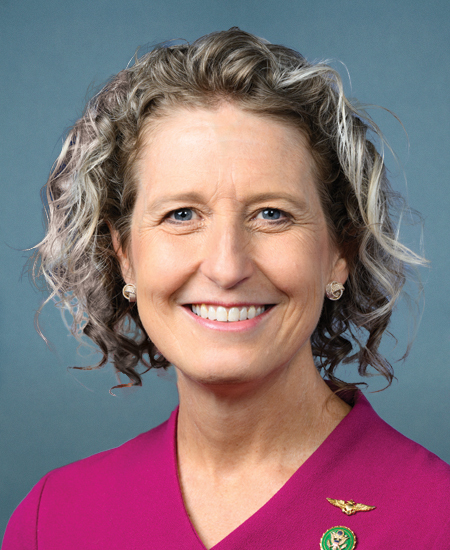
Rep. Jennifer A. Kiggans
Sponsored bills
Maddy summaryHR 2559, the Taiwan Allies Fund Act, authorizes $40 million annually (2026-2028) from existing foreign aid funds to support countries maintaining or strengthening unofficial ties with Taiwan, particularly those facing economic or diplomatic pressure from China. The bill directs funds to help eligible countries diversify supply chains, counter Chinese propaganda, develop health initiatives as alternatives to China's "Health Silk Road," and advance Taiwan's participation in international organizations. Countries receiving funds cannot get more than $5 million per year, and the State Department must coordinate with Taiwan and report annually on fund usage and effectiveness. This is a targeted financial assistance program, not a policy change affecting Taiwan's status or U.S. diplomatic recognition.
Maddy summaryHR 2581, the Iranian Terror Prevention Act, requires the U.S. government to designate 29 specific Iranian-backed militant groups as terrorist organizations within 90 days of the bill’s passage. The President must then decide within 60 days whether to impose sanctions on these groups, blocking their U.S. assets and transactions under existing law. The bill also mandates regular reports to Congress on these designations and sanctions, including for any new groups meeting the criteria. This law directly affects the 29 named groups (such as the Badr Organization and Houthis) and any entities controlled by Iran’s Islamic Revolutionary Guard Corps.
Sanctioning Russia Act of 2025 This bill imposes penalties on certain persons (individuals and entities) if the President determines that the Russian government or a person acting at Russia's direction is involved with (1) refusing to negotiate a peace agreement with Ukraine; (2) violating a negotiated peace agreement; (3) initiating another invasion of Ukraine; or (4) overthrowing, dismantling, or seeking to subvert the Ukrainian government. If the President makes such a determination, the bill requires certain actions including the President must impose visa- and property-blocking sanctions on specified persons such as the Russian president, certain Russian military commanders, and any foreign person that knowingly provides defense items to the Russian armed forces; the President must increase the rate of duty on all goods and services imported from Russia into the United States to at least 500% relative to the value of such goods and services; the President must increase the rate of duty on all goods and services imported into the United States from countries that knowingly engage in the exchange of Russian-origin uranium and petroleum products to at least 500% relative to the value of such goods and services; the Department of the Treasury must impose property-blocking sanctions on any financial institution organized under Russian law and owned wholly or partly by Russia, and any financial institution that engages in transactions with those entities; and the Department of Commerce must prohibit the export, reexport, or in-country transfer to or in Russia of any U.S.-produced energy or energy product.

Maddy summaryThis bill establishes a federal grant program to fund mental health crisis response training for law enforcement and corrections officers. It provides up to $10 million annually for state, local, and tribal agencies to cover training costs, including travel and lodging, for officers responding to mental health crises. The training must be evidence-based, developed with healthcare professionals and people with lived mental health experience, and cover de-escalation, empathy, community resources, and safety protocols. Agencies applying must demonstrate current training gaps, officer safety records, and how the training will reduce injuries to officers and the public during mental health emergencies. The grants are supplemental to existing funding and require annual reporting on training participation and outcomes.
Maddy summaryHR 2527, the Early Detection of Vision Impairments for Children Act of 2025, provides federal grants to states, territories, tribes, and urban Indian organizations to establish statewide vision screening and intervention programs for children. The bill requires grantees to implement vision screenings in medical, home, educational, and early learning settings, develop data systems for tracking outcomes, and improve access to care for underserved children in rural and low-income communities. It also authorizes technical assistance grants through the CDC to help develop screening systems, share best practices, and conduct research on vision care programs. The bill allocates $5 million annually for fiscal years 2026-2030 to fund these activities, targeting early detection to prevent vision-related learning and developmental challenges.
Maddy summaryThe ABC Act (HR 2491) requires the Centers for Medicare & Medicaid Services and the Social Security Administration to review and simplify eligibility processes, forms, and communications for Medicare, Medicaid, CHIP, and Social Security programs. It specifically aims to reduce duplicate paperwork for family caregivers - defined as individuals supporting people with disabilities or health needs - and improve accessibility through features like ADA-compliant websites, translation services, and reduced call wait times. The agencies must gather input from caregivers and organizations, then implement changes to streamline interactions. Within two years, they must report findings and proposed actions to Congress, with follow-up reports every two years. This procedural bill focuses on administrative improvements, not new benefits.
Maddy summaryHR 2457, the Mining Schools Act of 2025, establishes a competitive grant program to fund education and training programs for the U.S. mining industry. It directs the Secretary of Energy to award up to 10 annual grants to eligible "mining schools" - defined as accredited engineering programs (including Tribal Colleges) or specific geology/engineering departments at public universities in states with significant mining GDP - to recruit students and enhance curriculum. Grants must support education in critical areas like critical mineral extraction, environmental reclamation, rare earth element processing, and reducing reliance on foreign mineral supplies. The program requires geographic diversity in grant selection and mandates an advisory board (with industry and academic members) to review applications and ensure funds are used for specified educational purposes, with no new federal funds authorized.
Maddy summaryThis bill requires colleges receiving federal financial aid to prohibit events promoting antisemitism, using the International Holocaust Remembrance Alliance's 2016 working definition (including contemporary examples). It bans institutions from authorizing, funding, or otherwise supporting such events on campus. The policy change applies directly to all higher education institutions covered by the Higher Education Act of 1965. This amendment modifies existing federal funding requirements for colleges.
Maddy summaryHR 2429 requires the Secretary of Transportation to create and implement a 10-year campus modernization plan for the U.S. Merchant Marine Academy within 180 days. The bill directs the modernization of outdated facilities - including new training labs, a safety training pool, updated athletic facilities, and infrastructure upgrades like electrical systems and accessibility improvements - to support midshipmen training for maritime careers and national defense. It authorizes $1.02 billion in funding (starting in 2026) for phased construction and renovations over 10 years, prioritizing facilities needed for Coast Guard licensing exams, physical readiness, and campus safety. The plan directly affects the academy’s midshipmen, faculty, and operations by replacing aging infrastructure that currently hinders training.