

Maddy summaryThe IDEA Full Funding Act (HR 2598) mandates specific annual federal funding levels for the Individuals with Disabilities Education Act (IDEA), directly affecting schools and students with disabilities nationwide. It requires the federal government to appropriate either a fixed dollar amount or a specified percentage (increasing annually from 4.5% to 40%) of a calculated total - based on the number of eligible students and average per-pupil costs - starting in fiscal year 2026 through 2035. The bill sets clear, escalating funding targets, with the higher of two calculated amounts (dollar figure or percentage) becoming available for obligation each fiscal year. This establishes a binding financial commitment to address long-standing underfunding of special education services under IDEA.
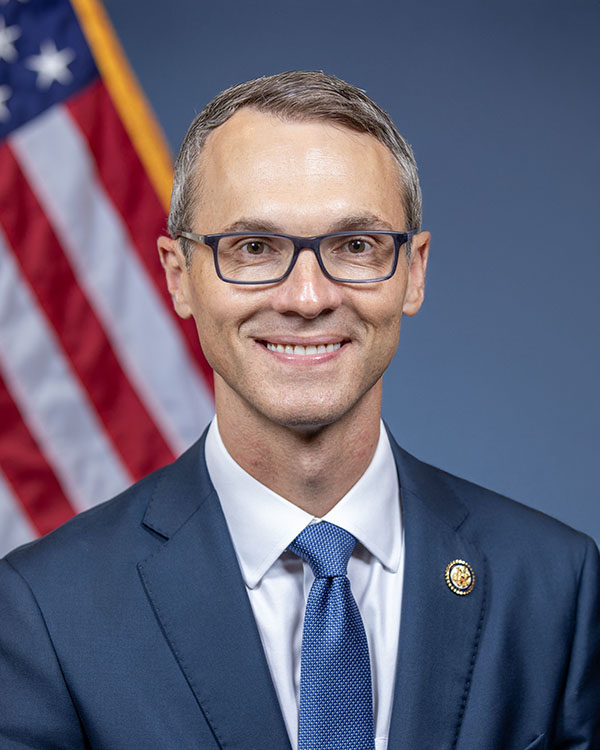
Rep. James R. Walkinshaw
Sponsored bills
Maddy summaryHR 2601, the "Delete DOGE Act," prohibits federal funding for the U.S. DOGE Service (Department of Government Efficiency) and related entities established under specific executive orders. It blocks all federal funds from implementing, administering, or enforcing the covered executive orders (Executive Orders 14158, 14210, and 14222) or supporting any new projects initiated by the DOGE department after January 20, 2025. The bill restricts U.S. Digital Service funding to only maintaining existing digital services as of January 19, 2025, and bans federal funds from being used by individuals associated with the DOGE entities or their directives. This directly affects the DOGE department, its employees, contractors, and any new initiatives tied to its executive orders.
Maddy summaryThis bill requires the State Department to obtain specific congressional authorization and submit a detailed reorganization plan before making any structural changes. The plan must cover impacts on diplomatic operations, consular services, workforce transitions, and risks to U.S. foreign policy interests. If the department bypasses these requirements, federal funds cannot be used for State Department efficiency activities or official travel by politically appointed officials. The bill directly affects State Department leadership and congressional committees, mandating strict oversight before any reorganization takes effect.
Maddy summaryHR 2559, the Taiwan Allies Fund Act, authorizes $40 million annually (2026-2028) from existing foreign aid funds to support countries maintaining or strengthening unofficial ties with Taiwan, particularly those facing economic or diplomatic pressure from China. The bill directs funds to help eligible countries diversify supply chains, counter Chinese propaganda, develop health initiatives as alternatives to China's "Health Silk Road," and advance Taiwan's participation in international organizations. Countries receiving funds cannot get more than $5 million per year, and the State Department must coordinate with Taiwan and report annually on fund usage and effectiveness. This is a targeted financial assistance program, not a policy change affecting Taiwan's status or U.S. diplomatic recognition.
Workplace Violence Prevention for Health Care and Social Service Workers Act This bill requires the Department of Labor to address workplace violence in health care, social service, and similar sectors. Specifically, Labor must issue an occupational safety and health standard that requires certain employers to take actions to protect workers and other personnel from workplace violence. The standard applies to employers in the health care sector, in the social service sector, and in sectors that conduct activities similar to those in the health care and social service sectors. Among other elements, the standard must require each employer to (1) develop a workplace violence prevention plan, (2) promptly investigate incidents of workplace violence, and (3) provide relevant training and education to employees. The bill requires certain hospitals and skilled nursing facilities to comply with this standard as a condition of Medicare participation.
Maddy summaryHR 2586, the Reentry Act of 2025, amends Medicaid rules to allow incarcerated individuals to receive Medicaid coverage during the 30 days immediately before their release from prison or jail. This directly affects people leaving correctional facilities, ensuring they can access health care as they transition back into communities. The bill requires a report within 18 months analyzing current health care standards in prisons, the number of people who would gain coverage, and current discharge practices to improve Medicaid enrollment for newly released individuals. The report will also assess how to better connect people with community health services and addiction treatment after release.
Maddy summaryHR 2487, the Transgender Health Care Access Act, aims to improve access to gender-affirming care for transgender individuals by funding training and education for healthcare providers. The bill provides $10 million annually for medical schools to develop curricula on gender-affirming care and culturally competent treatment, and $15 million annually for grants to train medical residents, nurse practitioners, and community health centers serving transgender patients. It specifically targets rural providers through $5 million annually for collaborative networks to expand care in underserved areas. The legislation requires a report to Congress within two years detailing progress in improving health equity for transgender populations.
Maddy summaryHR 2527, the Early Detection of Vision Impairments for Children Act of 2025, provides federal grants to states, territories, tribes, and urban Indian organizations to establish statewide vision screening and intervention programs for children. The bill requires grantees to implement vision screenings in medical, home, educational, and early learning settings, develop data systems for tracking outcomes, and improve access to care for underserved children in rural and low-income communities. It also authorizes technical assistance grants through the CDC to help develop screening systems, share best practices, and conduct research on vision care programs. The bill allocates $5 million annually for fiscal years 2026-2030 to fund these activities, targeting early detection to prevent vision-related learning and developmental challenges.
Save America's Forgotten Equines Act of 2025 or the SAFE Act of 2025 This bill permanently prohibits the slaughter of equines (e.g., horses and mules) for human consumption. (Current law prohibits the slaughter of dogs and cats for human consumption. This bill extends the prohibition to equines.) Specifically, this bill prohibits a person from knowingly (1) slaughtering an equine for human consumption; or (2) shipping, transporting, possessing, purchasing, selling, or donating an equine to be slaughtered for human consumption or equine parts for human consumption. The bill subjects a violator to a fine. The bill applies to conduct in or affecting interstate or foreign commerce or within the special maritime and territorial jurisdiction of the United States. However, it does not apply to an activity carried out by an Indian for a religious ceremony. As background, in recent years, the appropriations acts have prohibited the Department of Agriculture (USDA) from using federal funds to inspect horses before they are slaughtered for human consumption. Therefore, there are currently no USDA-inspected horse slaughter facilities in the United States.
Maddy summaryHR 2439 authorizes $50 million for fiscal year 2026 and $55 million for 2027 to fund the United Nations Population Fund (UNFPA), directly supporting its global programs. The bill specifies that these funds will help end preventable maternal deaths, address unmet contraceptive needs, combat gender-based violence, and end harmful practices like child marriage and female genital mutilation. UNFPA operates in over 150 countries, primarily aiding women and girls in developing nations and crisis zones, including those affected by conflict or natural disasters. The bill emphasizes UNFPA’s compliance with U.S. restrictions (not funding abortion) and its role in advancing U.S. strategic interests through voluntary family planning and reproductive health services.