

Department of Homeland Security Appropriations Act, 2026 This bill provides FY2026 appropriations for various agencies and offices within the Department of Homeland Security (DHS), except for U.S. Immigration and Customs Enforcement (ICE), U.S. Customs and Border Protection (CBP), and management and oversight activities of the Office of the Secretary. Specifically, the bill provides appropriations to DHS for the Federal Protective Service, the Office of Inspector General, the Transportation Security Administration, the U.S. Coast Guard, the U.S. Secret Service, the Cybersecurity and Infrastructure Security Agency, the Federal Emergency Management Agency (FEMA), U.S. Citizenship and Immigration Services, the Federal Law Enforcement Training Centers, and the Science and Technology Directorate. The bill does not provide appropriations for some agencies and activities that have been funded in prior DHS appropriations acts, including ICE, CBP, and management and oversight activities of the Office of the Secretary.
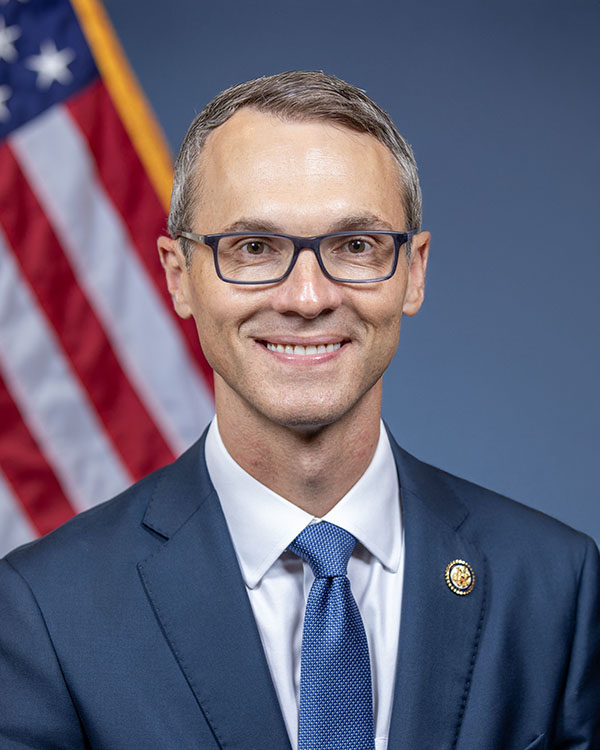
Rep. James R. Walkinshaw
Sponsored bills
Maddy summaryHR 7507, the Fiscal Harms of Federal Firings Act, mandates the Government Accountability Office (GAO) to study how federal workforce reductions (RIFs) impact state and local government budgets. The study will examine increased costs for services like unemployment insurance and Medicaid, reduced tax revenues, regional economic shifts, and varying fiscal challenges across states. It requires the GAO to consult with state officials, economists, and federal agencies, then submit a public report to Congress within 18 months detailing findings, historical case studies, and policy options. This bill does not change federal policy but aims to provide data for future decisions about RIFs' fiscal effects.
Maddy summaryHR 7516, the "No Funds for Forced Labor Act," requires the U.S. Treasury to direct American representatives at international financial institutions (like the World Bank) to oppose loans for projects that use or risk using forced labor, particularly those involving state-run entities in Xinjiang. It mandates these institutions to vet projects for forced labor risks, explain their vetting process, and detail mitigation steps before funding. The bill directly affects international financial institutions and the projects they fund, especially those linked to Xinjiang. It does not ban all loans but targets projects with documented forced labor concerns, requiring annual reports to Congress on implementation. The law focuses on policy changes to prevent U.S.-aligned financial support for forced labor practices.
Maddy summaryHR 7480, the FAIR Act, sets pay adjustments for federal employees in 2027. It increases base pay by 3.1% for most federal workers under standard pay systems and for employees paid according to local civilian wages in high-cost areas. Additionally, it raises locality pay adjustments by 1% for 2027. The bill directly affects all federal employees covered by these pay systems through concrete, formula-based adjustments.
Maddy summaryHRES 1041 is a non-binding resolution supporting the designation of February 8, 2026, as "Scouting America Day" to celebrate the 116th anniversary of the organization's incorporation. It recognizes Scouting America's history, including its founding in 1910, its youth development programs, and its contributions to community service (e.g., over 7 million service hours in 2025). The resolution does not create new laws or directly affect any group, as it serves only as a symbolic expression of congressional support. It honors Scouting America's role in fostering leadership and character among youth, citing its long-standing partnership with national initiatives like America 250.
Maddy summaryHRES 1035 is a non-binding House resolution condemning recent and proposed workforce reductions at FEMA, which the resolution states endanger the agency's ability to prepare for, respond to, and recover from disasters. It specifically cites a 35% staffing shortage at FEMA (per GAO) and notes that over 2,000 permanent staff left FEMA in 2025, weakening disaster response during events like Hurricanes Helene and California wildfires. The resolution expresses concern that staffing cuts would delay aid, reduce assistance to vulnerable communities (including rural, coastal, and wildfire-prone areas), and undermine counterterrorism programs supporting first responders. It calls for a stable, adequately resourced FEMA workforce to ensure effective disaster management, without proposing new legislation or policy changes.
Maddy summaryThe Rebuild America's Schools Act of 2026 authorizes $20 billion annually from 2027 to 2031 to improve public school facilities nationwide. The bill provides grants to states to fund school construction, renovation, and modernization projects that focus on safety, energy efficiency, and accessibility, with priority given to schools serving high percentages of students eligible for free or reduced-price lunch. Funds cannot be used for routine maintenance, athletic facilities, or vehicles, and must meet specific environmental, safety, and energy efficiency standards. The bill also includes specific provisions for repairing school foundations affected by pyrrhotite, a mineral that causes concrete deterioration, and requires use of American-made materials for construction projects.
Maddy summaryHR 7335 establishes comprehensive humanitarian standards for individuals held in U.S. Immigration and Customs Enforcement (ICE) and U.S. Customs and Border Protection (CBP) custody. The bill requires facilities to provide immediate health screenings within 12 hours (6 hours for high-risk individuals like children, pregnant people, or those with medical conditions), ensure access to adequate water, sanitation, food (with 2,000+ calories daily for adults), and age-appropriate shelter. It mandates specific facility standards including separate housing for males and females, accessible accommodations for people with disabilities, daily outdoor access for those detained over 48 hours, and proper medical equipment and personnel on-site. The bill also requires regular inspections, staff training on humanitarian protocols, and public reporting of sexual abuse complaints. These standards directly affect all individuals detained by ICE or CBP, with special protections for vulnerable groups like children, pregnant people, and those with medical needs.
Maddy summaryHR 7322, the True Shutdown Fairness Act, requires federal agencies to pay regular wages to most employees and contractor workers during government shutdowns in fiscal year 2026, instead of furloughing them. It applies to all standard federal employees (excluding those on emergency duty) and contractor workers whose jobs would normally halt during a funding gap. Agencies must pay covered employees within 7 days of the bill's enactment for ongoing shutdowns, and contractors receive reimbursement for costs incurred keeping workers paid. The bill also prohibits agencies from implementing layoffs or placing employees on administrative leave for more than 10 days during a shutdown.
Maddy summaryHJRES 144 is a congressional disapproval resolution targeting a specific rule issued by the Department of Veterans Affairs (VA) on December 31, 2025, which addressed "Reproductive Health Services" (90 Fed. Reg. 61310). This resolution directs Congress to disapprove the VA rule under Chapter 8 of Title 5, U.S. Code, meaning the rule would have no legal effect if passed. The bill directly affects the VA's implementation of reproductive health services for veterans, as it seeks to nullify the agency's existing policy. This is a procedural measure, not a substantive policy change, aimed solely at blocking the VA's rule through congressional action.