

Maddy summaryThis resolution commemorates the 51st anniversary of the Fall of Saigon on April 30, 1975, and the subsequent day known as Black April. It formally acknowledges the historical events of that date, including the displacement of millions of Vietnamese people and the U.S. military's evacuation efforts. The document honors the contributions of Vietnamese Americans to the United States and reaffirms support for democracy and human rights in Vietnam. Additionally, it pays tribute to the service and sacrifice of U.S. and South Vietnamese military personnel who fought during the Vietnam War.
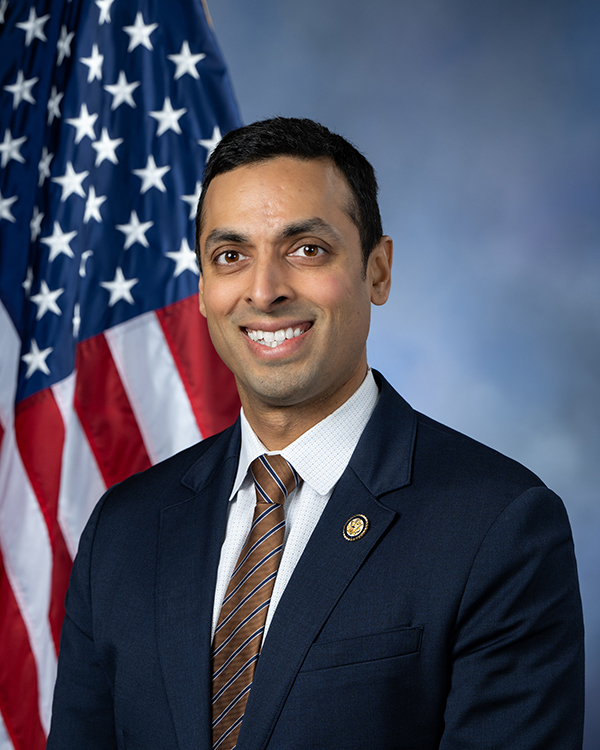
Rep. Suhas Subramanyam
Sponsored bills
Maddy summaryThis resolution directs the House Committee on Oversight and Government Reform to take legal action in federal court to enforce a subpoena issued to Attorney General Pamela Bondi. The specific goal is to obtain a court order requiring Bondi to provide deposition testimony and documents related to the government's handling of sex trafficking cases and the Jeffrey Epstein investigation. The House Office of General Counsel is authorized to represent the committee in these proceedings and may hire additional private lawyers to assist. If the committee initiates or intervenes in the lawsuit, it must report its actions to the full House of Representatives as soon as possible.
Maddy summaryThis bill, titled the Protecting Human Rights and Public Health in Foreign Assistance Act, aims to cancel specific regulations issued by the Department of State. It directly affects the federal government by prohibiting any department or agency from enforcing, implementing, or proposing rules related to protecting life, combating discriminatory equity ideology, and combating gender ideology in foreign aid programs. The legislation treats these cancelled rules as if they never existed, effectively nullifying their impact on future foreign assistance policies.
Maddy summaryThis bill, known as the Lowering Utility Bills Act, aims to reduce electricity and natural gas costs by regulating how utility companies calculate their profits and what expenses they can pass on to customers. It requires transmission providers and investor-owned utilities to determine a reasonable profit range based on historical stock market returns from academics, large financial institutions, and major global banks, then generally limits their authorized profit to the lowest point in that range. Additionally, the legislation bans utilities from recovering specific costs in customer rates, including lobbying fees, political contributions, executive travel, and entertainment expenses. The bill also mandates that utilities prioritize lower-cost grid technologies in their planning and requires them to publicly justify any decision to use a higher profit rate than the standard minimum.
Maddy summaryThis resolution expresses support for designating April as Undiagnosed Awareness Month to highlight the challenges faced by the approximately 25 million Americans living with rare diseases that have not yet been identified. The bill aims to raise public awareness about the difficulties these patients endure, such as long diagnostic delays, misdiagnoses, and lack of treatment options, while honoring the work of the Undiagnosed Diseases Network and related research efforts. By acknowledging this month, the House intends to promote greater understanding of the need for improved diagnostic tools and equitable access to medical care for individuals with undiagnosed conditions.
Maddy summaryThe PRICE Act requires third-party food delivery apps to stop using hidden pricing strategies that change delivery fees based on a customer's past order history or willingness to pay. Starting 90 days after enactment, these platforms must calculate delivery fees using a fixed formula based only on the order total and distance, while clearly displaying the base food price and the final total before checkout. The law also mandates that apps explain exactly what each delivery fee covers and whether it is refundable. The Federal Trade Commission is responsible for enforcing these rules, and state attorneys general have the authority to sue platforms that violate the act on behalf of their residents.
Maddy summaryThis bill authorizes the placement of a monument at Arlington National Cemetery to honor veterans of the Army Security Agency who served between 1945 and 1976. The monument will be designed with approval from the Secretary of the Army and the National Army Security Agency Association, and the association will be responsible for funding the site preparation, construction, and ongoing maintenance. If no suitable space exists within the cemetery, the monument may be placed outside the entrance instead. The legislation defines the covered service periods using existing legal definitions for World War II, the Korean conflict, and the Vietnam era.
Maddy summaryThe Peer Support for Our First Responders Act of 2026 directs the Department of Health and Human Services to create a temporary working group focused on improving mental health support for law enforcement officers and first responders. This group will examine current peer-to-peer behavioral health programs, considering the unique challenges faced by these workers, and develop updated recommendations for Congress on reducing suicide risk and addressing substance use. The committee will include representatives from federal agencies, local governments, and organizations, as well as law enforcement officers and first responders with direct experience in these programs. Within one year of passing, the group must publish a report with evidence-based findings and minimum standards for effective support, then submit specific proposals to Congress on how to integrate these services into broader healthcare systems. The working group will dissolve after completing its report, though the Secretary may request to reconvene it later if new updates are deemed necessary.
Maddy summaryThe Public Safety UAS Readiness Act establishes a grant program to help fire departments, law enforcement agencies, and emergency medical services train their personnel on operating drones for public safety missions. Funded by up to $10 million annually from 2026 to 2029, these grants can be used to develop training curriculums, purchase compliant drones, and cover administrative costs related to the programs. Recipients must submit detailed plans outlining their safety protocols, risk management strategies, and data privacy measures, with a priority given to agencies in high-risk areas or underserved regions that currently lack drone training capacity. To ensure quality, the act requires that training materials be maintained by recognized nonprofit organizations and mandates annual reporting on the number of trained personnel and drone deployments to Congress.
Maddy summaryThe MATCH Act requires U.S. agencies to align export controls on semiconductor manufacturing equipment with allied nations to prevent adversaries from accessing critical technology. It mandates a 150-day period for diplomatic efforts to secure countrywide denial policies from allied suppliers, after which U.S. jurisdiction would extend to equipment exported from countries not complying with these controls. The bill specifically targets semiconductor manufacturing equipment that the U.S. cannot currently produce in high volume and includes a list of Chinese companies deemed to warrant comprehensive restrictions. If allies fail to implement matching controls, the Act would allow the U.S. to regulate equipment exported from non-compliant allied countries and restrict servicing of restricted items at facilities in adversary nations. The legislation includes a sunset provision that expires five years after enactment, with annual reporting requirements to Congress on progress and compliance.