This resolution recognizes that aircraft carriers continue to be a cornerstone of the U.S. Navy and supports the celebration of the centennial of Navy aircraft carriers.
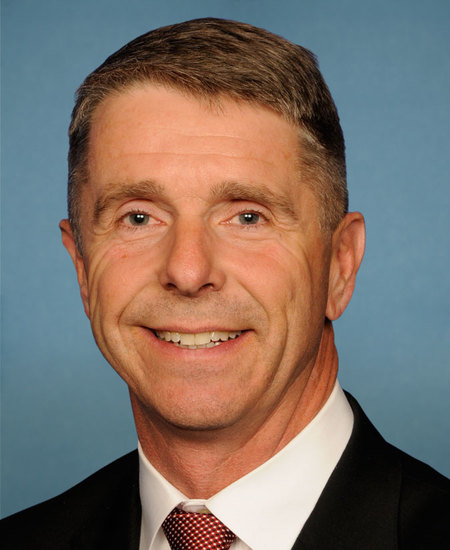
Rep. Robert J. Wittman
Sponsored bills
Access to Prescription Digital Therapeutics Act of 2022 This bill provides for Medicare and Medicaid coverage of prescription digital therapeutics (i.e., software applications that are used to prevent, manage, or treat medical conditions). The Centers for Medicare & Medicaid Services must establish a Medicare payment methodology for payments to manufacturers that takes into account certain factors (e.g., ongoing use); manufacturers must report specified information about private payors, subject to civil penalties.
Firearm Industry Non-Discrimination Act or the FIND Act This bill prohibits the federal government from entering into contracts with an entity that discriminates against firearm trade associations or businesses that deal in firearms, ammunition, or related products. Specifically, the bill requires a federal agency to include in each contract for the procurement of goods or services awarded by the agency a clause requiring the prime contractor to certify that it (1) has no policy, practice, guidance, or directive that discriminates against a firearm entity or firearm trade association; and (2) will not adopt a policy, practice, guidance, or directive that discriminates against a firearm entity or firearm trade association during the term of the contract. The bill establishes (1) a similar requirement with respect to subcontracts, and (2) penalties for violations. The bill makes such prohibition inapplicable to a contract for the procurement of goods or services that is a sole-source contract.

American Energy Independence from Russia Act This bill addresses U.S. energy security, the production of oil and gas, and the importation and exportation of oil and gas. Specifically, the President must submit an energy security plan that (1) evaluates U.S. crude oil, petroleum products, and natural gas imports and exports; (2) assesses the energy security risks of such imports; and (3) includes strategies to encourage increased domestic production of crude oil, petroleum products, and natural gas to offset Russian imports. The bill also approves the TransCanada Keystone Pipeline in Phillips County, Montana for the import of oil from Canada to the United States. In addition, the bill grants the Federal Energy Regulatory Commission the authority to approve or deny applications for facilities to export natural gas from the United States to foreign countries or import natural gas from foreign countries. The President and federal agencies must obtain congressional approval before (1) prohibiting or substantially delaying certain new energy mineral leases or permits on federal lands, or (2) withdrawing certain federal lands from mineral and geothermal leasing activities. The Department of the Interior must resume issuing oil and gas leases on federal lands and offshore submerged lands in the Outer Continental Shelf as specified under the bill. Finally, the bill limits the drawdown of petroleum in the Strategic Petroleum Reserve until the Department of Energy develops a plan to increase the percentage of federal lands leased for oil and gas production.
Maddy summaryThis non-binding resolution, introduced in March 2022, calls for the House wing of the U.S. Capitol and House Office Buildings to reopen to the public, citing the unprecedented closure since March 2020 as the longest in history. It urges removing visitor restrictions like logs and prioritizing public access, noting that other state capitols and public venues operated safely during the same period. As a "sense" resolution, it does not mandate action but expresses the House’s position on restoring public access to a democratic symbol. The resolution specifically targets the House wing (not the full Capitol) and aims to encourage the Capitol Police and House leadership to act.
This resolution addresses the need for improvements to broadband infrastructure, particularly in rural areas, and the role of specified federal agencies in making such improvements.
TSA Security Threat Assessment Application Modernization Act This bill requires the Transportation Security Administration (TSA) to standardize the enrollment and renewal system for individuals applying for or renewing multiple TSA Security Threat Assessment programs, including the Transportation Worker Identification Credential, Hazardous Materials Endorsement, and TSA PreCheck programs. The standardization shall permit an individual to (1) enroll at a TSA-designated universal enrollment center once and use the application for one of such programs to enroll in two or more of such programs,with specified exceptions for those applying for or renewing enrollment in more than one program at different times; (2) apply successful, valid clearance results from a TSA Security Threat Assessment to satisfy vetting requirements for participation in any related program without additional cost; and (3) undergo a streamlined and expeditious renewal process. Additionally, the TSA must publish on its website information relating to the standardization of the enrollment system.
Stop Arduous Vaccine Enforcement Act of 2022 or the SAVE Act of 2022 This bill prohibits transplant centers from discriminating against an individual on the basis of COVID-19 vaccination status for purposes of determining eligibility or assigning priority for organ transplants.
National Security Moratorium on Foreign Purchases of U.S. Land This bill requires the President to take actions necessary to bar foreign persons (individuals or entities) from purchasing public or private real estate in the United States for the five-year period beginning from this bill's enactment. The Government Accountability Office must report to Congress (1) certain information on the purchase and ownership of U.S. real estate by foreign persons; and (2) recommendations to make it easier for U.S. citizens and harder for foreign persons to purchase U.S. real estate, including farmland.
Accelerating Access to Critical Therapies for ALS Act This bill establishes grant programs to address neurodegenerative diseases, such as amyotrophic lateral sclerosis (also known as ALS or Lou Gehrig's disease), and contains other related provisions. The Department of Health and Human Services (HHS) shall award grants to eligible entities for scientific research utilizing data from expanded access to investigational ALS treatments for individuals who are not otherwise eligible for clinical trials. The Food and Drug Administration (FDA) shall award grants to public and private entities to cover the costs of research and development of drugs that diagnose or treat ALS and other rare neurodegenerative diseases. HHS shall also establish the Public-Private Partnership for Neurodegenerative Diseases between the National Institutes of Health, the FDA, and at least one eligible entity (generally, an institution of higher education or a nonprofit organization). The partnership shall support the development and regulatory review of drugs that address ALS and other rare neurodegenerative diseases. The FDA shall publish on its website a five-year action plan for fostering the development of drugs that improve or extend the lives of people living with rare neurodegenerative diseases. The Government Accountability Office must report to Congress about the grants provided under this bill, including an analysis of the impact of such grants on research and development of treatments for ALS.