

Maddy summaryThe Strategic Production Response Act (HR 21) requires the Secretary of Energy to develop a plan increasing oil and gas leasing on federal lands (managed by Interior, Agriculture, Energy, and Defense) by the same percentage as any initial drawdown of petroleum from the Strategic Petroleum Reserve. This plan must be created before the first sale, exchange, or loan of reserve oil, and cannot increase leasing on federal lands by more than 10% overall. The bill mandates consultation with the Secretaries of Agriculture, Interior, and Defense during plan development. It directly affects federal land management agencies and future oil/gas leasing decisions on public lands.
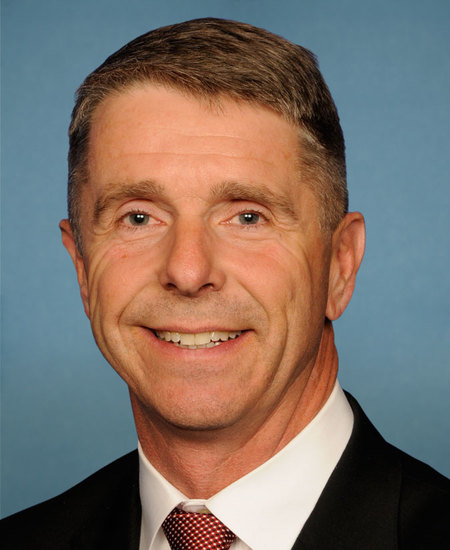
Rep. Robert J. Wittman
Sponsored bills
Commercial Fishing and Seafood Business Act of 2023 This bill expands a provision that exempts certain H-2B visas (temporary nonagricultural laborers) from the annual cap of 66,000 on such visas. Under this bill, the exemption shall apply to H-2B visas issued for employment (1) on a commercial fishing vessel or shrimp trawler; or (2) in the processing of fish, baitfish, or fishery products. Currently, this exemption only applies to H-2B visas issued for certain employment related to the processing of fish roe.
Maddy summaryThe HEAL Act (HR 603) requires the U.S. Holocaust Memorial Museum Director to study how public elementary and secondary schools teach about the Holocaust and related antisemitism. The study will examine curriculum requirements, teaching methods (like project-based learning), instructional materials, and assessment approaches across states and school districts. It specifically analyzes whether Holocaust education is mandatory, optional, or integrated across subjects, and how schools address antisemitism and genocide prevention. The resulting report, due within 180 days of the study or three years after enactment, will inform Congress but does not change current school policies. This is a data-gathering measure, not a policy mandate.
Maddy summaryHCONRES 7 is a symbolic resolution passed by the U.S. House of Representatives that commends Iranian protesters - particularly women - who have risked safety to demonstrate against the Iranian regime's human rights abuses, including the mandatory hijab law and violent crackdowns following Mahsa Amini's death. It condemns the regime's use of violence (reportedly killing over 450 protesters) and detention of activists, while urging the Biden Administration to impose additional human rights sanctions on officials involved in repression and support internet freedom tools to bypass Iranian censorship. The resolution makes no binding policy changes but formally expresses congressional support for protesters' demands for freedom, justice, and an end to discriminatory laws targeting women. It does not directly affect any U.S. laws or policies but serves as a statement of U.S. position.
Maddy summaryThe Educational Choice for Children Act creates tax credits for individuals and corporations that contribute to scholarship granting organizations providing education scholarships. Individuals can claim a credit up to $5,000 or 10% of their income, while corporations can claim up to 5% of taxable income. The scholarships are available to students from households with income up to 300% of the area median income, and can be used for private school tuition, tutoring, and other educational expenses at elementary and secondary schools. The bill includes strict requirements for scholarship organizations to verify income, conduct audits, and prevent misuse of funds, while also prohibiting government control over these organizations and protecting private and religious schools from discrimination in the program. It establishes a $10 billion annual cap on the total tax credits available.
Maddy summaryThis bill requires healthcare providers to give the same medical care to infants born alive during abortions as they would to any newborn, and to immediately admit such infants to a hospital. It mandates reporting of non-compliance to law enforcement and imposes penalties including up to 5 years in prison for violations. Women who undergo abortions can file civil lawsuits seeking money damages for injuries, three times the abortion cost, and punitive damages if care standards are not met. The bill also clarifies that abortion includes intentionally killing an unborn child or terminating pregnancy without specific exceptions (e.g., after viability to preserve life or removing a dead fetus).
Maddy summaryHR 22, the *Protecting America’s Strategic Petroleum Reserve from China Act*, blocks the U.S. government from selling petroleum from the Strategic Petroleum Reserve to entities under Chinese Communist Party control or unless sellers guarantee the oil won’t be exported to China. It directly affects the Department of Energy’s management of the reserve and any foreign entities seeking to purchase reserve petroleum. The key mechanism requires the Secretary of Energy to prohibit sales to China-linked entities or impose strict export restrictions on any sale. This policy change aims to prevent strategic petroleum resources from reaching entities tied to China’s government.
Maddy summaryThis bill establishes Military Education Savings Accounts for children of active duty military members. Parents can use funds (starting at $6,000 for the first year, adjusted for inflation annually) to pay for private school tuition, online learning, tutoring, educational materials, and other approved educational expenses. Priority for funding is given to children of enlisted members and siblings of previously enrolled children if funds are limited. Account holders must agree to certain educational standards and not enroll their children full-time in public schools while using the accounts. Unused funds roll over annually, and any remaining funds at account termination return to the Treasury.
Teleabortion Prevention Act of 2023 This bill restricts the use of telehealth for chemical abortions (also known as medication abortions). Specifically, it requires a provider who dispenses or prescribes medication for a chemical abortion to physically examine the patient, be physically present at the location of the chemical abortion, and schedule a follow-up visit for the patient. The bill provides an exception for a chemical abortion that is necessary to save the life of a mother whose life is endangered by a physical disorder, illness, injury, or condition. The bill establishes criminal penalties—a fine, a prison term of up to two years, or both—for a provider who does not comply with the requirements. A patient who undergoes a chemical abortion may not be prosecuted.
Maddy summaryHR 229, the "World Deserves To Know Act," proposes sanctions against specific Chinese officials for actions related to the COVID-19 pandemic. It directs the President to freeze assets and bar from the U.S. individuals identified as responsible for restricting pandemic-related speech or silencing whistleblowers, including Health Commission Director Ma Xiaowei and CDC Director Gao Fu. The bill also prohibits federal funding for U.S. universities or the National Academy of Sciences if they contract with China’s National Health Commission or affiliated entities. Additionally, it requires a review of NIH funding linked to Chinese health agencies and terminates sanctions once an independent investigation into the pandemic's origin occurs.